
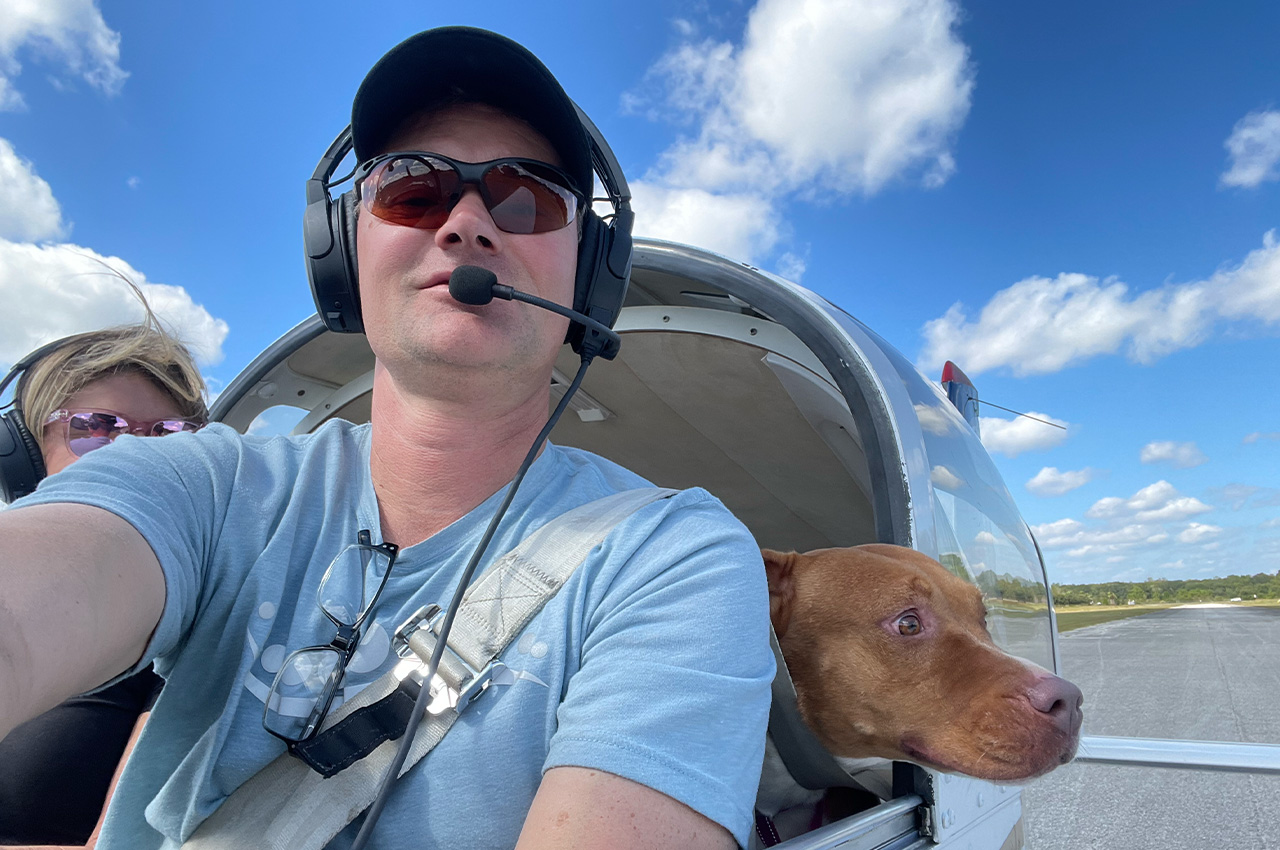
Most days, Dr. Scott Smith treats patients at Fort Walton Beach Chiropractic on Racetrack Road. But a few times a year, his office is the cockpit of a Grumman Tiger — and his passengers have four legs.
- For the past five to six years, Smith has volunteered as a pilot for two nonprofit organizations — Puppy Rescue Flights and Pilots N Paws — flying dogs out of kill shelters and into the arms of rescue organizations and foster homes across the country. He does it all on his own dime: the fuel, the flight time, the airplane, his time.
“I’m a dog lover,” Smith said. “My wife and I…we travel to eat, drink and pet dogs.”
That love drives him into the sky.
Smith estimates he’s transported several dozen animals over the years, anywhere from one dog per flight to as many as four. On his most recent mission, he flew four dogs. One memorable flight had him delivering a mother dog and her roughly four-day-old puppies after a scheduling delay meant the mom gave birth before the transport.
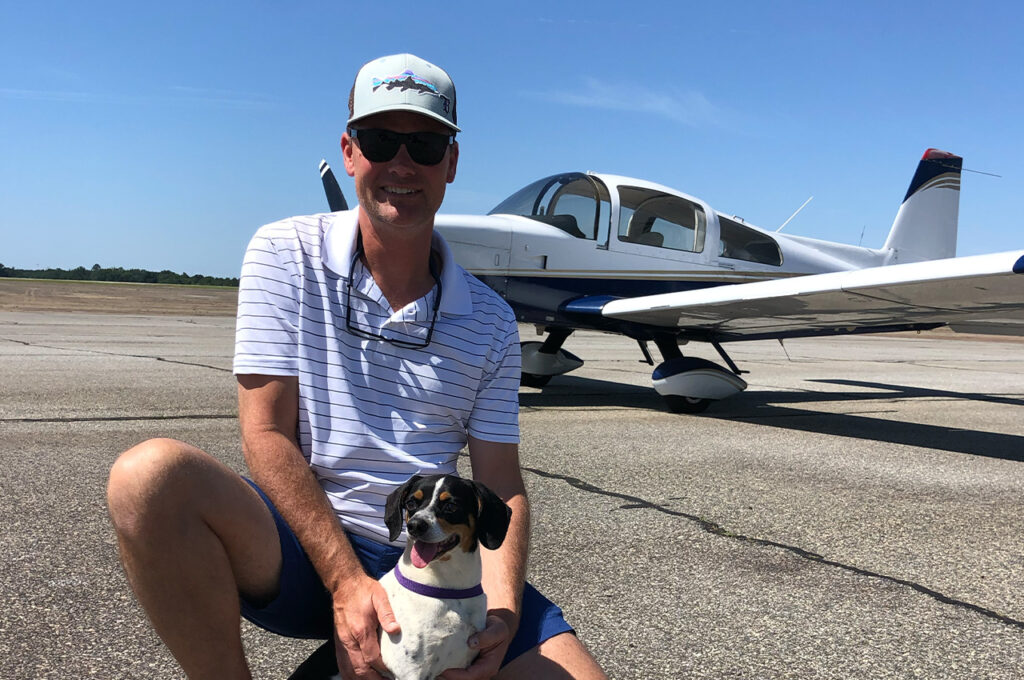
The two organizations work differently. Puppy Rescue Flights, based in the Sanford-Orlando area, coordinates multiple pilots who meet in Enterprise, Alabama, where animals from shelters across the state are redistributed among planes and flown south into Central and South Florida. Pilots N Paws operates on a broader, national scale through an online message board where shelters and rescues post transport requests. Pilots like Smith set a geographic radius — his is 300 miles — and receive alerts when animals need to move through their area. Some transports are single flights. Others involve as many as five legs with different pilots.
- The goal across both organizations is the same: get animals out of kill shelters and into areas where they have a better chance of being adopted.
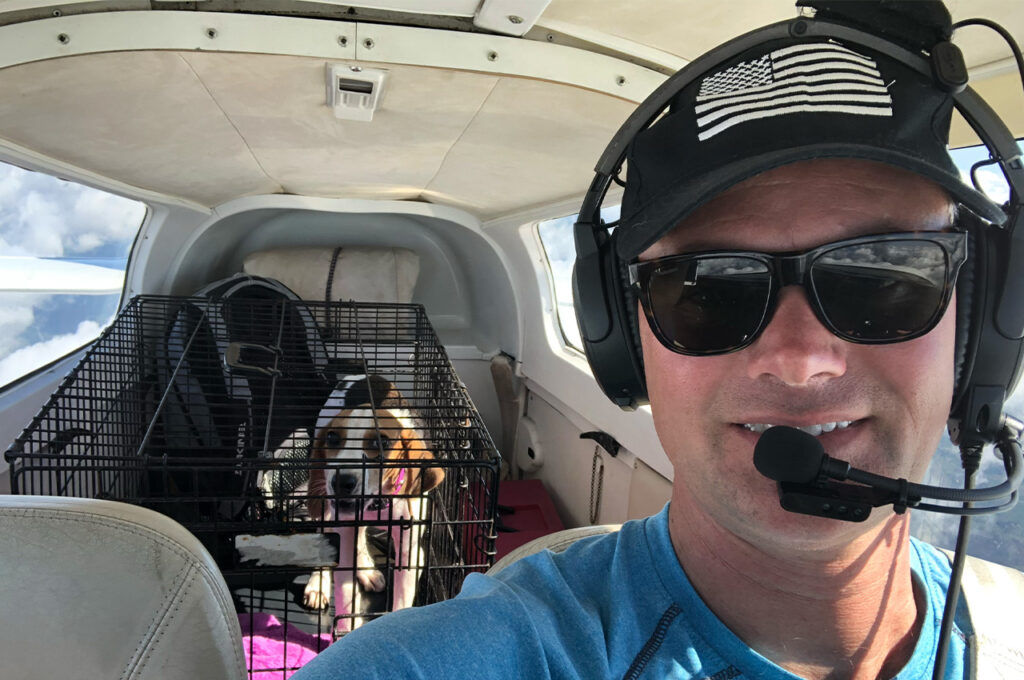
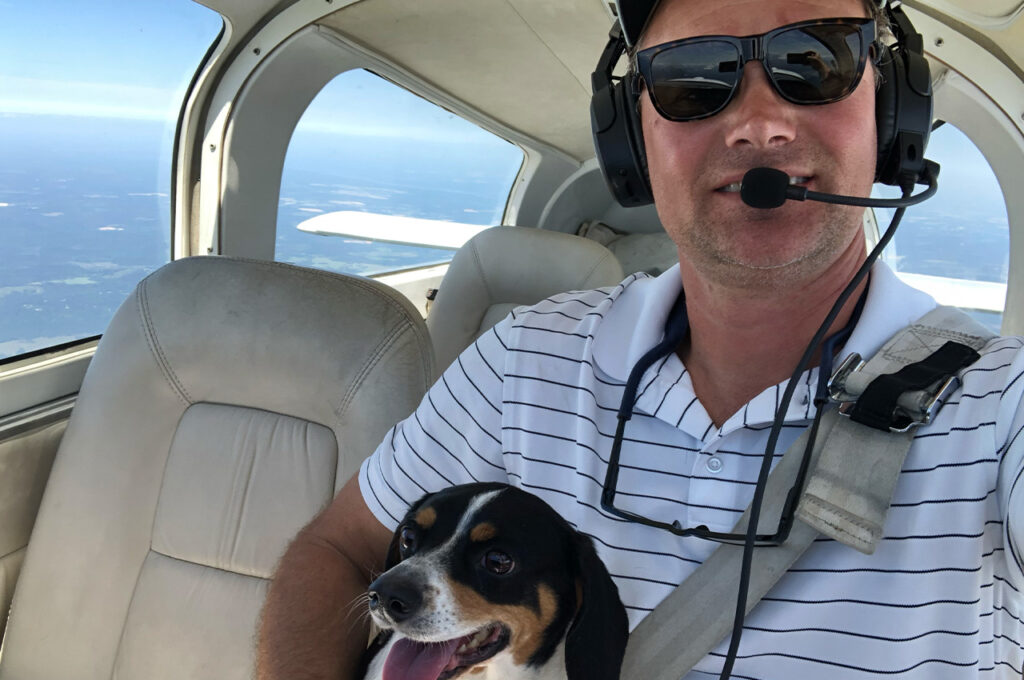
“A lot of times, if you look at the patterns of movement, it’s all from rural areas down to higher densely populated areas because there’s more opportunity for them to get adopted,” Smith said.
Smith’s aviation roots run deep. He spent more than 25 years flying, beginning in the U.S. Army where he started in helicopters — including the AH-64 Apache — before transitioning to fixed-wing aircraft. He served as an attack aviation platoon leader, company commander and battalion logistics officer across multiple assignments, including a deployment to Balad, Iraq. His last military aircraft was the C-23 Sherpa. He retired from the Mississippi Army National Guard as a Major in 2015 and holds a Bronze Star among his military awards.
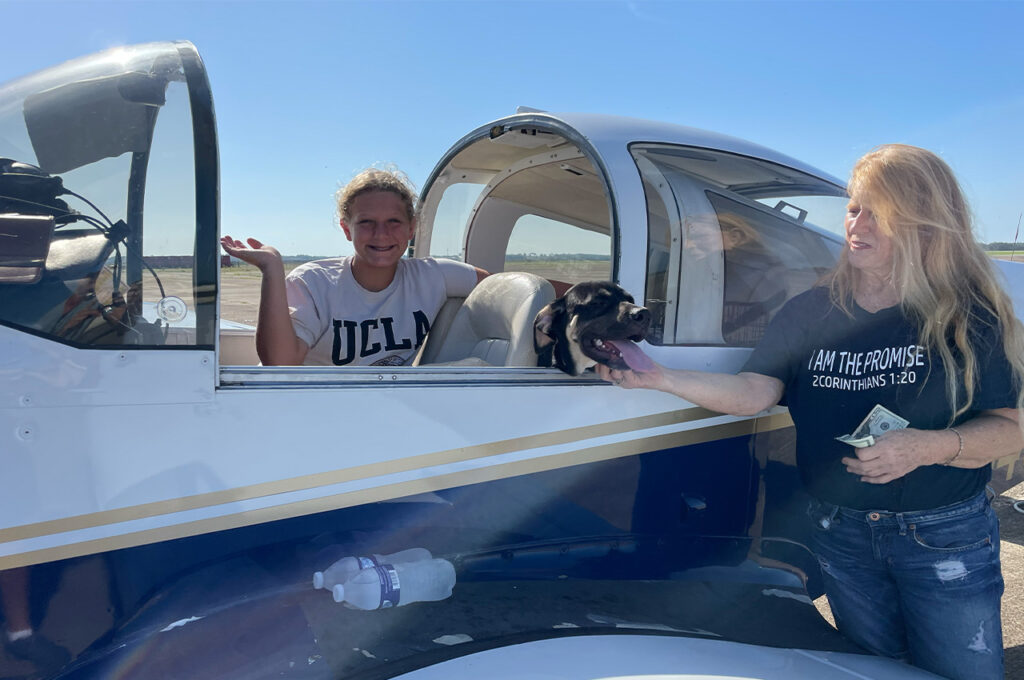
Today, his Grumman Tiger — a four-seat, single-engine piston airplane with fixed gear and a fixed propeller — is his tool for giving back.
Smith said he doesn’t fly just to fly. He needs a mission.
- “I don’t just go out and fly circles,” he said. “When I’m going somewhere like to visit my parents, I’ll look on the job board and see if there’s animals going in that direction. If I’m already flying that way, why not try to help?”
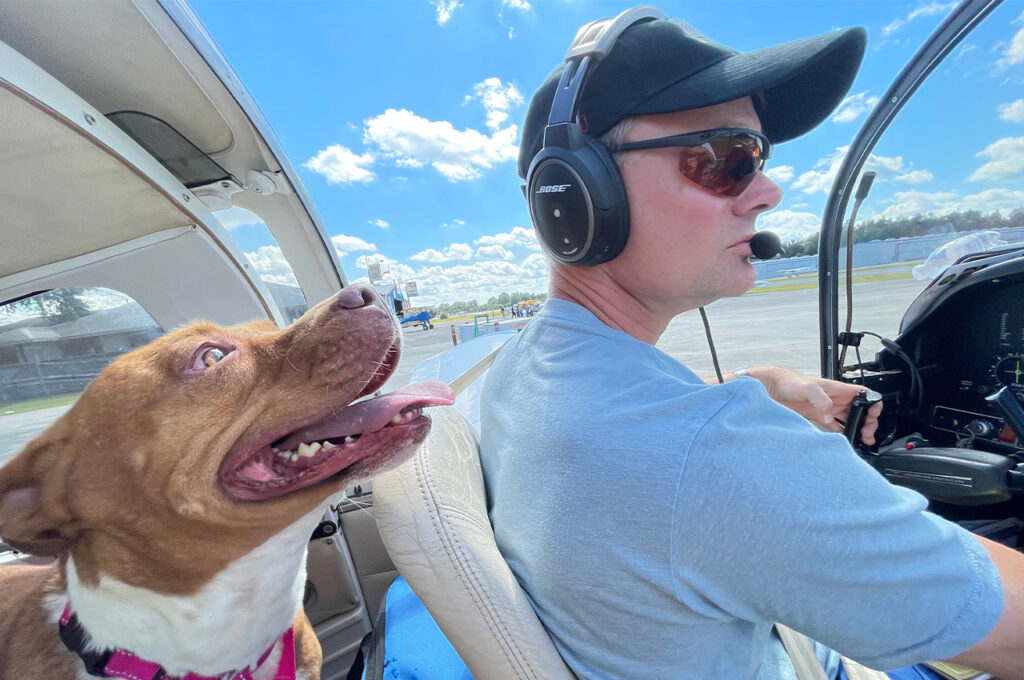
He tries to fly three to five rescue missions a year and wants to do more, though weather and scheduling sometimes intervene. He’s also flown medical transport missions for people through organizations like Angel Flight.
It’s not just pilots who can help, Smith noted. When weather grounds flights, volunteers step up to drive animals by car. Others serve as short-term foster homes along the route.
“You don’t have to be just a pilot to get involved,” he said. “You can drive them, you can house them, you can facilitate that way.”
For Smith, the reward is layered — a love of flying married to a love of dogs, wrapped in something bigger.
“Animals are good for people in terms of mental health,” he said. “It’s all full circle.”




4 Responses
The BEST story ever! Thank you Scott for all you do! We’re so proud to call you “friend!”
Dear Dr. Smith,
Thank you for your valuable volunteer service! How can I help your mission? I live in Destin.
Hey, Scott! I am delighted to hear your story! This is wonderful news!
I am proud to call Scott friend, as a dog lover and “mother” to 2 at different times and earlier in my life, I admire him for his mission. Thank you Scott.