Rob Smith sat at a conference table inside a building his family has owned for decades, a hundred yards from old storm drains he says prove the city has its priorities backward.
- For nearly 90 minutes, the chairman of the FWB Watch Group laid out the case for the voter-approved spending cap that has become the most contentious governance issue Fort Walton Beach has faced in years — while also, at times, conceding the measure he championed may need fixing.
“I’m not saying it’s perfect, but you don’t throw the whole deal out,” Smith said. He said the FWB Watch Group would welcome collaboration on fixes but draws the line at repeal. “We’d be glad to get with them and work through the bugs,” he said
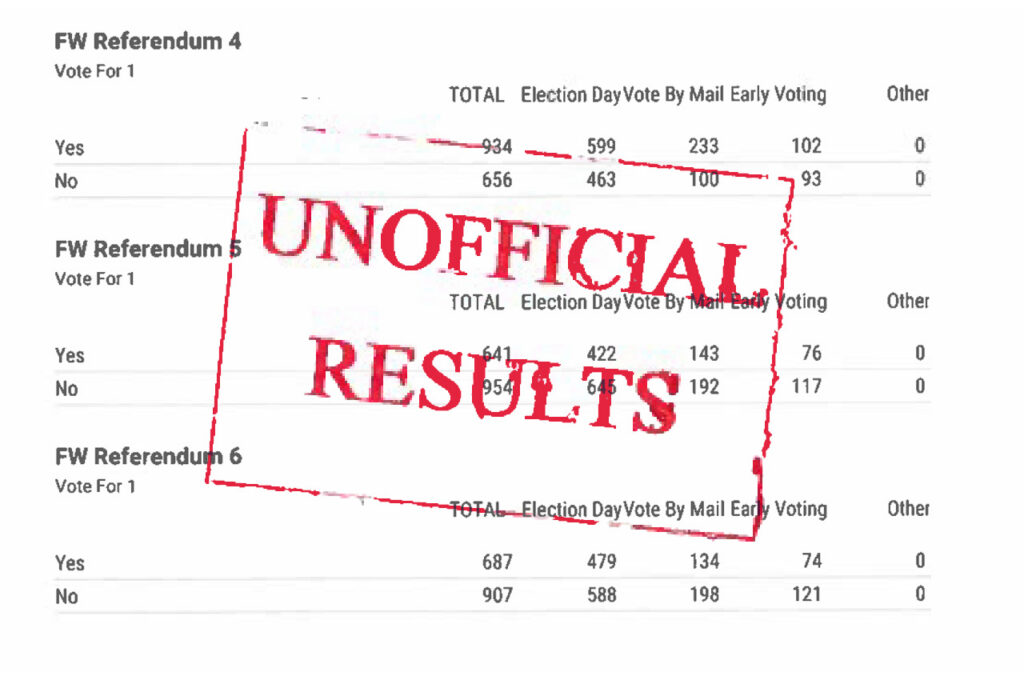
The interview came the same week a circuit court judge granted the Watch Group’s request for an injunction on most of the city’s proposed charter amendment ballot questions from the March 10 election. The ruling allowed questions on moving elections to November and elected official compensation to proceed but found problems with the remaining questions, including the one that would repeal the spending cap.
Ballots have already been printed and early voting begins Monday. There is no way to remove the blocked questions from the physical ballots, so voters will still see them. However, results on the challenged questions will not be published. The judge will hear additional arguments after the election. If the city prevails at a final hearing, the election results will be used. If the Watch Group prevails, they won’t matter.
The ruling represented a partial victory for Smith and the Watch Group, whose January lawsuit argued the ballot language failed to clearly explain what voters were being asked to approve — a requirement under Florida Statute 101.161.
How the cap works
Voters approved the spending cap in November 2024 with more than 60 percent support. Codified as Section 35 of the city charter through Ordinance 2145, it limits annual increases in personnel and operating expenditures to the lesser of 3 percent or the Consumer Price Index. The city can only exceed the cap with voter approval through a referendum.
The cap applies to personnel services across all city funds combined — including enterprise funds like water and sewer — and to operating expenses in the general fund. Capital projects funded through borrowing or unrestricted reserves are exempt, but general fund operating expenses are capped.
- The provision also states the cap can never fall below zero, but it can be zero, meaning in a year where CPI is flat, the city would receive no budget increase at all.
As of January 2026, overall CPI was running at 2.4 percent, according to the Bureau of Labor Statistics. If that figure holds, the cap would limit the city to a 2.4 percent increase — not the 3 percent figure that dominates public discussion. At the same time, BLS data shows electricity costs rose 6.3 percent over the same period, natural gas increased 9.8 percent, and food service costs climbed 4 percent.
Asked how the city is supposed to absorb cost spikes in specific categories within an overall cap of 2.4 percent, Smith said taxpayers face the same problem.
- “Everybody else in the city has to face that same issue,” he said. “We have to pay our electric bill, we have to pay our food. If everybody’s only getting a 2.4 percent increase in their paycheck, they have to live within those means. And the city’s no different.”
Smith said the cap is forcing the city to budget responsibly for the first time.
“They’ve never been constrained before. It’s just a matter of, we can just spend more,” he said. “This is going to force them to budget and force them to live within the constraints that the citizens are living within.”
On whether the cap directly saves taxpayers money on property taxes, Smith clarified his position.
“The cap doesn’t have anything to do with the millage rate. It has to do with spending,” he said. “But what they collect is based on the millage, and that’s where they raise the millage rate to collect. If they have less spending, they’re more likely to have a lower millage rate than they are if they have unlimited spending.”
The city sees it differently.
A white paper produced by City Manager Jason Davis describes the cap’s first six months of operational impacts as creating “a less effective and efficient form of government.” Among the documented effects:
- A canceled fire outreach program.
- Youth sports leagues capping participation and turning away two new programs: youth rugby and paddle boarding.
- The municipal golf course running out of merchandise and range balls mid-season.
- Unrepaired police vehicles and golf carts.
- and more than $100,000 in tree mitigation funds sitting unused because trees are purchased from operations subject to the cap.
Councilman Ben Merrell, in a January social media post, wrote that core city costs like insurance, utilities, labor and materials “routinely rise faster than 3 percent, turning the cap into an automatic cut every year.”
“There is no world where this works,” Merrell wrote. “We have already seen real life examples where we spent twice as much out of a fund not capped because the operating budget was limited by the 3 percent.”
Smith said he doesn’t believe the reported service impacts are real.
“To say that they’re going to have to cut youth league stuff and senior services — that ought to be first on the list,” Smith said, arguing that travel sports programs and outside visitors should be deprioritized. “The citizens are who we should be focusing on.”
What prompted the cap
The Watch Group formed in response to a proposed fire assessment fee that Smith said was designed to generate $2 million in new revenue — not to increase firefighter funding, but to free up $2 million in general fund dollars for other purposes.
- “It was really just a shell game,” Smith said.
The fire fee controversy led the group to examine the broader city budget, where Smith said they found spending growing at 7 to 8 percent annually with much of the growth directed toward parks and recreation programs and new hires.
When asked to identify specific expenditures the Watch Group considered wasteful, Smith pointed to the pace of hiring rather than particular line items.
- “They’ve hired 28 new employees,” he said. “They’re growing the city when we haven’t had any population growth and they’re growing it towards parks and recreation and just building bigger government.”
When the question was revisited, Smith returned to the overall growth rate rather than citing specific line items.
“We can’t sustain a six or seven, 8 percent increase in the budget every year when the people that live here aren’t seeing that on their paycheck,” he said.
At a February council meeting, city staff provided additional context on the hiring figure. Councilman Payne Walker noted the city had gone from 292 full-time equivalents to 320 — a difference of 28 — since the 2015-16 budget cycle.
Of those, 17 were added to the police department. Chief Robert Bage explained the police additions included three community policing officers funded through a federal grant, three to four officers to establish a fourth patrol zone at the request of the council and residents, a quality-of-life officer, and code enforcement personnel who were merged into the department.
- Bage also noted transfers from the Community Redevelopment Agency back to the police department and the addition of mandated school crossing guards — moves that affected FTE counts without necessarily representing new positions.
City Manager Davis noted that tying staffing solely to population growth, as Smith’s argument implies, doesn’t account for the services a city offers. He pointed to park acreage, types of facilities and expanded programming as factors that drive staffing needs independently of population.
The version of the spending cap that ultimately went to voters was already a compromise. According to February 2024 council meeting minutes, the Watch Group’s original proposal was a flat 3 percent cap on the base budget with no exceptions. Over the course of negotiations, the CPI component and a list of exclusions for emergencies, grants, gifts and special assessments were added.
During that same February 2024 discussion, then-City Attorney Kim Kopp included an example charter amendment from Marco Island on the agenda, and Finance Director Nicole Nabors said staff would use the exceptions from Marco Island’s charter as a starting point for creating the city’s own proposed exceptions.
- Nabors warned the council that Marco Island’s charter includes language allowing for inflation adjustments, insurance rate increases, pay scale changes and interest rate fluctuations. Fort Walton Beach’s version lacked similar language, which she said “might hinder city operations.”
Nabors also identified a list of costs the city cannot control during the budgeting process, including debt service, fuel and oil, insurance, software upgrades, contract pricing and legal services. Staff warned that a zero-growth year — possible under the cap if CPI is flat — could mean losing employees and being unable to fund vital operating materials.
City Attorney Jeff Burns noted a critical distinction in that meeting: Marco Island’s cap allows a 3 percent increase and a CPI adjustment, while Fort Walton Beach’s cap is 3 percent or CPI, whichever is less. The Fort Walton Beach version is the more restrictive of the two.
Concessions and limitations
At several points during the interview, Smith acknowledged limitations in the cap’s design.
On the compounding baseline problem, where a department that spends less one year sees that reduced spending become its new cap baseline, Smith initially said it wasn’t an issue because the cap is calculated citywide, not by department.
“There’s no effect on that department the following year because it’s an overall number,” he said.
However, he later acknowledged the concern.
- “We probably could have better worded it,” he said. “There’s stuff in here that probably needs to be modified over time.”
He was most candid about the vacancy problem. When a high-salaried employee leaves and the position sits vacant, the reduced actual spending lowers the following year’s cap baseline.
“That’s the one potential flaw that I can see, which could easily be rectified,” Smith said. “But without throwing out the whole thing — because the people, the citizens, don’t want to throw it out.”
Smith also said that the Watch Group had already carved out an exception during the drafting process after Public Works Director Daniel Payne raised concerns about county wastewater contracts increasing more than 10 percent annually.
- “Daniel Payne came to us and said, ‘I’ve got these particular issues with the county — our wastewater, it’s going to go up X amount per year, more than 10 percent,” Smith said. “We looked at it, we said okay, we took out the operating expenses in the water and sewer department completely to solve those issues.”
However, the ordinance language in Section 35 specifies that personnel services are capped across all funds combined. That means while water and sewer operating expenses were carved out, the employees who maintain that infrastructure — water line workers, sewer crews — still have their personnel costs subject to the cap, even though enterprise funds generate their own revenue independent of property taxes.
The city’s white paper also describes a “use it or lose it” mentality created by the cap, where departments feel pressure to spend their full budgets to avoid a lower baseline the following year. Davis cited the golf course as an example: common industry practice is to send staff home on bad weather days when the course is closed, but under the cap, doing so would reduce year-end spending and lower the following year’s budget.
Smith said he didn’t see that as a real problem, arguing departments have always spent their full budgets anyway.
- “They’re not going to tell you that they’re wasting money. They’ve always spent the money,” he said.
He suggested the city had previously been budgeting for positions “they never intended to fill, just to get extra money” and moving surpluses into departmental contingency funds. At the February council meeting, Davis confirmed he had eliminated those contingency accounts.
Nabors explained that under Florida statute, the city had been budgeting up to 3 percent of revenues into contingency accounts that could be used for budget transfers — roughly $900,000 in the general fund alone. Davis said those funds had historically been used when a council member requested an unplanned project, and that the practice was no longer in place.
The white paper also described a position making less than $100,000 that was outsourced through a contract costing $200,000 — because the salary fell under the cap but the contract did not. Smith said Public Works Director Payne explained at a recent council meeting that the cost increase was related to an unusually high volume of utility spotting due to fiber optic installation work, not the cap itself.
At the February council meeting, Councilman Walker asked Payne about the outsourced flagging contract and the question of whether it shifted liability away from the city. City Attorney Burns clarified that contracting out a function doesn’t eliminate city liability — it creates shared liability with the contractor.
- “The city’s fault doesn’t go to zero,” Burns said. “It could be a hundred percent if the contractor can show that the city was at fault.”
Marco Island
The connection between Fort Walton Beach’s spending cap and Marco Island’s charter provision is documented in the February 2024 council minutes, where then-City Attorney Kim Kopp included an example charter amendment from Marco Island on the agenda and Nabors said staff would use Marco Island’s exceptions as a starting point.
Smith downplayed the connection.
- “The city makes a big argument that it was based on Marco Island, but it wasn’t. That’s just one example that we found out there when we were working on putting it together,” he said.
When told that Marco Island is currently dealing with what its own staff describes as major disrepair of roads, bridges and stormwater infrastructure — with road paving cut from $2 million to $500,000, stormwater work slashed from $3.6 million to $600,000, and a 7.4 percent overall budget reduction — Smith said the comparison wasn’t applicable.
“It is a completely different deal. They have a lot more tax base,” he said. He noted Marco Island is “a very expensive, exclusive island” and said comparisons should be drawn to communities of similar size and demographics.
Smith said he has not closely tracked Marco Island’s outcomes under its spending cap. He acknowledged that the Watch Group’s version is more restrictive — using an “or” structure rather than Marco Island’s “and” — but did not address why a stricter cap would produce better results than the looser version that Marco Island is struggling under.
He also pointed to Destin’s 2 percent millage cap as evidence other cities operate under fiscal constraints. A millage cap limits the tax rate a city can levy. A spending cap restricts how the city allocates the revenue it collects — a distinction Smith acknowledged.
- “The millage cap is how much money they can collect. Spending cap is how much money they can spend,” he said. “If you limit the spending, there’s no need to collect money that you can’t spend.”
Police and priorities
Smith’s most detailed fiscal argument centered on the police department — and it’s one that has drawn significant attention in council chambers as well.
Smith said Fort Walton Beach spends $9.5 million annually on policing compared to Destin’s $3.3 million for contracted sheriff’s services, despite the two cities covering nearly identical geography — 7.3 square miles and 7.1, respectively — and Destin taking more calls.
“That’s the biggest thing that’s jumped out at us,” Smith said.
The comparison has become a recurring point of debate. At a February council meeting, Councilman Walker laid out those same numbers. He noted that Destin handled approximately 36,000 calls compared to Fort Walton Beach’s 31,000, and did so with 21 officers compared to the city’s 53.
Chief Bage pushed back on the comparison, telling the council that Destin is “heavily subsidized by Okaloosa County” through the sheriff’s office. He said an article he shared with Walker showed approximately $1.5 million in additional salaries not charged to the Destin contract and pointed to Panama City Beach — which spends $19 million on policing — as a more realistic comparator.
- “Destin is an anomaly,” Bage said.
Bage also noted that the police department’s FTE count includes civilian personnel, dispatch, crime analysts and mandated school crossing guards — not just sworn officers. He told Walker that the department had actually been larger around 2010, was downsized by about 15 positions, and is now getting back to those earlier numbers.
Smith acknowledged the subsidy argument but saw it differently.
“Chief Bage got up and explained at the meeting that Destin’s heavily subsidized by Okaloosa County. That’s the point Payne’s been trying to make all along — we should be subsidized by the county,” Smith said. “That’s the perfect argument for consolidation.”
Smith said he wouldn’t push for police consolidation without putting it before voters.
- “I would never suggest that it goes away without putting it before the people,” he said. But he added: “Put the number out there. Everybody’s going to say they want the police department. But if you say, we can save $5 million if we contract with the Sheriff’s Department and they’re going to promise us 25 extra officers dedicated to this area — what’s it worth?”
Davis, at the same February meeting, offered a different framework for evaluating police costs. He noted that staffing should be tied to the services a city provides, not just population. The city’s service population — the number of people who work, shop, visit and travel through Fort Walton Beach on a given day — far exceeds its residential population of roughly 22,000.
Bage reinforced the point, telling Walker that the city’s land usage is roughly 50 percent residential and 50 percent non-residential.
“We were not the police just for the 22,000 people,” Bage said.
Financial transparency
Smith reserved some of his sharpest criticism for the city’s financial reporting practices.
“What business that has a $65 million budget would not have their board of directors looking at financial statements?” he said.
Smith said the city does not produce monthly financial statements for the council, and that Finance has attributed the gap to software limitations.
- “They had no restrictions on the budget,” Smith said, referring to the past 4-5 years. “They could have got the software, but they haven’t made any effort.”
At the February council meeting, Nabors and Davis provided additional context. Davis said the city’s current system is a DOS-based platform he “hasn’t personally seen since 1999” and that it is not physically capable of producing the kind of reports Destin generates. Nabors confirmed the city does produce Excel-based financial spreadsheets that are posted on the city’s website, created by the Comptroller. She also noted the city had saved $16,000 annually by canceling a ClearGov transparency module that “kept giving the wrong numbers.”
Davis said a new finance enterprise software system is being built out.
Smith contrasted the city’s practices with Destin, where he said the finance director provides monthly statements in council packets. He said he requested financial data from Nabors and she provided numbers — but only after having the controller produce them separately, rather than pulling from existing reports.
Smith said his own finance director, who previously worked as an assistant finance director for Fort Walton Beach more than 20 years ago, told him the city always presented financial statements to the council during her tenure.
The lawsuit and the ballot
The Watch Group’s lawsuit, filed Jan. 14, challenged the ballot language on five charter amendment ordinances the council adopted Dec. 16, 2025. The suit argued the ballot questions failed to meet the requirements of Florida Statute 101.161, which mandates “clear and unambiguous” explanatory statements of each amendment’s chief purpose.
Smith said his objection is not to the council putting a repeal before voters.
- “They certainly have the authority to do it,” he said. “They just need to make it clear what’s happening, and then if they can sell the voters on their way.”
He took particular issue with the ballot language for Question 6, which would repeal the spending cap. The question included the phrase “which does not limit increases to property tax millage rates” — language City Attorney Jeff Burns confirmed at the Dec. 16 meeting was not recommended by the Charter Review Committee but was added at staff’s request.
“There’s nothing in Section 35 that even mentions millage rates,” Smith said. “They could have spent their 75 words explaining what Section 35 did and what removing it will do. But they didn’t.”
Smith said the Watch Group’s broader concern extends beyond Question 6. He pointed to Question 4, which proposes changes to city operations and officer duties, as an example of vague ballot language.
- “Within that charter amendment, they have an amendment that says the fire and police must be maintained with city employees, not outsourced,” Smith said. “And it doesn’t even have the words fire, police in the language.”
At the Dec. 16 meeting, Smith objected to the ballot language on all the ordinances. Burns responded briefly: “I disagree.”
“He responded real quick to me,” Smith said. He noted that later in the meeting, council members Bryce Jeter and Payne Walker asked Burns additional questions, and the attorney “went in depth” defending the language.
Smith also criticized the timing of the election, saying the Charter Review Committee itself recommended against placing the questions on a special election. The city has argued the March 10 date falls within its municipal election cycle, but Smith noted there are no council candidates on the ballot.
“There’s no candidates running,” he said. “This is an odd timing.”
On Feb. 27, a circuit court judge sided with the Watch Group in part, granting an injunction that put most of the ballot question results on hold while allowing the election and compensation amendments to proceed.
Ballots have already been printed and early voting begins Monday, March 2. The questions will still appear on the ballot, but results will not be published. The judge will hear additional arguments after the election, and the final ruling will determine whether those results are ever counted.
Looking ahead
Smith said the Watch Group is open to modifying the cap over time.
“I’ve already worked up some modifications,” he said. “But we’re not open to throwing it out.”
Asked what he’d cut if he were setting priorities, Smith said the city should focus on core services — “the fire, the police, the garbage, the roads, the infrastructure” — and stop growing staff for parks and recreation programs that primarily serve nonresidents.
He also suggested the city could reduce its workforce through technology.
- “I think with AI and the different stuff going on, they could actually probably reduce the number of people that they have,” he said. “They’ve got eight or 10 people under Nicole doing accounting. That seems like a lot of people to me. I don’t know the firm answers, but that’s why we got a high paid city manager.”
“Don’t hire four more people to clean up the fields over there,” he said, referring to the Preston Hood Athletic Complex expansion. “Or we charge more money to the people coming in from out of town to make that an enterprise deal. If it’s going to be something that’s intended to bring people in from out of town, make it self-supported.”
He said the city’s approach in recent years represented a departure from decades of stable governance
“For years the city wasn’t increasing 6, 7, 8 percent every year. For years and years we didn’t do that,” he said. “And then all of a sudden, we started this big buildup — we’re going to build a new city hall, we’re going to build the complex down on Jet Drive.”
Smith said infrastructure should be the city’s top priority. He noted the city has roughly 110 miles of clay sewer lines and “failing storm drains.” He said most of that work would qualify as capital expenditures that could be funded through borrowing outside the cap, but said the city avoids general obligation bonds because state law requires putting them before voters in a referendum.
- “They don’t want to do general obligation bonds because by law they have to go to referendum,” Smith said. “So they try to do everything they can to not put it out there before the people.”
He continued.
“You need to fix the infrastructure before you start trying to put pretty on top of it,” he said, referring to recent paving.