
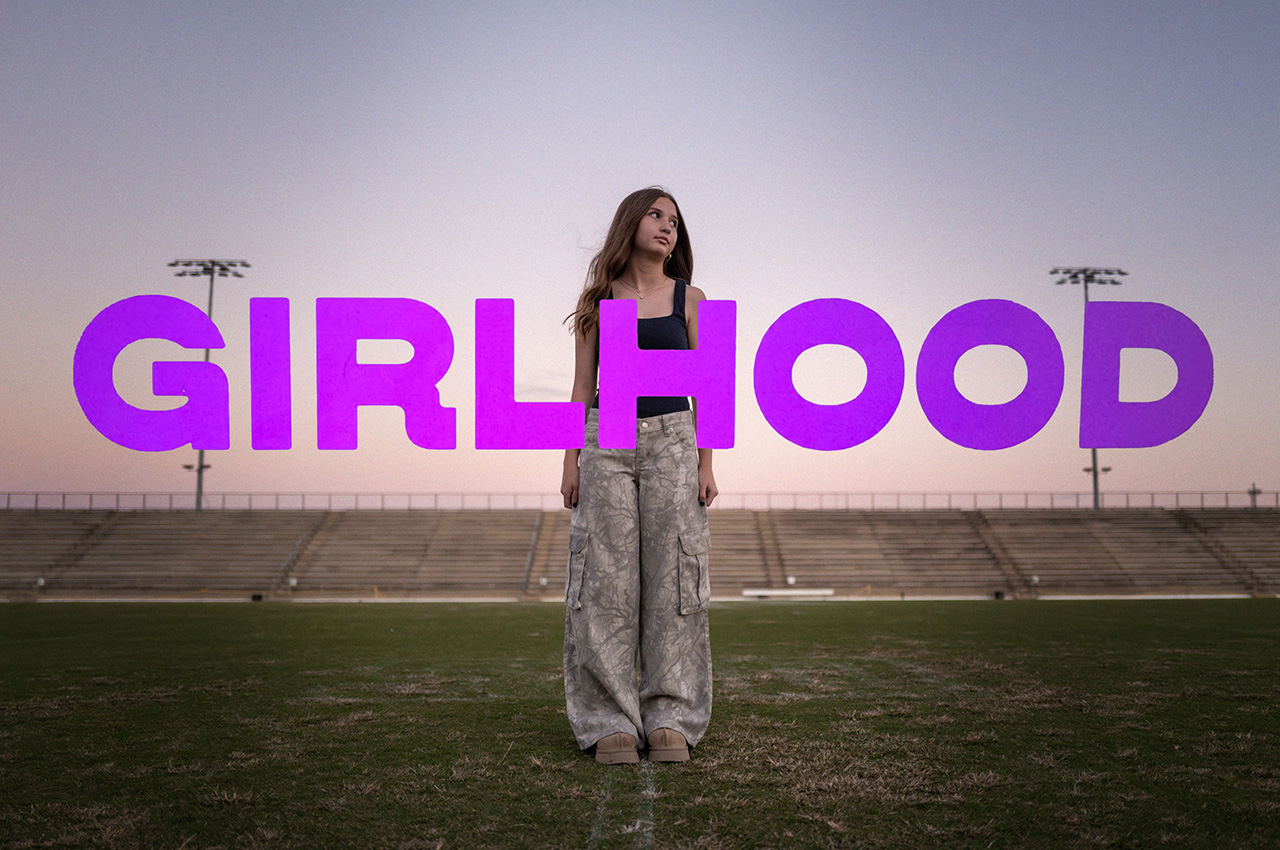
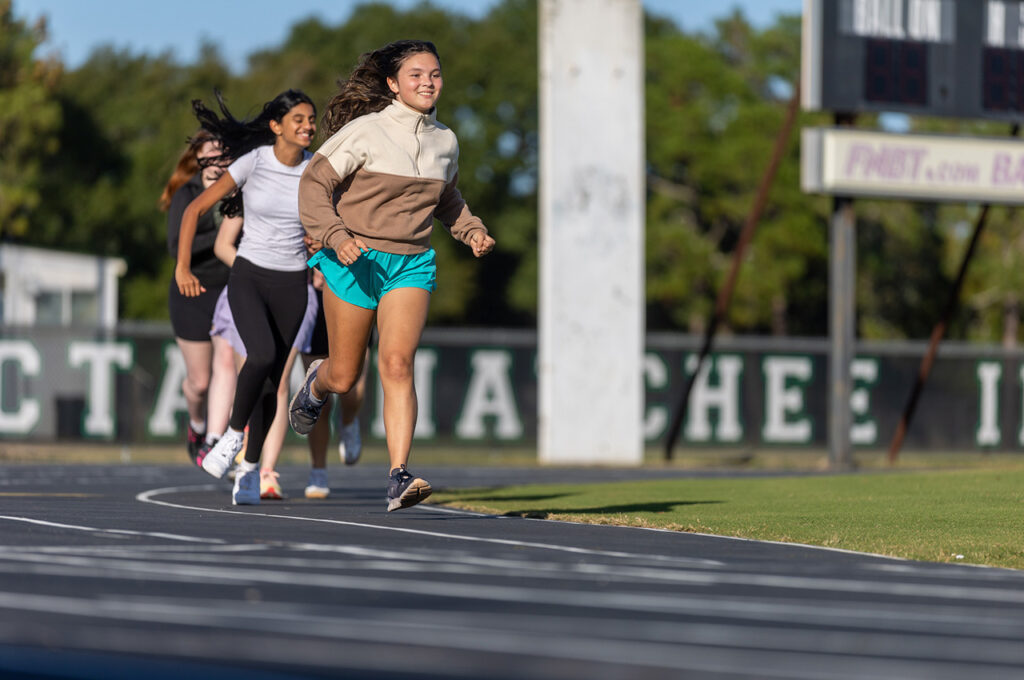
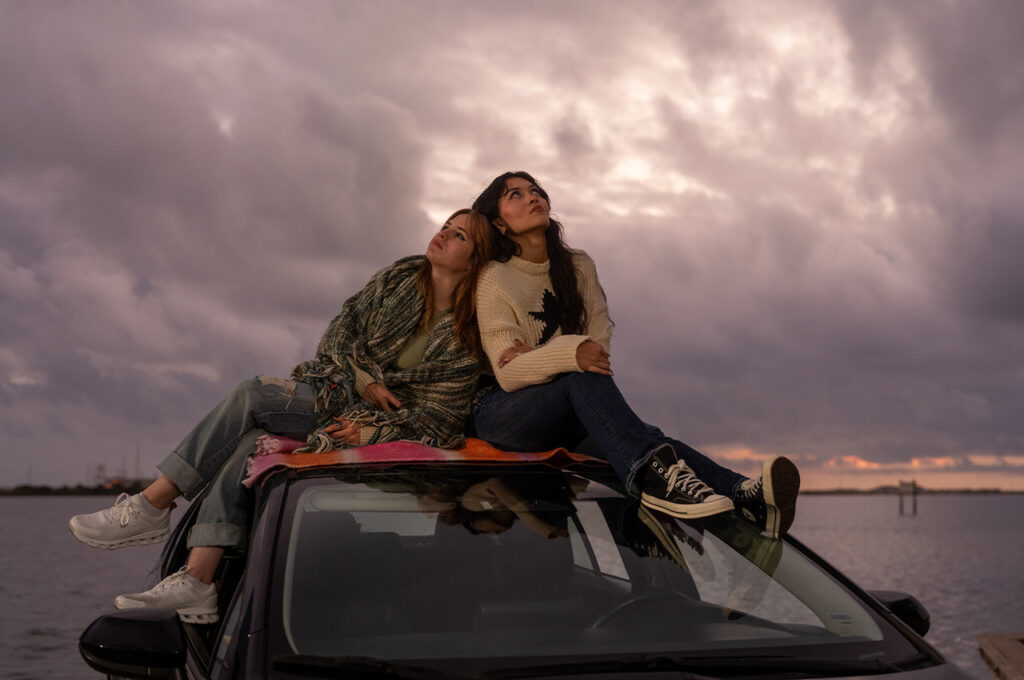
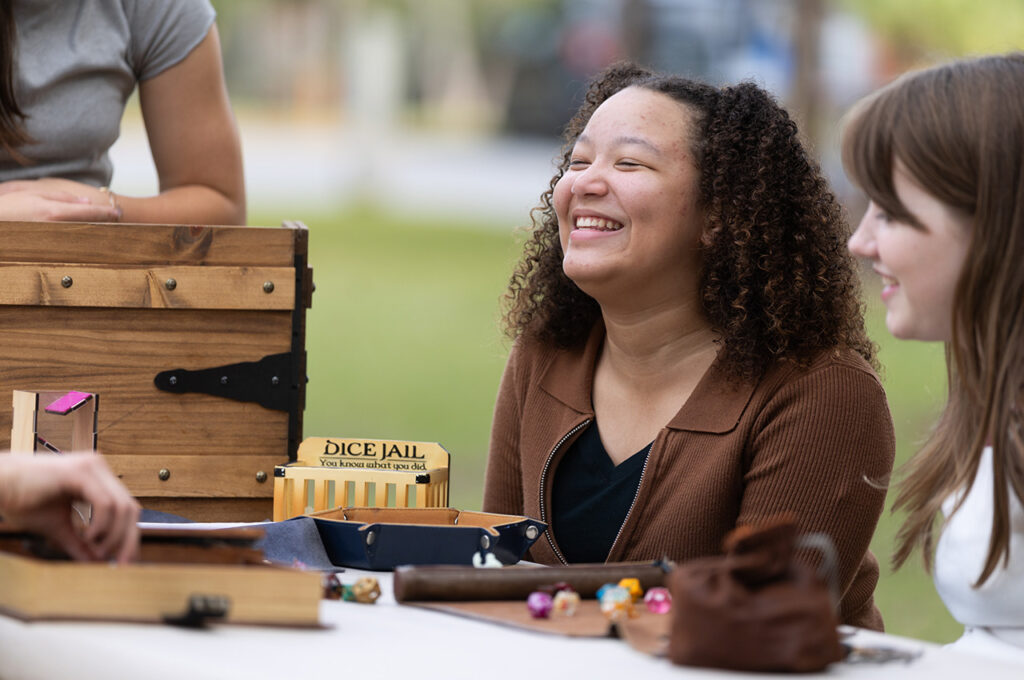
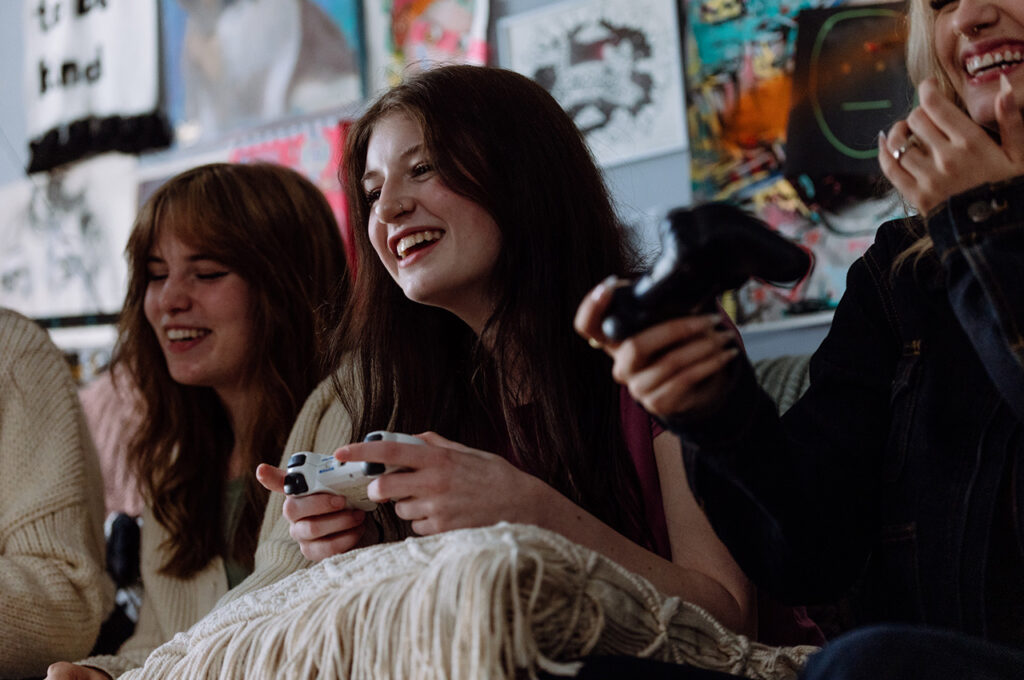
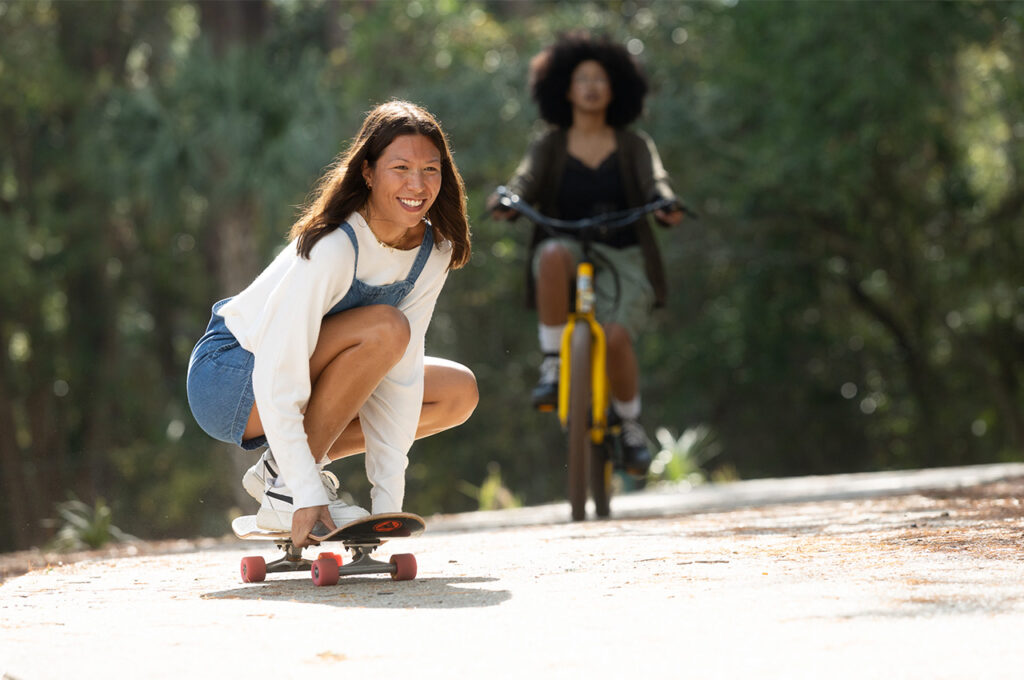
While the voiceovers belong to real survivors of sex trafficking, the images — girls at roller derby practice, playing Dungeons & Dragons, scrolling through their phones, just being young — were captured entirely in Fort Walton Beach.
- “Protect Girlhood,” a national awareness campaign for the SHERO Foundation, launched Tuesday across television, digital platforms and out-of-home advertising. The project pairs those audio testimonials with footage showing the ordinary beauty of growing up – sleepovers, sports, friendship – all the things exploitation steals away.
A San Francisco advertising agency created the concept. But a three-person production company based in downtown Fort Walton Beach made it real.
Gannet Creative House – photographer Sean Murphy, cinematographer Tyler Trant and producer Skye Howard – had been in business for barely a month when Duncan Channon approached Murphy about shooting still images for the campaign. Murphy, who had worked with the agency for 15 years on projects for clients like Hard Rock Cafe and Kona beer, made a counteroffer.
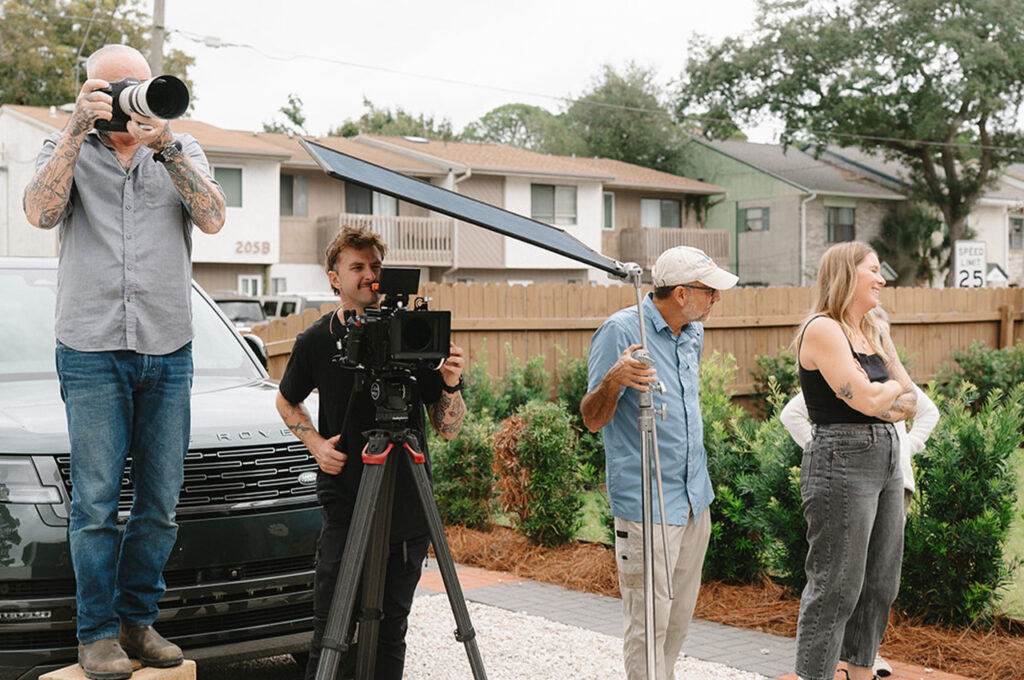
“I said, as luck would have it, we just started this team,” Murphy recalled. “Would you be interested in letting us try to shoot it here locally in Florida? And we can handle the video portion too?”
The agency was skeptical. They worried the footage would look too Floridian, with palm trees and beaches, when they needed something more universal. They questioned whether the area could provide the diversity of talent and locations their shot list required.
- “They want it to look more universal,” Murphy said. “Can we get the diversity that we need?”
Gannet exceeded every expectation. On zero budget.
The agency had provided a master wishlist of scenarios they hoped to capture. They told the Gannet team afterward they’d been hoping for 25 to 30 percent of that list.
“You gave us 150 percent,” Trant said the agency told them. “Stuff that we didn’t even think about.”
The four day shoot
The four-day shoot pulled together locations across the area, transforming familiar spaces into a universal backdrop for American girlhood.
Choctawhatchee High School became a centerpiece. Principal Michelle Heck spent a Saturday giving the crew full access to the campus – the hallways, classrooms and facilities that would appear in the national campaign.
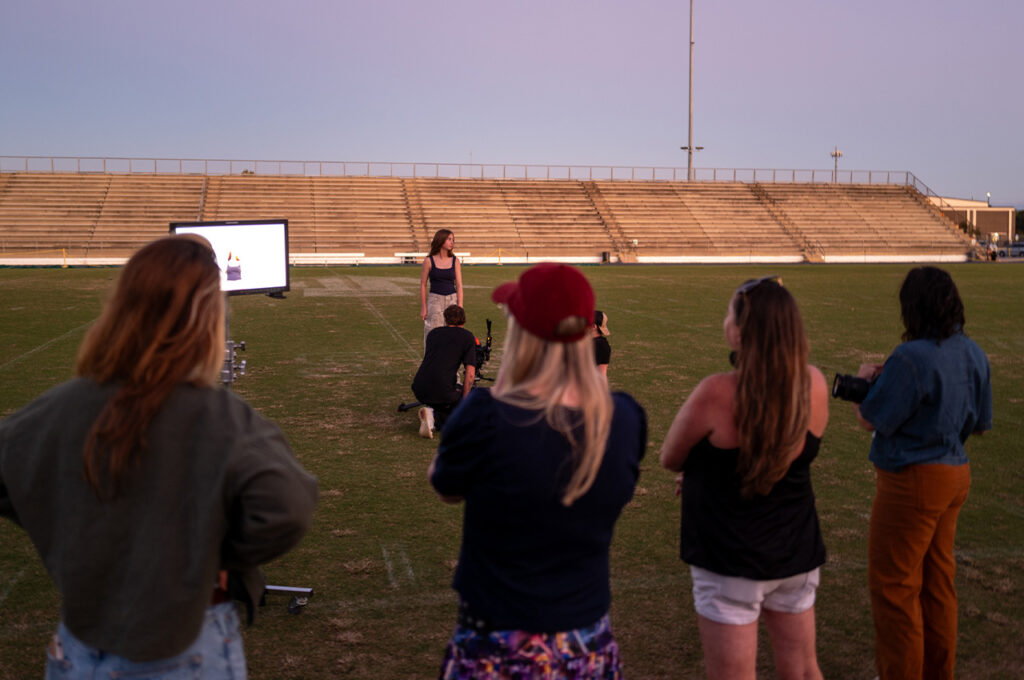
For Murphy, who graduated from Choctaw and grew up in Fort Walton Beach, the homecoming carried extra weight.
- “I was voted most likely to be in prison,” he said with a laugh. “No one thought I would ever make anything of myself. I thought it was nice to go back on this positive kind of note and reconnect.”
Murphy had left the Emerald Coast for a career in Los Angeles, spending decades shooting campaigns across the globe before returning home. His California colleagues never quite understood the move.
“They thought, what are you doing going to Florida?” Murphy said. “That’s insane.”
Now he was bringing those same colleagues here by way of video, showing them the community he’d chosen to return to.
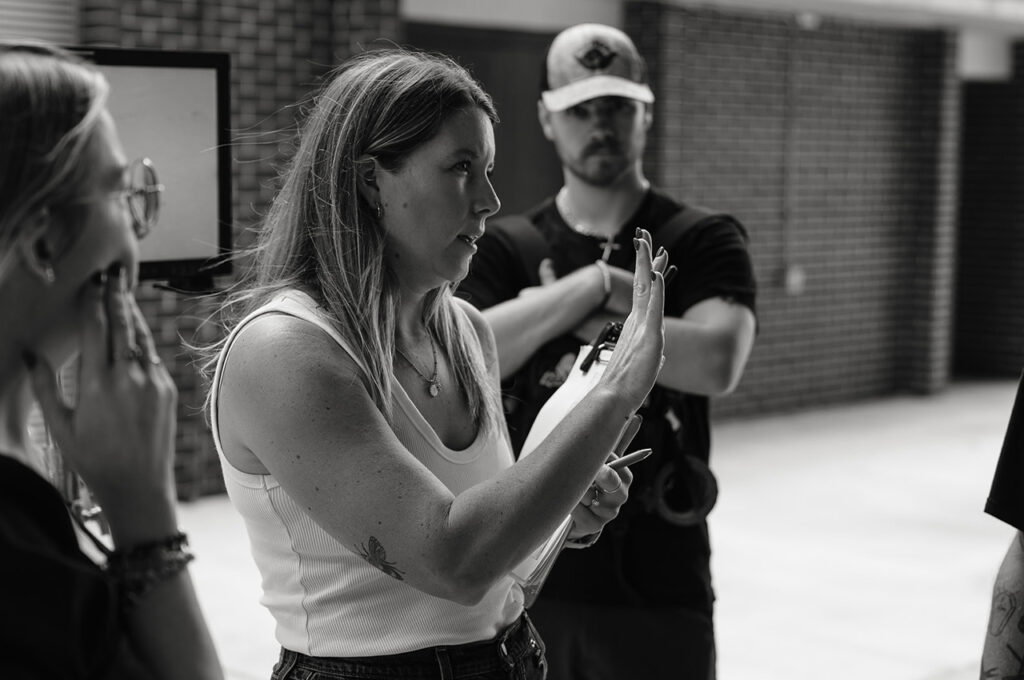
The Fort Walton Beach Junior Bombers roller derby team delivered one of the shoot’s biggest surprises. The agency had asked for two or three skaters. Amy Weiseman and Nicci Starks Lee brought the entire team, with everyone signing releases and letting cameras capture an actual practice.
- “The agency was blown away,” Howard said. “They couldn’t believe that we were able to deliver the entire roller derby team.”
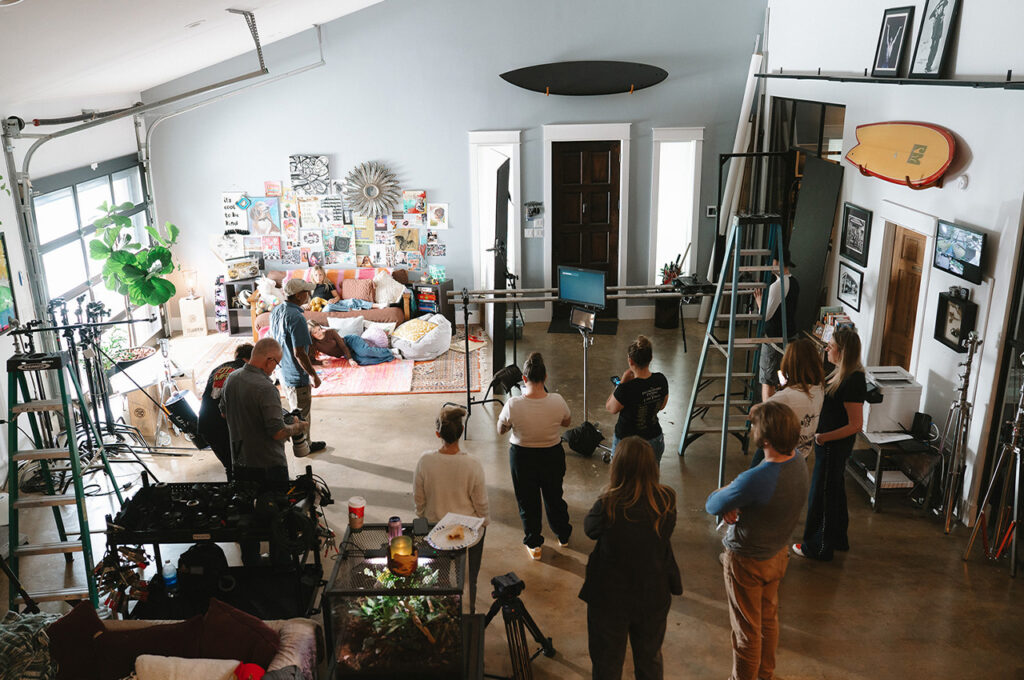
Howard’s parents, Rob and Michele Bailey, offered their home for pool and bedroom scenes. A stylist flew in from Nashville to transform a loft at the studio into a teenage girl’s room and a living room gaming setup. Ferry Park became the backdrop for skateboarding and biking shots. Liza Jackson Park hosted another setup.
Harbor Docks’ Eddie Morgan and Helen Back Pizza’s Chris Sehman donated food to feed the crew.
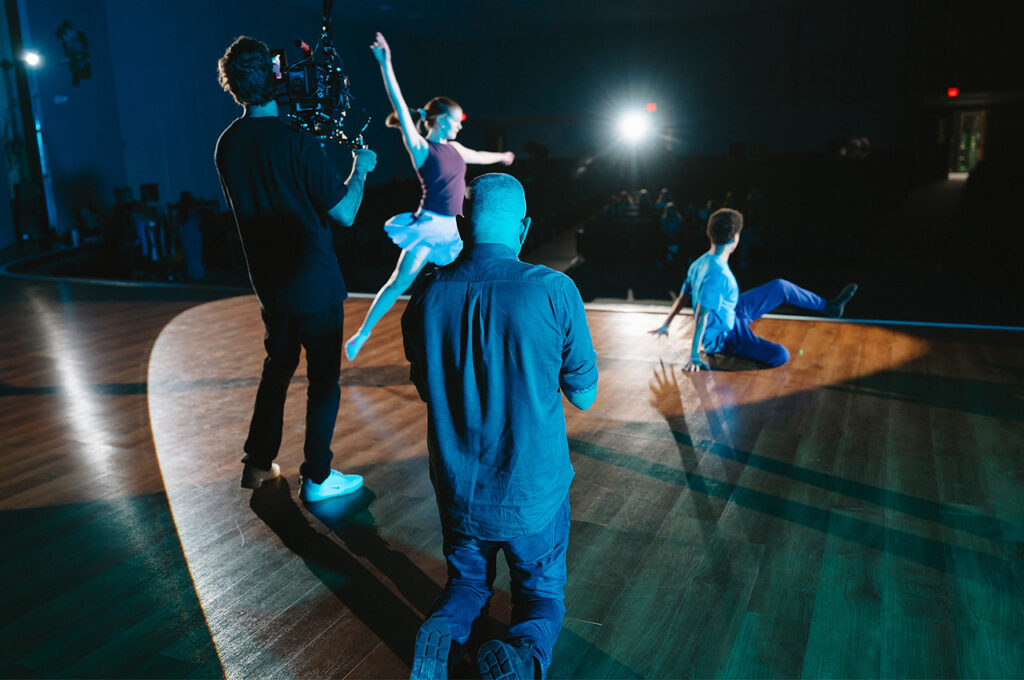
Beach Weekend’s Jayme Nabors provided lodging for the visiting art director from San Francisco, while his daughter Camilla also appeared in the footage. Mosaic Theatre Company’s Kailey Madison connected the production with young performers, many of whom appear throughout the campaign.
- “A lot of the girls that were a part of this piece are in theatre and were really excited to be in this campaign,” Howard said. “That was really cool for me to see – just the amount of talent that we have in the area.”
The City of Fort Walton Beach helped with permitting. Film Commissioner Gail Morgan provided support throughout.
“I think the cool thing about this for all of us is it’s a great way to connect more with people we normally maybe wouldn’t connect with,” Murphy said. “It just makes our world smaller and tighter here.”
The pitch to parents
The hardest part wasn’t logistics. It was the pitch.
“Can I use your daughter for a sex trafficking campaign?” Murphy said. “It’s a rough pitch.”
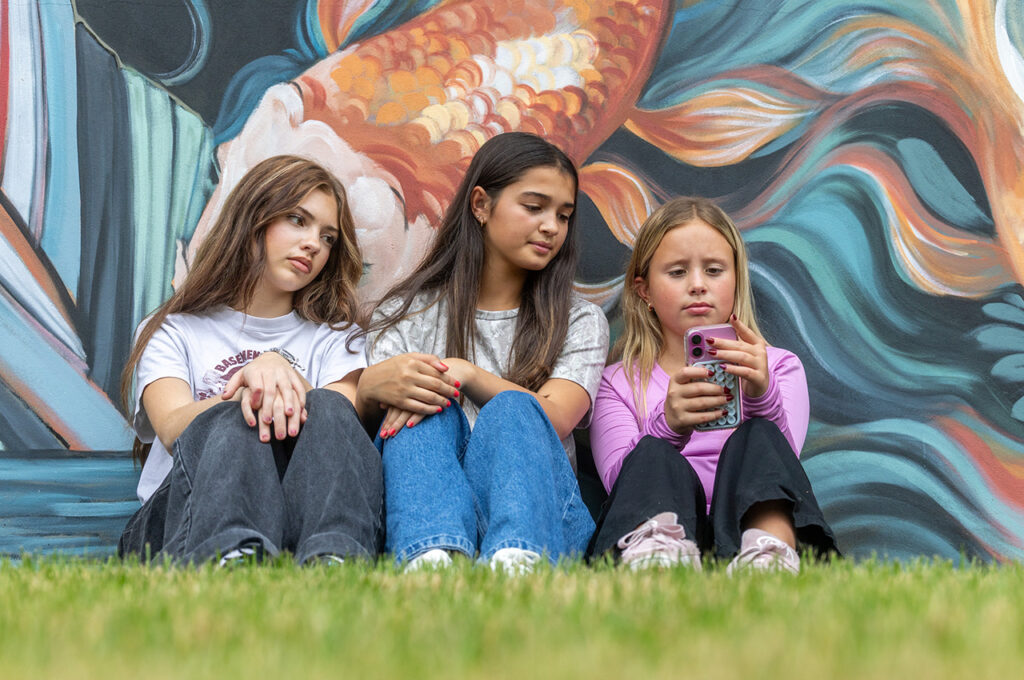
The subject matter made every conversation delicate. Howard found herself approaching parents of young girls, explaining that yes, this was about trafficking, but no, the imagery wouldn’t be dark or disturbing.
- “It’s hard to approach parents and say this is for a good cause without people immediately turning away,” Howard said. “But after speaking to a lot of people and talking about the cause, they opened up very quickly to being part of it.”
The campaign’s creative approach made those conversations easier. Rather than depicting the horrors of trafficking, “Protect Girlhood” shows what girls lose — the small, vivid moments of an ordinary adolescence.
“It shows what they’re missing out on if they get sex trafficked, what their life should be like – how beautiful girlhood is,” Howard said. “I think it’s such a beautiful campaign.”
The concept also educated the team itself.
“I didn’t realize in this modern day, how they’re getting girls,” Howard said. The campaign addresses how predators slip into direct messages, how exploitation doesn’t always look like kidnapping. “It was eye-opening for me too.”
The I-10 corridor running through Northwest Florida has long been identified as a trafficking route, making the campaign’s local connection more than coincidental.
Zero budget
What could have easily been a quarter-million-dollar production in California came together for roughly a thousand dollars out of pocket – mostly lost Amazon return boxes, Trant joked.
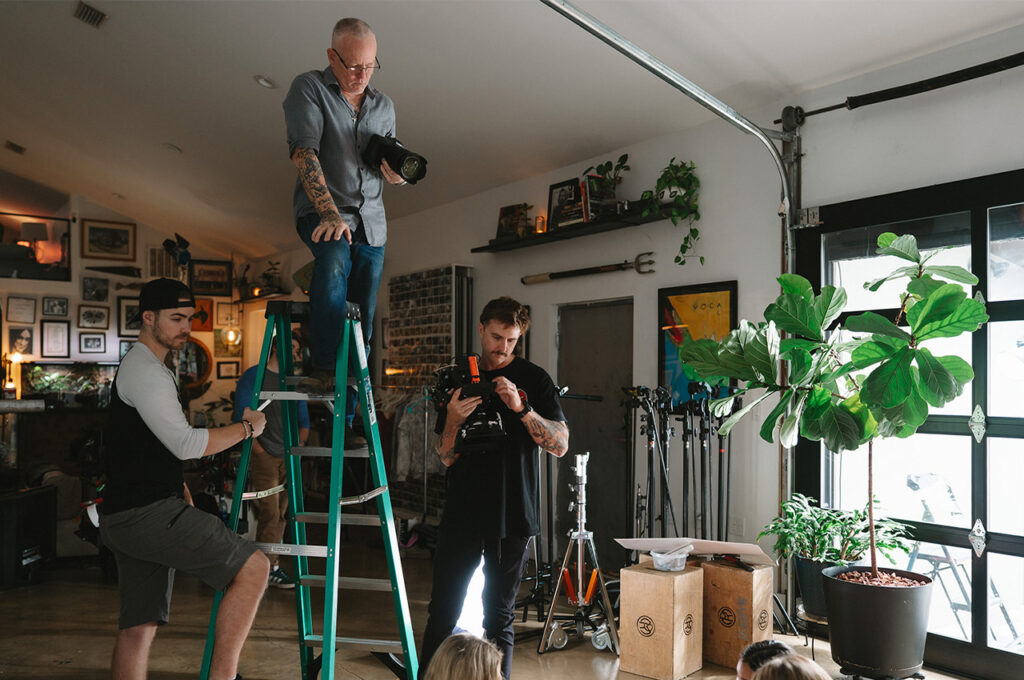
The crew numbered 9 people total. Kevin Almodovar served as gaffer, bringing professional lighting that elevated the footage to agency standards.
- “Without him gaffing and lighting this, and making us look good to the clients, it would’ve looked a little Mickey Mouse,” Murphy said. “He made it look real.”
Ian Lovin worked as assistant camera. Jen Deeb captured behind-the-scenes content — nearly 500 video clips that Howard later reviewed, the scope of the project finally hitting her as she scrolled through the footage.
Howard’s brother Austin flew in from Atlanta. Originally he was just supposed to help set up an authentic Dungeons & Dragons scene as nobody on the crew knew the game.
- Austin ended up working as a production assistant throughout the shoot. He fell in love with production in the process.
The final edit was handled by professionals in New York. Sound design came from Los Angeles. The voiceover was assembled from interviews with real survivors. But the raw material – every frame of footage – originated in Fort Walton Beach.
“I can really do this.”
For Trant, seeing his footage cut by a world-class editor was a revelation.
“Normally I shoot and edit a lot of my footage,” he said. “But then – knowing that somebody else is going to watch my footage – you get a little self-conscious about it. But then when you see it all put together, I said ‘oh shit. I did pretty good.’“
He watched the finished piece about a hundred times.
- “It was one of those eye-opening experiences,” he said. “I can really do this.”
Howard still tears up every time.
“I can’t watch it without crying,” she said. “It means a lot for just how impactful the piece is, but also just what it means for our team.”
When the shoot wrapped, she and Trant sat down over coffee. The immediate takeaway was that they really did. The team pulled it off flawlessly.
Murphy, the veteran of the group, understood what the project meant for his younger colleagues.
“It was a great opportunity for all of us, and especially Tyler and Skye, to be on a giant shoot that maybe wouldn’t happen this soon for our company,” he said. “At that level – shooting with a giant ad agency, with world-renowned art directors, and then having them take his footage and passing it off to a world-renowned editor in New York City and a sound design person in Los Angeles. His work gets to be touched by greatness.”
Six Degrees
The campaign is part of Purpose Produced, an initiative from SixDegrees.org — the nonprofit founded by actor Kevin Bacon in 2007 – that pairs advertising agencies with organizations fighting social issues.
Duncan Channon was matched with the SHERO Foundation, a Las Vegas-based nonprofit established in 2015 that works with sex trafficking survivors and runs prevention programs for at-risk youth.
- Six agencies participated in the inaugural year, each paired with a different cause. The Duncan Channon team told Gannet they were confident their work would stand out.
“Protect Girlhood” will appear on bus stops, digital billboards and screens nationwide. When it does, Fort Walton Beach will be tagged in the credits – along with every restaurant, school, theater company and family that made it happen.
From FWB to anywhere
The success of the SHERO project has opened doors to new opportunities, with Gannet now fielding inquiries for campaigns that could take them across the country.
But the larger goal isn’t to dominate the local market. It’s to grow alongside it.
Murphy is careful about how the team is perceived among the area’s creative community. As a photographer with three decades of global experience, he knows what it might look like when someone with that resume sets up shop in a smaller market.
- “I don’t want people worrying about us taking their work,” Murphy said. “We’re not trying to do that. We’re going after things outside of here, and if we can shoot some of it locally, great. If not, we’ll travel.”
What Gannet wants to build is something more collaborative. The SHERO shoot proved how much talent exists in Northwest Florida in just those four days. Murphy sees the company’s role as adding to that ecosystem, not extracting from it.
“We can all help each other,” he said. “We’re willing to be part of other people’s teams here locally, just like people helped us.”
When local creatives need extra hands, Gannet wants to be a resource. When Gannet lands a big project, they want to bring others along. The SHERO shoot did exactly that — aspiring videographers and photographers showed up, asked questions, and watched how a professional production operates.
- “That’s why I think we had so much success with SHERO – because we made a few phone calls and people jumped at the chance,” Trant said.
The team recently sat down to map out where they want to go. The answer was unanimous: bigger projects, more ambitious work, the kind of campaigns that prove what’s possible from this corner of Florida.
“There’s a lot of eyes on us right now as a company here locally,” Trant said. “And we do what we can to bring people in who are the right fit for the job.”
Next up
On Feb. 6, Gannet will screen the campaign at a Greater Fort Walton Beach Chamber of Commerce breakfast. Hundreds of local business leaders will see what a handful of creatives accomplished with no money and a lot of community support.
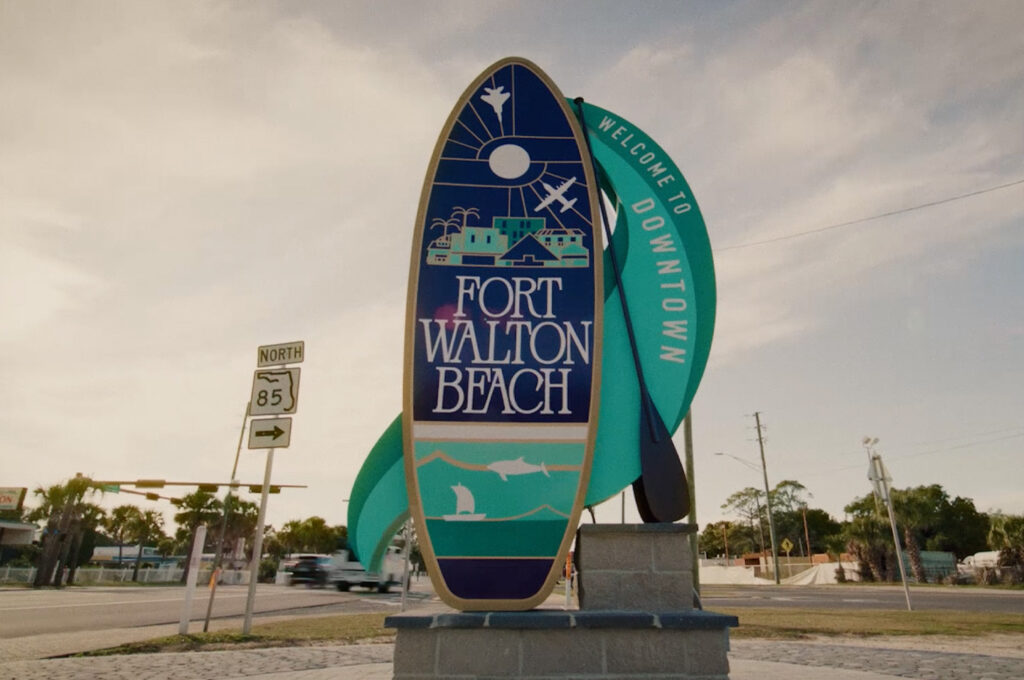
They’ll also see a second piece – a promotional video about downtown Fort Walton Beach that Gannet produced around the same time, drawing on many of the same relationships forged during the SHERO shoot.
- Murphy had pitched it as a passion project before any agency came calling. He wanted to capture the energy of a downtown in transition – the restaurants, the food trucks, the emerging vibe.
That piece, too, came together through donated time and community goodwill.
“We’ve had a ton of pro bono work,” Murphy said. “But it’s going to be great for business in the end. And we got to do it on our own terms.”
Four days. Nine crew members. Zero budget. And now a national campaign that you’d never know was shot in Fort Walton Beach.
That was the whole point.
Watch
Gannett Creative House crew: Producer/Casting Director Skye Bailey Howard; Photographer Sean Murphy; Cinematographer Tyler Trant; Gaffer Kevin Almodovar; Social & BTS Jen Deeb; Assistant Producer Jen von Nida; Set Designer Kaitlyn Bausch; PA Austin English; AC Ian Lovin.
Community contributors: Eddie Morgan, Harbor Docks; Chris Sehman, Helen Back Pizza; Keith and Megan Water, AJ’s on the Bayou; Michelle Heck, Choctawhatchee High School; Jayme Nabors, Beach Weekend; Rob and Michele Bailey; Amy Weiseman and Nicci Starks Lee, Fort Walton Beach Junior Bombers; Gail Morgan, Film Commissioner, Destin-Fort Walton Beach; Kailey Madison, Mosaic Theatre Company; Marissa Vita; Sheetal Vita; Alex Mottern; Jessica Murphy; Kyle Howard; Keelie Carroll; Northwest Florida Production Services Association; City of Fort Walton Beach.

3 Responses
Spectacular production and message!!! Congratulations! This community is so blessed to have such talented, generous and compassionate professionals being right here!!
Thanks for the article. I have forwarded it to our daughter Alison who founded a nonprofit called Anew in Gainesville FL over 14 years ago whose mission is to restore women who have been impacted by sex trafficking and sexual exploitation throughout Florida and other states. Extra special connection since Alison grew up in FWB and is a Choctaw grad. Thanks for shining a light on this important issue.
This is fabulous. I’m so proud of Sean and his crew ❤️