A Niceville mother and Shalimar Elementary School teacher has published a children’s book that tackles bullying from an angle rarely explored in educational literature — through the eyes of the bully.
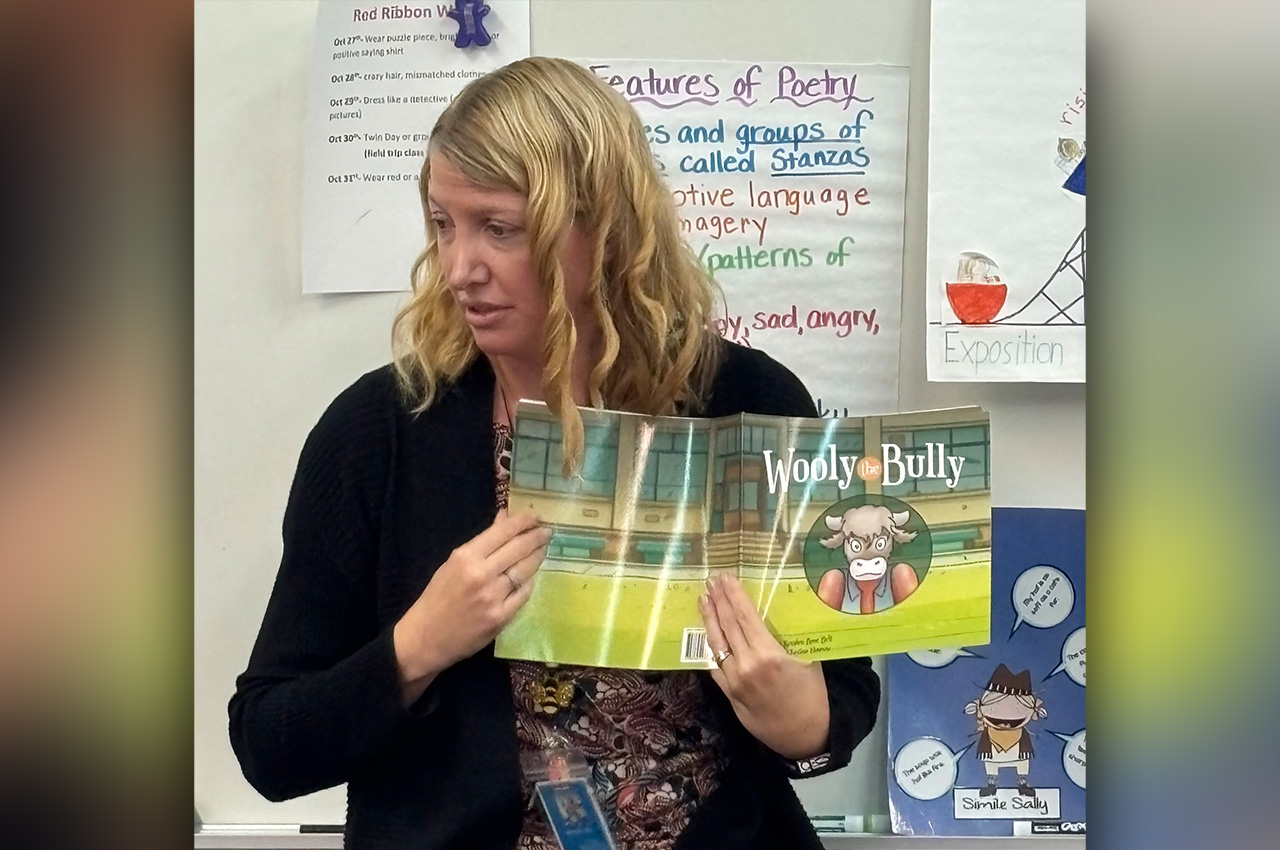
- Kendra Bell, a fourth grade reading teacher at the Title I school and mother of three school-aged children, published “Wooly the Bully” in September after witnessing traditional disciplinary approaches fail to address the root causes of bullying behavior.
“I have taught many children that have been identified as a bully and were administered punishments for their actions like in-school suspension or referrals,” Bell said. “These punishments were definitely warranted, however, they didn’t seem to stop the bullying itself. What the children really needed in order to change their ways was some self reflection on why they felt the need to hurt others.”
Bell, who has seven years of teaching experience including previous work in special education and first grade, said her personal history as a bullying victim informed her approach. She underwent surgery to repair retinas in her eyes after being beaten up as a child.
“I was bullied as a child, but I was also beaten up,” Bell said. “Going through that, I knew I wanted to become a teacher and I wanted to stop bullying.”
The book tells the story of Wooly, a Highland cow who bullies classmates because he cannot read or write and feels embarrassed about his academic struggles. When a chimp befriends him, Wooly learns to seek help from teachers and parents instead of lashing out at others.
- “Bullies are not always born mean,” Bell said. “There’s something going on in their life. When I was growing up, I was told, ‘oh, it’s not, it’s them.’ That wasn’t enough.”
After improving his own behavior, Wooly helps Paula the Possum, who steals lunches from other students because she is hungry. Wooly organizes student donations to provide her with food. The book also features Harry, a hippopotamus adopted by rhinos who struggles to control his anger.
Bell said she carefully crafted the rhyming book to explain bullying without condoning it.
“I wanted to make sure students understood,” Bell said. “I wanted to make sure I did it very carefully without condoning bullying.”
The writing process took six months after Bell was inspired by a visiting author at Shalimar Elementary who encouraged teachers to write. Publishing took another six months.
- “I picked up a pencil that night and I started writing my book,” Bell said.
Bell has shared the book with multiple classrooms at her school and said students connect with the characters. When one fourth grader complained about name-calling, Bell used the book’s framework to redirect the conversation. The student concluded that the other child likely had problems at home and said she needed to pray for her.
“When I pass by, they say, ‘you’re the book author, I love Wooly,’” Bell said. “They ask questions — they connect with the characters.”
The oldest of seven children with a psychology degree, Bell said understanding the psychological factors behind bullying behavior shaped her educational approach.
- “It wasn’t until I became a teacher that I actually understood what this meant,” Bell said. “Adding this in with some support – counseling, peer groups – with the issues they are experiencing often made the most difference in their lives.”
Bell created lesson plans aligned with Florida ELA standards for teachers who want to use the book in classrooms. The book is available on Amazon and includes a song written specifically for Wooly’s story. Bell offers read-aloud sessions at schools and donated a book to the Greater Fort Walton Beach Chamber of Commerce for a charity gala.
Bell is seeking corporate sponsors to donate read-aloud sessions and books to local schools. Interested parties can contact her at woolythebullybooking@gmail.com. She maintains a Facebook page for the book where followers can track her reading schedule.
Bell plans to donate book proceeds to anti-bullying campaigns. She said she plans to continue writing social-emotional learning books that teach important lessons in engaging ways and address topics not commonly covered in children’s literature.