
Family visits often reveal difficult truths about aging loved ones. Adult children checking in on parents may discover they’re struggling in ways they never anticipated —- perhaps falling victim to financial scams, showing signs of cognitive decline or making decisions that put their safety at risk.
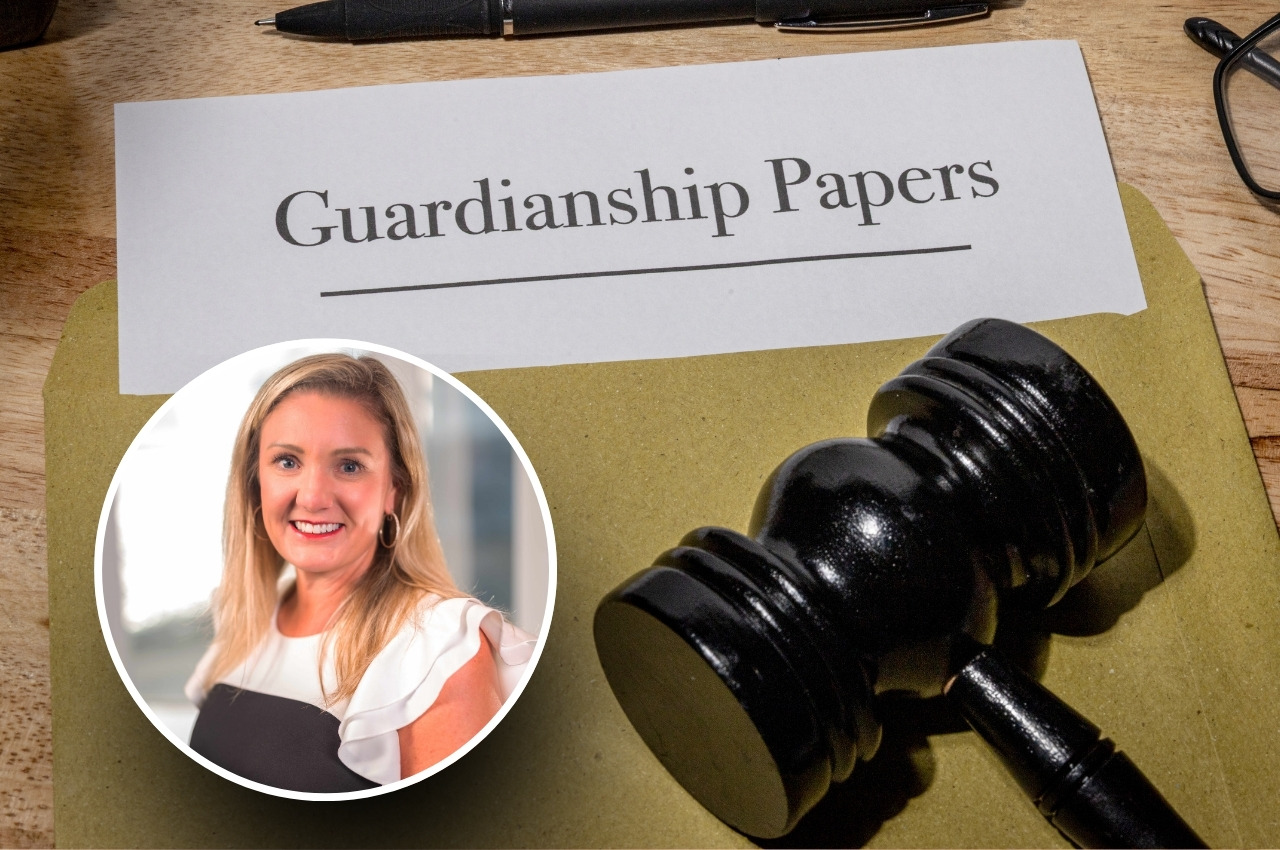
- When those situations arise, guardianship may be necessary to protect vulnerable family members. Whitney Smith, with Fleet, Smith & Freeman in Shalimar, recently sat down to explain what local families need to know about this complex legal process.
Understanding Guardianship
At its core, guardianship is a court process that removes certain constitutional rights from an individual who can no longer make safe decisions for themselves.
- “Guardianship is where a court removes certain constitutional rights from an individual, so it’s a very high threshold,” Smith explained. “You’re taking away someone’s fundamental rights. It’s a serious standard, but unfortunately, it becomes necessary more often than people realize.”
Smith emphasized that guardianship should be considered a last resort. Many families assume a power of attorney will solve their problems, but that document has significant limitations.
“A lot of people think having a power of attorney solves everything,” Smith said. “But power of attorney is the least restrictive option — it doesn’t give you the ability to restrict someone against their own free will.”
She shared a recent example that illustrates the distinction: A client’s family member had been “catfished” and sent $85,000 to a cryptocurrency scam. The family wanted to use power of attorney to prevent further losses, but Smith explained that wouldn’t work.
- “A power of attorney is not going to stop her from doing things against her own free will,” Smith said. “A guardianship will.”
How the process works
When a guardianship petition is filed, the court initiates a thorough evaluation process. Three independent medical professionals are appointed to examine the individual in question, administering cognitive tests and providing reports to the court.
- Additionally, the court appoints an attorney to represent the alleged incapacitated person — ensuring their voice is heard throughout the proceedings.
“That attorney meets with them and explains what’s been filed and what’s happening,” Smith explained. “Many of these individuals can still communicate — they’re not completely incapacitated. If they have an opinion, they’ll express it.”
The timeline varies depending on the circumstances. Emergency guardianships, required when someone poses a danger to themselves or others, can be established in about a week. Setting up a standard guardianship typically takes six to eight weeks to complete.
Who can serve as Guardian
Florida statutes establish a priority list for potential guardians, with spouses being first, followed by adult children. However, Smith noted that family isn’t always the best choice.
- “I don’t always agree with that priority list because using a family member as a guardian isn’t always in your best interest,” she said. “Sometimes siblings disagree about who can best care for a parent, and that can lead to conflict over who should take charge.”
Professional guardians are another option, and courts often favor them because they remove the emotional dynamics that can complicate family situations.
“The courts often favor professional guardians because it removes the emotional aspect,” Smith said. “That way, the children can focus on being family and caring for mom without taking on the fiduciary responsibilities of a guardian.”
Smith also noted that guardianship responsibilities can be divided. In one case, a daughter who was a nurse became guardian of the person, handling medical decisions, while her brother, a financial advisor, became guardian of the property, handling financial matters.
Warning signs families should watch for
Recognizing when a loved one may need help is often the first challenge families face. Common indicators include being “catfished” or scammed, financial exploitation by caregivers, unexplained disappearance of money, and isolation or seclusion by people who may not have the person’s best interests at heart.
Smith offered one surprising piece of advice for families concerned about sudden cognitive changes.
- “A lot of people don’t realize this, but the first thing I always recommend is checking for a urinary tract infection,” she said. “In elderly individuals, a UTI can cause symptoms that mimic dementia and leave them completely disoriented. That’s the first question I ask when someone is concerned about a parent’s sudden confusion.”
Guardianship for minor children
Guardianship isn’t only for elderly adults. It also applies to minor children in certain circumstances, particularly when a child inherits money.
Smith described a common scenario: A parent dies in a car accident, and the child receives a wrongful death settlement. Even though the surviving parent can make healthcare decisions, a guardianship of the property must be established to manage those funds.
- “The law says that money belongs to the child when they turn 18,” Smith said. “The surviving parent has an obligation to support their own child, so they can’t touch those funds until the child reaches adulthood. At 18, that child receives the full amount.”
For children with developmental disabilities, a special process called guardian advocacy allows parents to continue providing support after the child turns 18, without the full restrictions of traditional guardianship.
Not all-or-nothing
A common misconception is that guardianship completely strips someone of all their rights. In reality, the court tailors each guardianship to the individual’s specific needs.
- “Sometimes they’re still able to make medical decisions or even marry,” Smith explained. “The examining committee reports to the court on what the person should or shouldn’t be able to do. It’s not all or nothing.”
Importantly, guardianship can also be reversed if the person’s condition improves. Another medical examination can be requested to demonstrate that the individual has regained capacity.
Serious responsibilities
Becoming a guardian is not a simple commitment. Once appointed, guardians must complete background checks, fingerprinting, credit reports and an online training class covering their fiduciary responsibilities.
“Every single thing involving the ward has to be accounted for by the court,” Smith emphasized. “Every penny, every decision about their care — and you have to file an accounting every year.”
Each county has an inspector general who audits guardianship accounts. Guardians who fail to keep proper records face consequences.
“If they find any errors, they won’t accept the audit — and you’ll have to go before the court and explain what happened,” Smith said. She advises new guardians to get an expandable folder and organize receipts by month from day one.
Planning ahead to avoid Guardianship
The best way to avoid the guardianship process is proper estate planning while individuals still have capacity. Key documents include a power of attorney for assets and a healthcare surrogate for medical decisions.
- “As long as the person has those documents in place, you can walk into any bank and help manage their affairs on their behalf,” Smith said.
A pre-need guardian designation is another valuable planning tool, allowing individuals to specify who they want to serve as guardian if the need ever arises.
The key is timing. Once someone lacks capacity, they can no longer sign these documents.
“Once someone lacks capacity, I can’t have them execute a power of attorney,” Smith explained. “If they can’t enter into a contract or marry, they can’t sign a power of attorney either. The sooner you get these documents in place, the better.”
Advice for families
For families who suspect a loved one may need help, Smith recommends starting with medical providers.
- “Start going to their doctor’s appointments and paying attention to what the doctors are saying,” she advised. “Just because somebody has dementia doesn’t mean they’re incapacitated. Dementia patients can still have moments of clarity where they can make decisions.”
Smith also acknowledged the emotional difficulty of the decision. Many families hesitate because they fear their parent’s reaction.
“Once you pull the trigger, you pull the trigger,” she said. “Parents don’t like losing control — nobody does. You’re essentially admitting to your parents, ‘I believe you lack the capacity to handle things.’ It’s not uncommon for the parent to be upset.”
But ultimately, Smith emphasized, guardianship is about protecting vulnerable individuals.
“Ultimately, it’s what’s in the ward’s best interest,” she said.
Families with questions about guardianship can contact Fleet, Smith & Freeman for guidance on navigating the process and understanding their options.




One Response
Wow! Amazing infromation.