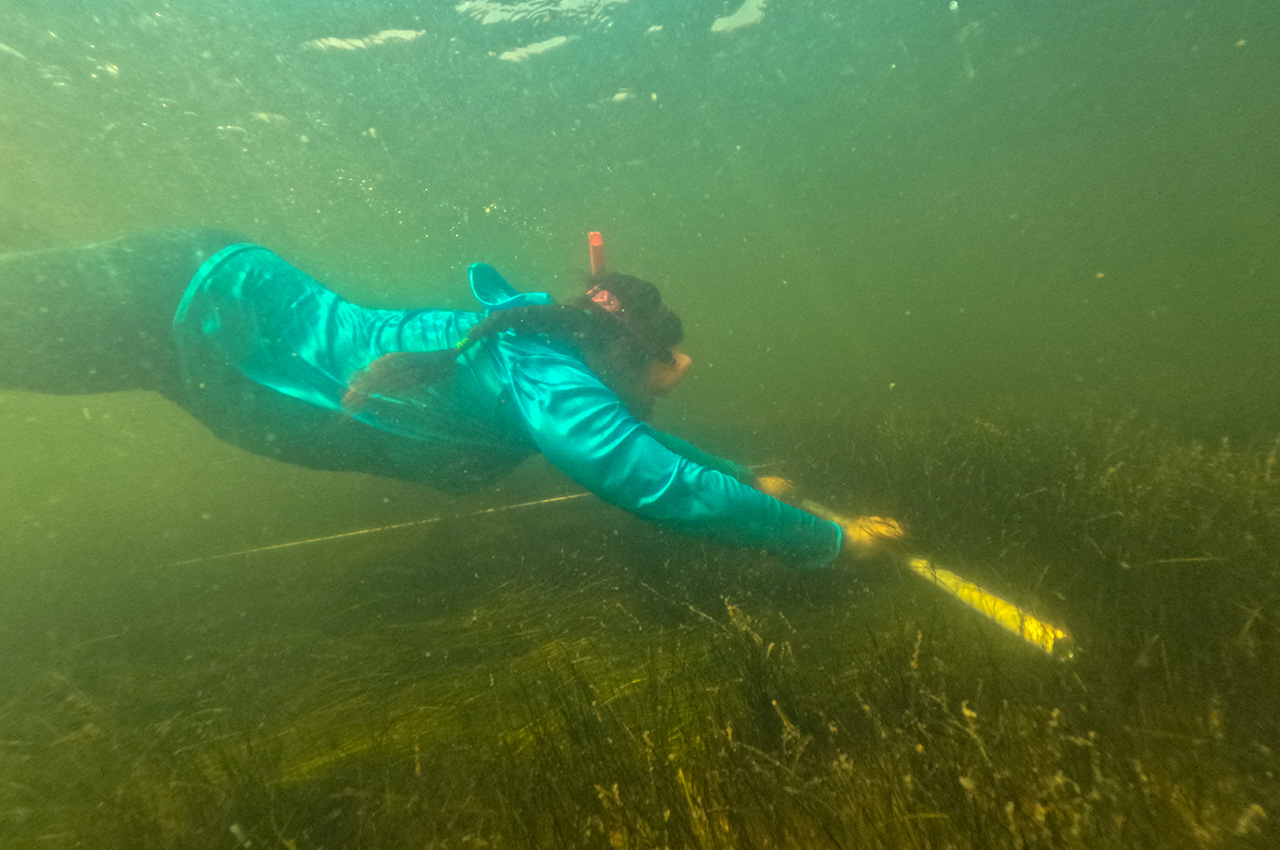
The annual Great Scallop Count on Choctawhatchee Bay drew 29 community volunteers and produced the first confirmed evidence of scallops in the bay in years, though no live scallops were found among the more than 200 shells collected.
- The event, organized by Okaloosa County’s Natural Resources Team and Florida Sea Grant, sent participants across designated survey grids in the bay to search seagrass beds for bay scallops, a shellfish species historically found in Choctawhatchee Bay that has gone unseen there for years.
“The turnout this year was fantastic, and it made all the difference,” said Danielle Lasseigne, Coastal Resources Coordinator for Okaloosa County. “With that many people in the water covering ground, we were able to search far more of the bay than we normally could, and that’s exactly how we ended up finding shells for the first time in years.”
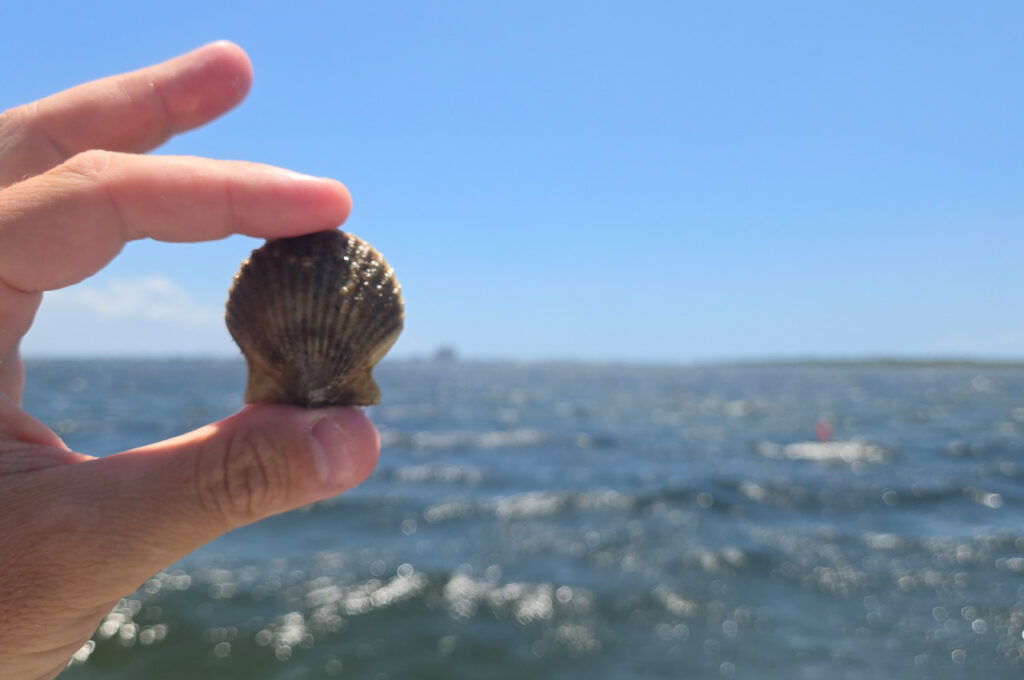
By the end of the day, teams had recovered more than 200 scallop shells, the first confirmed scallop evidence logged in the bay in years. Every shell recovered was empty, with no live scallops observed anywhere in the survey area.
The results are a bit of a mixed bag for researchers.
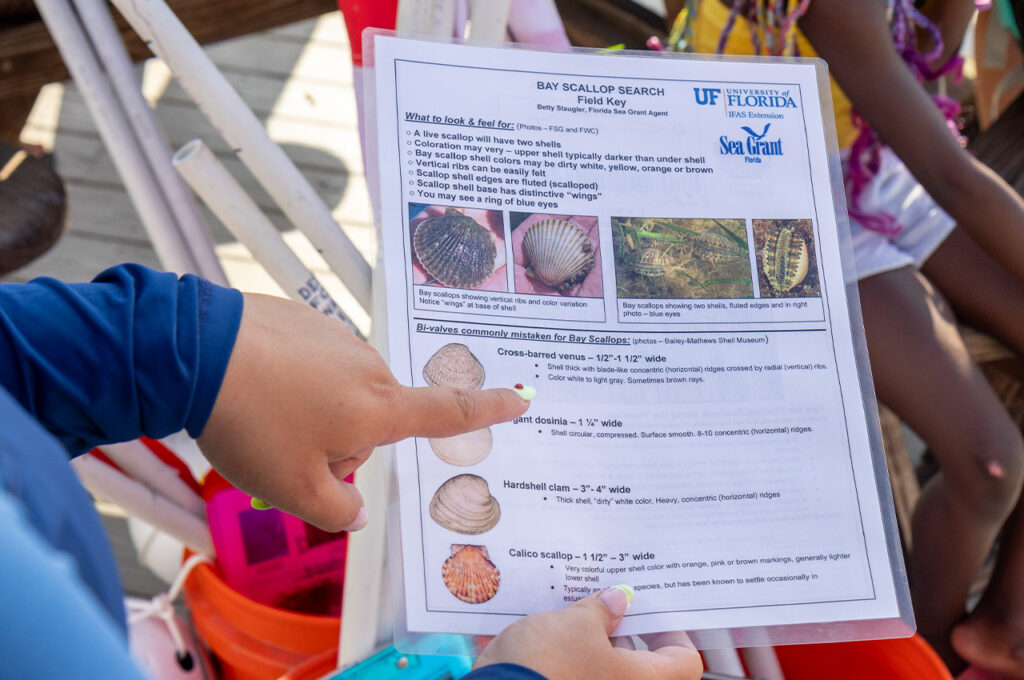
Just last month, survey teams conducting preliminary monitoring in the bay documented numerous live scallops, raising hopes that a small but viable population may have been reestablishing itself. The empty shells recovered during the count suggest that the population suffered a mortality event sometime in the weeks since.
- “Going from live animals last month to nothing but empty shells is tough,” said Dana Stephens of Florida Sea Grant. “But I don’t want that to overshadow what a big deal it is to have confirmed evidence of scallops in this bay again. That’s the first sign in years that conditions can support them, even if only briefly, and it gives us something concrete to build on.”
Bay scallops are highly sensitive to water quality conditions, including low dissolved oxygen, high water temperatures and salinity fluctuations, any of which could plausibly affect a small, localized population over a short period. Staff say they intend to conduct follow-up surveys in the coming months to determine whether any scallops survived.
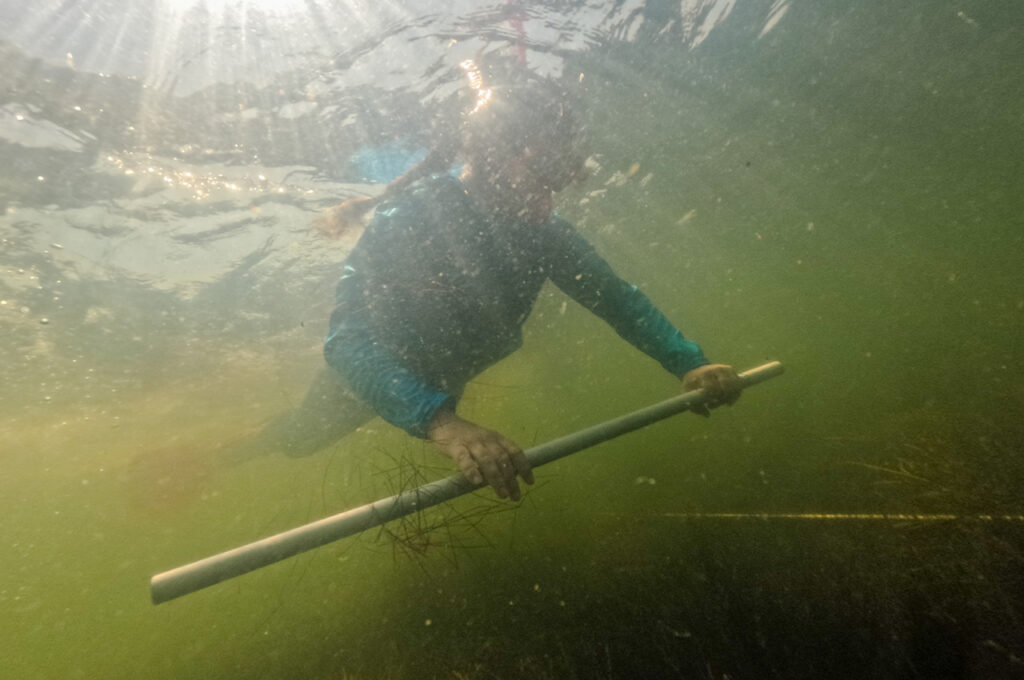
The count drew heavy participation from the Choctawhatchee Basin Alliance, one of the leading authorities on monitoring and restoration efforts for Choctawhatchee Bay. The Alliance’s staff and volunteers played a central role in coordinating survey teams and lending their expertise to the search, reinforcing the event’s scientific credibility and building on the organization’s long-running work tracking the bay’s health.
- Organizers credited Jackson Guard with personnel support and local business Luther’s Pontoons, which donated the use of several vessels for the day, allowing volunteer teams to reach survey grids across the bay that would otherwise have been difficult to access.
The Great Scallop Count is part of Okaloosa County’s broader effort to monitor the health of Choctawhatchee Bay’s seagrass and shellfish communities and depends each year on community volunteers and citizen scientists to cover its survey areas.
Organizers credited this year’s record participation with turning up results that years of prior counts had not and say the strong community response is itself a reason for optimism heading into future surveys.