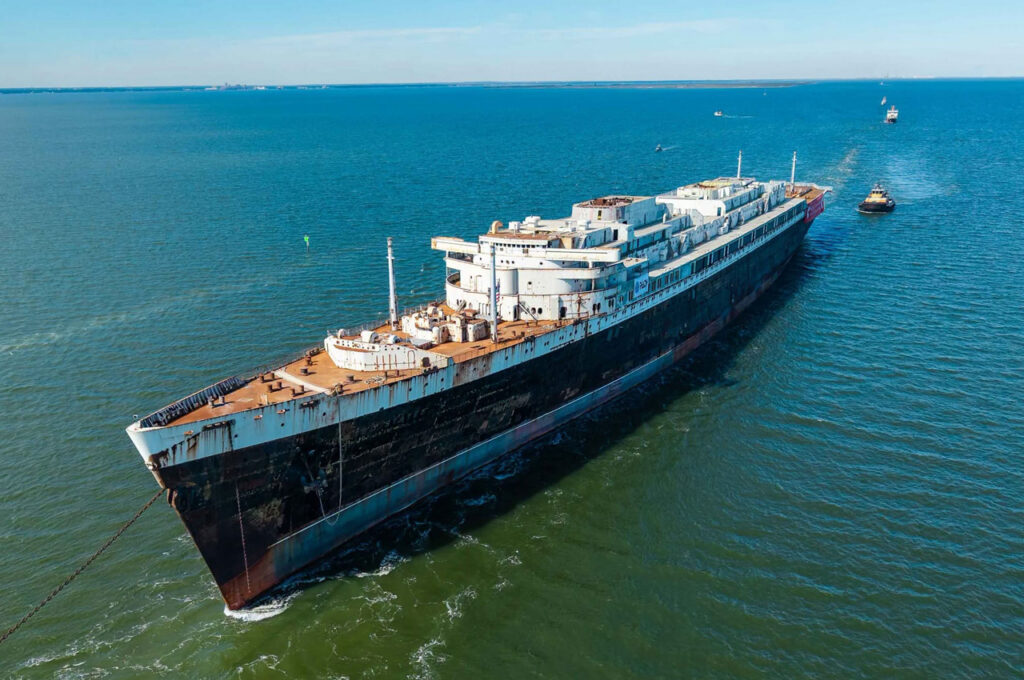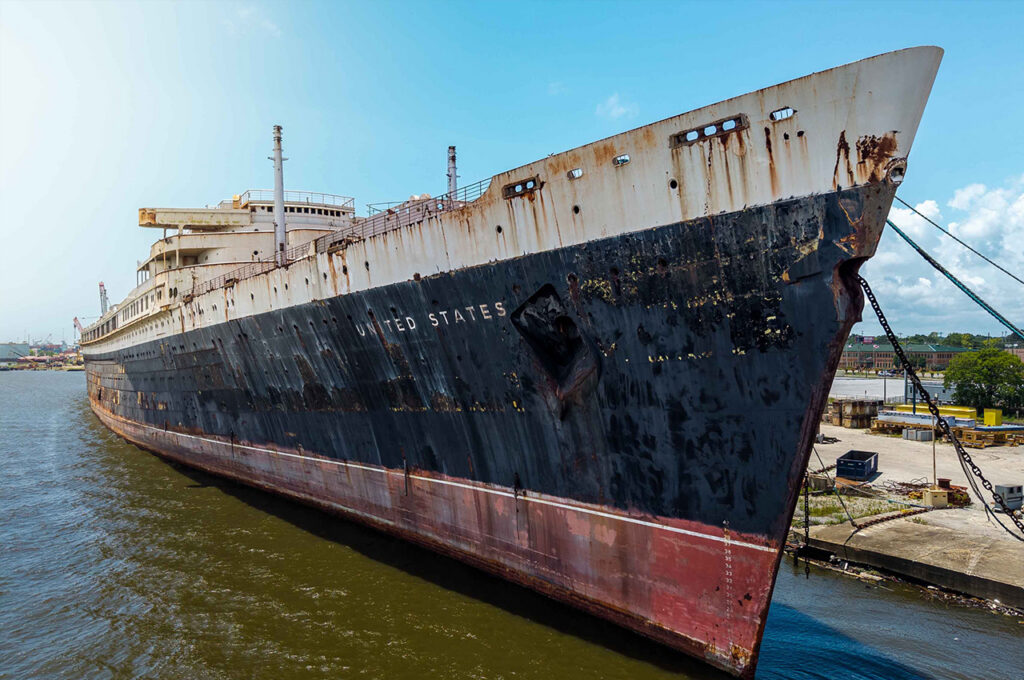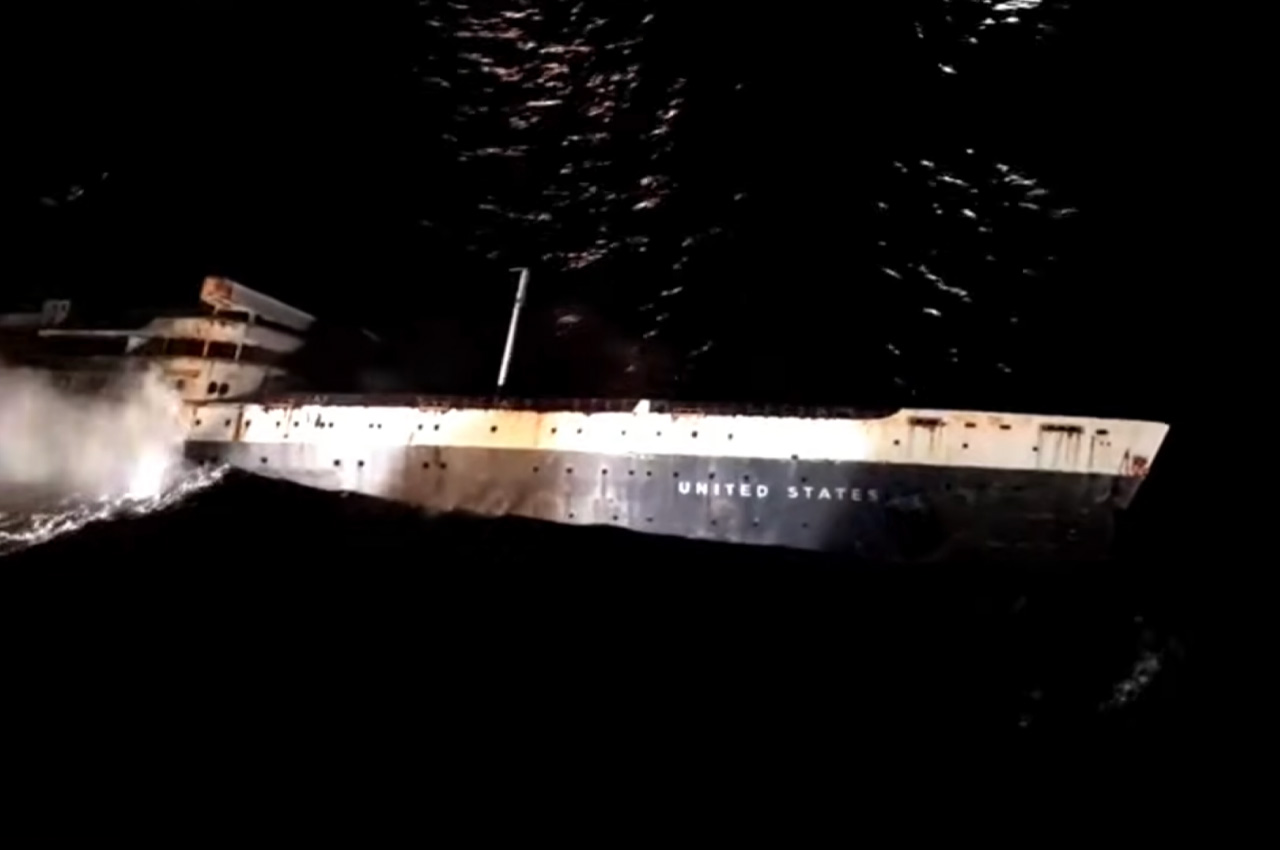
The SS United States, the 990-foot ocean liner that still holds the trans-Atlantic speed record she set in 1952, slipped beneath the surface of the Gulf around 9 p.m. Wednesday, Nov. 11, about 22 nautical miles southwest of Destin-Fort Walton Beach.
- Her deployment closes out a project that took the ship from Philadelphia, where she sat docked for nearly three decades, to Mobile, Alabama, for more than a year of environmental cleanup and preparation, and finally to her new home off the Okaloosa County coast.
The county had scheduled the deployment for Thursday, Nov. 12, but moved it up a day because of forecasted heavy winds and unsafe conditions Thursday. The change put the ship’s final voyage on Veterans Day.
“While the weather may have changed our plans, it has given this historic occasion an especially meaningful date,” said Okaloosa County Board Chairman Trey Goodwin. “On Veterans Day, as we honor the men and women who served our nation, we will also honor the legacy of the SS United States, a magnificent ship that proudly bears the name of the country they so bravely defended.”
The deployment
The ship was towed from Mobile to LAARS C, an Okaloosa County permitted reef area 32 nautical miles southeast of the Pensacola Pass. Deployment operations were scheduled to begin at 1 p.m. Wednesday.
To sink her, the county’s plan called for cutting holes strategically throughout the interior of ship and filling her cleaned fuel tanks with water so she would go down over a few hours rather than multiple days. A naval architect developed a model of the ship to determine where those holes should be cut.
Once operations began, the process took longer than originally projected. Around 4:45 p.m., the county said on its livestream that the ship was “fully flooded.” Around 8:40 p.m., live visuals showed the water reaching the ship’s doors, and she went down much faster from there, sinking around 9 p.m.
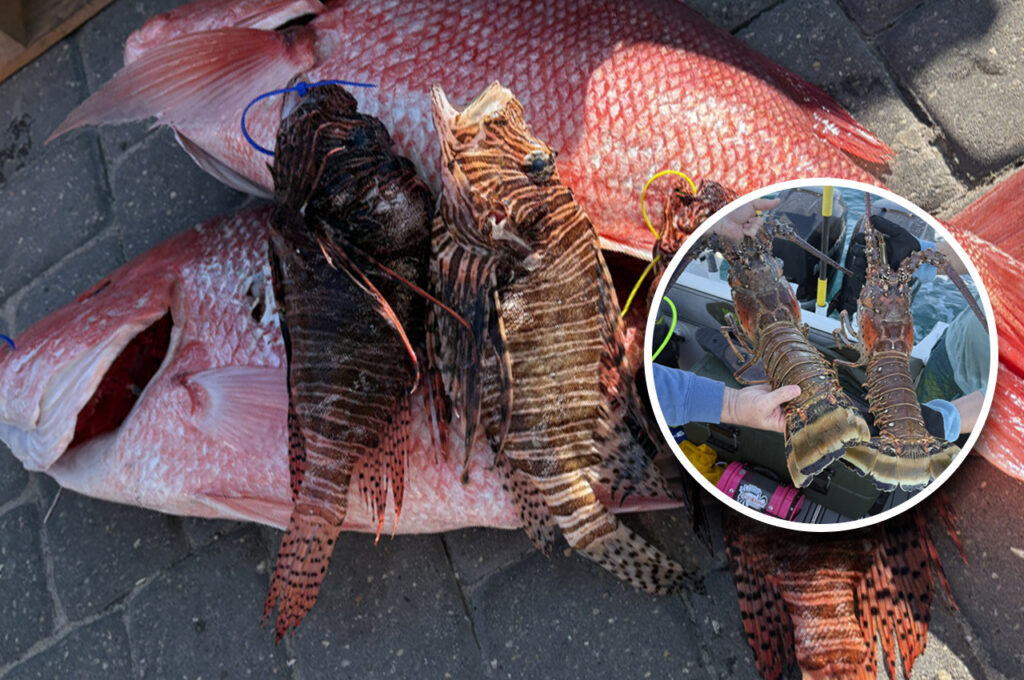
Okaloosa County Natural Resources Chief Alex Fogg has said the ship would rest in about 180 feet of water, with her upper decks about 50 to 55 feet below the surface, making her accessible to divers of all skill levels. He said she is expected to attract red snapper, amberjack and groupers almost immediately, along with pelagic species such as mackerel and tuna.
At 990 feet, she surpasses the 888-foot USS Oriskany, sunk off Pensacola in 2006, as the world’s largest artificial reef.
Two years in the making
Okaloosa County commissioners voted 4-1 in October 2024 to buy the ship from the SS United States Conservancy for $1 million and approved a $10.1 million budget for its acquisition, remediation, transport and deployment. Last December, commissioners approved a $2.95 million contract amendment to finish the work, with more than $4 million in partner contributions offsetting the added cost.
In Mobile, crews emptied and cleaned all 120 of the ship’s fuel tanks and removed 99% of materials containing PCBs, Fogg reported last December.
The project also brought in partners along the way. In April, commissioners unanimously approved an agreement with Divers Alert Network, a dive safety, medical response and research nonprofit that will provide $10,000 a year for five years. Fogg said DAN’s medical expertise is the most valuable part of the partnership, since Northwest Florida has no emergency hyperbaric treatment facility for injured divers.
Woods Hole Oceanographic Institution is leading a study of how life takes hold on the wreck, tracking about 132 permanently tagged locations across the vessel. Dr. Kirstin Meyer-Kaiser, the WHOI scientist leading the project, said the first two years are funded, with a goal of continuing the work for a decade.
- “Every time a ship sinks, it is a brand new habitat falling out of the sky,” Meyer-Kaiser said.
At Northwest Florida State College, the county and the school produced commemorative coins from the ship’s salvaged aluminum.
The plan also drew public concern from people who wanted to see the ship preserved. Fogg told commissioners last December that the ship’s listing on the National Register of Historic Places did not protect it from being sunk as a reef, and that a company had bid for years to scrap the ship before the county took ownership.
“So essentially we saved it from being scrapped,” Fogg said.
The project was funded by tourism bed-tax dollars and partner contributions, not property taxes, according to the county.
Her story continues on land
The SS United States Conservancy, which owned the ship before the county, is developing the SS United States Museum and Visitor Experience in Destin-Fort Walton Beach in partnership with Okaloosa County. The ship’s two 65-foot funnels, radar mast and five-blade propeller were removed in Mobile for the museum, which will also feature original cocktail bars from the ship and thousands of items the conservancy has collected over the decades.
Goodwin said the ship’s legacy will live on both above and below the water.
“Her story will continue to be told by thousands of people who visit her in tandem with the SS United States Conservancy’s land-based museum,” he said.