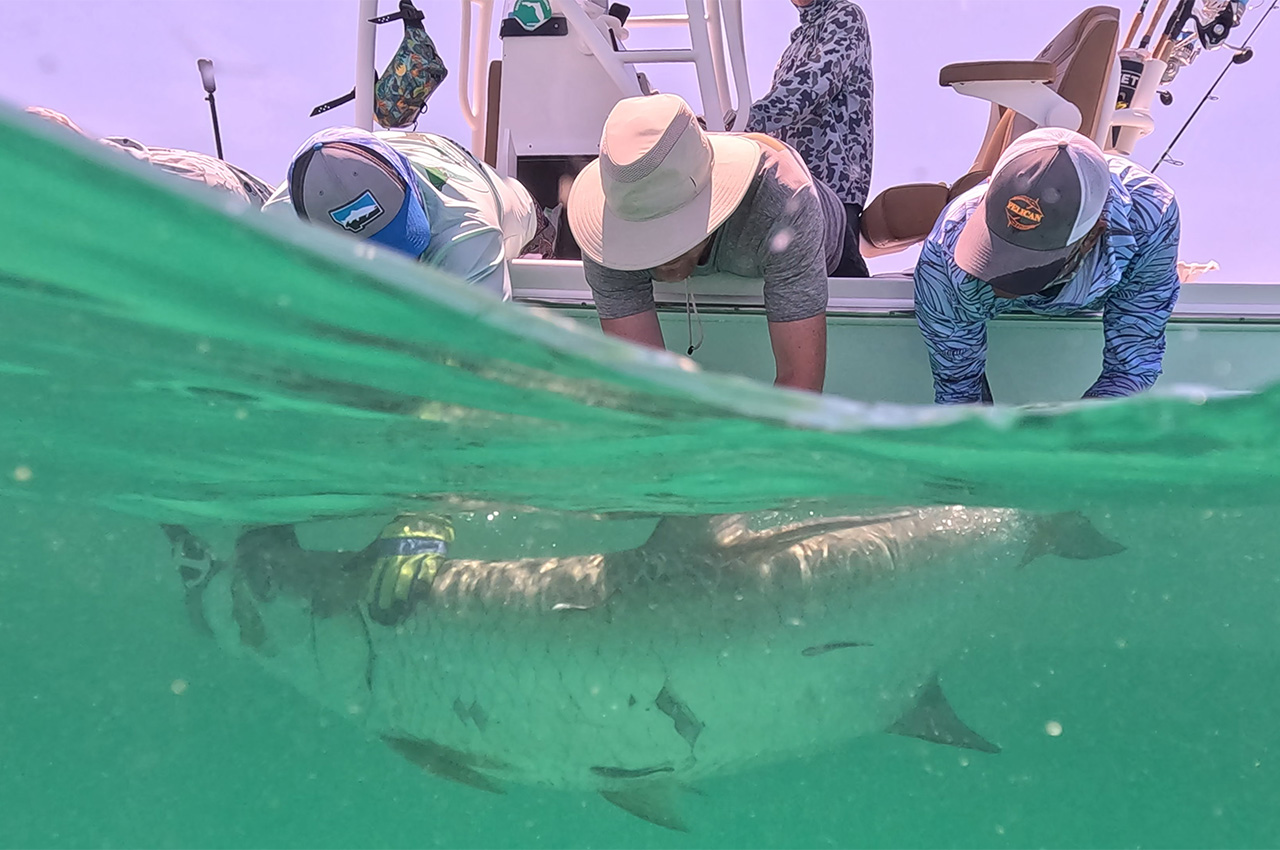
A group of veteran Destin-Fort Walton Beach charter captains spent two days in June turning every tarpon hookup into a data point, working alongside scientists from six universities and agencies to build a research baseline for a fishery that draws anglers worldwide but remains poorly studied in local waters.
- The second annual Silver Scale Invitational, held June 24-25, paired ten local captains and anglers with twelve researchers aboard the same boats.
Teams hooked 169 tarpon, landed 40, and tagged 46, including eight acoustic tags and one satellite tag that will let scientists follow individual fish across the Gulf and beyond. Crews also collected 40 scale samples and 30 diet samples.
The tournament was born from the captains themselves. Several of the area’s most experienced tarpon guides approached organizers looking for a way to make their time on the water count toward something lasting, and the first event launched in 2025 in response. The 2026 edition expanded the field and deepened the research partnership.
“This started with a group of captains who wanted their days on the water to count for something bigger than a single fish,” said Nicky Harvell, tournament organizer and owner of Emerald Coast Outfitters. “We know these fish better than anyone because we chase them every season, and pairing that knowledge with scientists means every hookup turns into data we can actually use. Watching a captain, an angler, and a researcher work the same fish together is what this event is all about.”
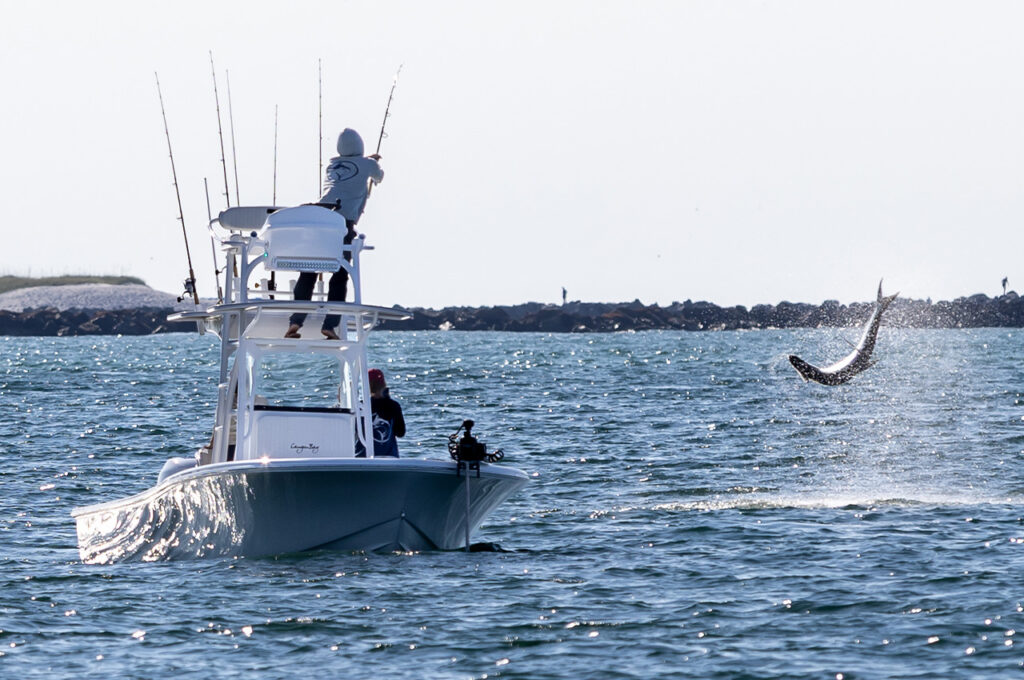
Destin-Fort Walton Beach Natural Resources led the research team, with scientists joining from Louisiana State University, the University of South Florida, Mississippi State University, the U.S. Geological Survey, Clemson University and several independent local organizations.
Rather than rewarding the biggest fish, the tournament scored teams on the data they collected.
Acoustic tags counted for 100 points, conventional tags 50, diet samples 50 and scale samples 25. Acoustic tags were limited to one per researcher, making them the scarcest and highest-value score of the event.
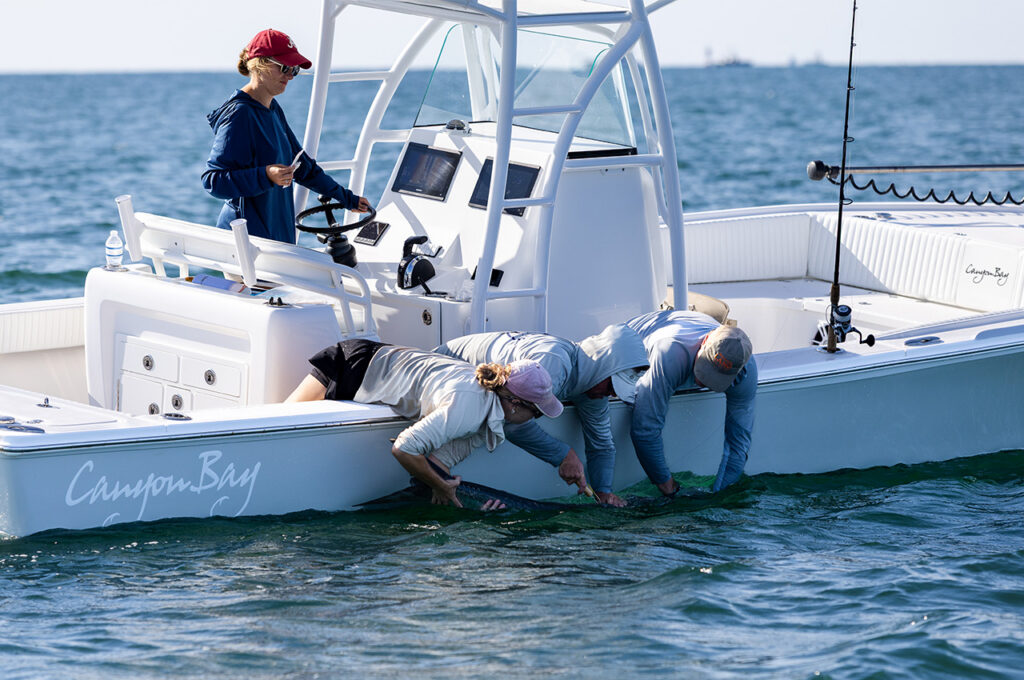
Capt. Greg Gladden took the top spot finishing with 1,325 points. Capt. Tommy Thompson placed second with 925 points, and Capt. Chris Esfeller finished third with 600 points. The grand prize paid $5,000, with more than $15,000 in additional Calcutta prizes distributed across the ten-boat field.
Dr. Mike Dance of Louisiana State University, who has worked on movement ecology research with Destin-Fort Walton Beach Natural Resources for years, said the local effort fills an important gap.
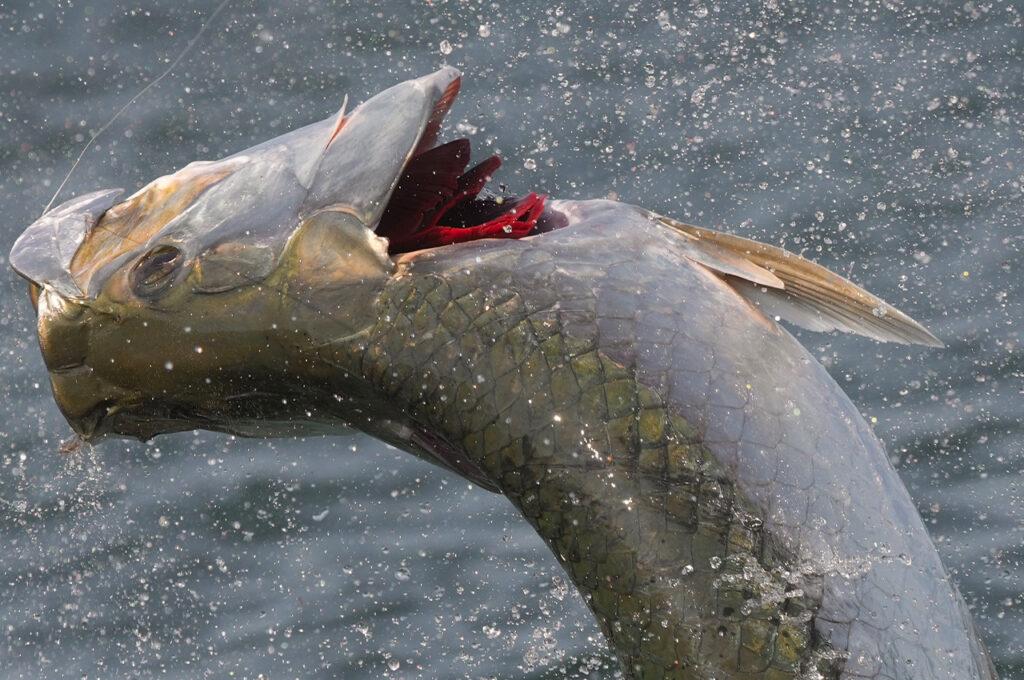
“Tarpon move across considerable distances, and to understand a population you have to know where it goes, when, and how individual fish connect within the broader Gulf,” Dance said. “The acoustic and satellite tags we deployed this year, combined with the diet and scale samples, give us a window into that movement and life history that is extremely limited for this part of the coast. The captains here provide a level of access and effort that is hard to replicate anywhere else.”
Conventional tags identify a fish if it is recaptured, while acoustic tags ping receiver arrays as fish move through the region. The satellite tag can trace a single animal’s path across long distances. Scale samples carry information on age and growth, and diet samples document feeding ecology.
Tarpon support a high-value catch-and-release fishery across the northern Gulf, but much of the existing research comes from waters far from Destin-Fort Walton Beach. Organizers plan to continue the event annually, growing the dataset season over season.
Sponsors of the 2026 tournament included Yamaha Rightwaters, Destin-Fort Walton Beach, and Boshamps Seafood and Oyster House.