
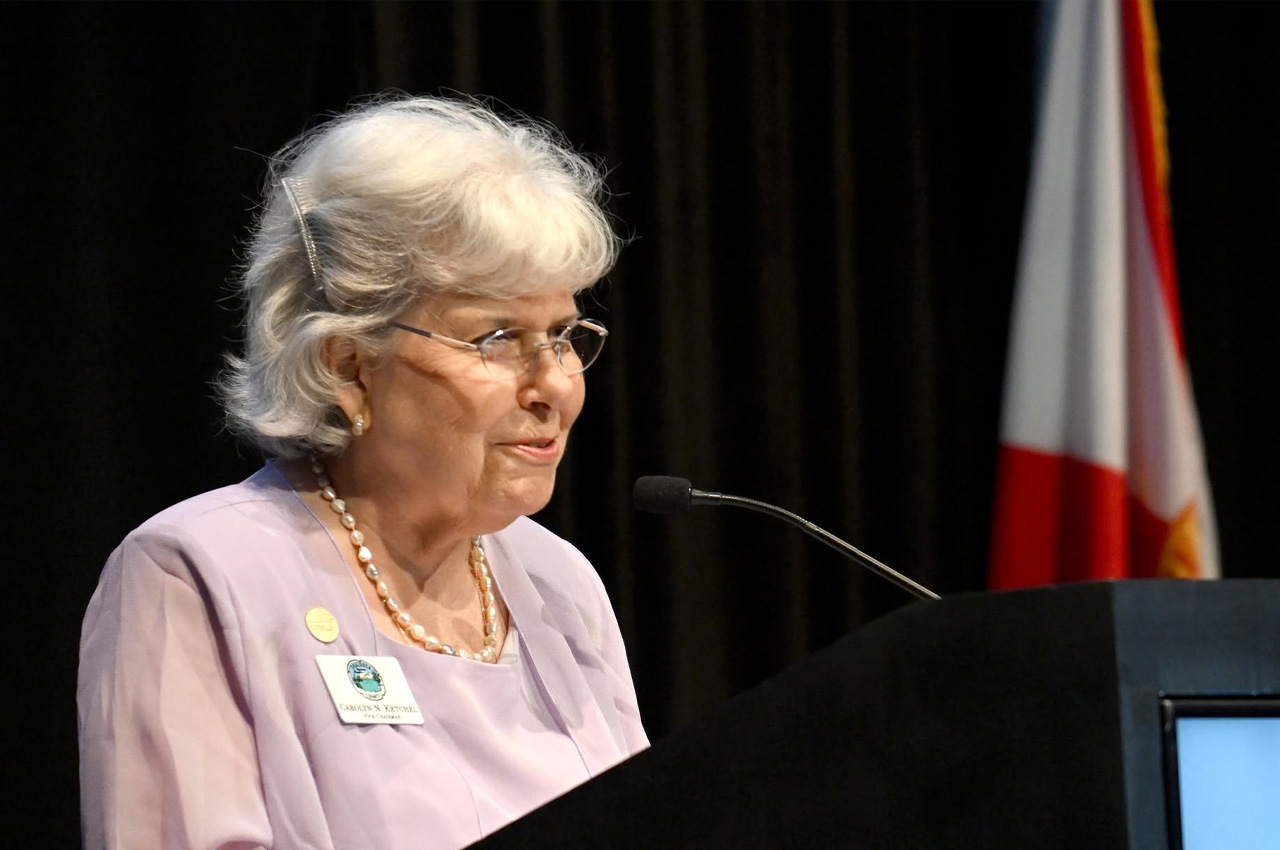
A proposed constitutional amendment that would dramatically expand the homestead exemption on non-school property taxes could cost Okaloosa County’s general fund tens of millions of dollars and force the elimination or reduction of services ranging from public safety to mosquito control, according to District 2 County Commissioner Carolyn Ketchel.
- The amendment, titled “Save Our Homes from Excessive Property Taxes,” will appear on the Nov. 3 ballot as Amendment 3 and requires 60% voter approval to take effect. HJR 1F would raise the homestead exemption for all levies other than school district levies to $150,000 beginning Jan. 1, 2027, and to $250,000 beginning Jan. 1, 2028.
The amendment also requires the legislature to provide, through general law, a schedule for full elimination of property taxes on homesteads.
People who establish Florida residency after Jan. 1, 2027 would receive a $50,000 exemption initially and would not qualify for the full exemption amount until their fifth year, unless a county or municipal governing body votes by a two-thirds majority that a shorter period is warranted for a critical local need.
The amendment would also lower the cap on annual assessment increases for non-homestead residential property of nine units or fewer, and for other non-homestead real property, from 10% to 5% starting Jan. 1, 2027.
It also restricts how counties and municipalities may use ad valorem tax revenue, limiting it to public safety, education, infrastructure, natural resources, debt service, retirement obligations for local government employees, and operations of county officers and governing bodies.
“Make no mistake, the ballot language is misleading to the reality of what will happen in counties throughout Florida,” Ketchel wrote.
According to Ketchel’s analysis, the county’s general fund would lose approximately $14.5 million in its first year and roughly $24 million by year two. The second-year impact, she said, would leave approximately $2.5 million to fund county services beyond core obligations.
Those figures are consistent with warnings County Administrator John Hofstad delivered during budget workshops this summer. In a July 7 budget presentation, Hofstad told commissioners the amendment could cut property tax revenue by 23%.
“23% is a huge burden,” Hofstad said at the time.
Current revenue and services at stake
The county’s current property tax millage rate of 3.8308 mils (which commissioners have held steady for 11 consecutive years) generates approximately $114.7 million in revenue. An additional $3.8 million comes from the non-countywide Municipal Services Taxing Unit at a rate of 0.2880 mils, bringing total general fund revenue to approximately $118.7 million.
Ketchel said the general fund pays for services residents have come to expect from county government, and that the proposed amendment would put many of them at risk.
- “First and foremost Okaloosa County citizens expect public safety, which means when you dial 911 we expect rapid response from our sheriff and EMS,” Ketchel wrote. “The passage of this measure will force us to consider reducing funding and would most certainly not be able to continue at the FY 2026 level.”
Ketchel listed a range of services that could face reductions or elimination, including funding to the Okaloosa County Sheriff’s Office, emergency management, school resource officers, beach safety and park rangers, corrections, veterans services, solid waste, mosquito control, animal services, library funding, parks and roads and bridges.
“Can you imagine living here without it?” Ketchel said, referring to mosquito control.
Why other county funds can’t fill the gap
A common question, Ketchel said, is why the county can’t simply use other revenue sources to fill the gap. She said it doesn’t work that way.
Enterprise funds generated by departments such as airports, water and sewer and tourism are restricted by law to their respective operations, she said. Tourism dollars cannot be used to build roads, and airport revenue cannot fund lifeguards.
Hofstad made the same point during the July 7 budget workshop.
- “I can’t take water and sewer dollars or airport dollars or TDD dollars and balance the general fund budget,” Hofstad said. “That’s just not the way municipal budgeting and county budgeting works.”
Hofstad also told commissioners during that workshop that a hiring freeze for non-essential general fund positions would remain in place until the results of the November election are known.
“I don’t want to launch into adding new positions or taking on additional general fund capital projects until I know the results of the referendum in November,” he said.
Amendment already factoring into budget decisions
The uncertainty surrounding the ballot measure has already factored into recent commission decisions. During an Aug. 4 meeting on the county’s new in-house animal control operation, Ketchel tied the county’s cautious approach directly to the amendment.
“The issue for us is cost,” Ketchel said. “We’re all nervous about every aspect of county government because we’re not going to have the money for services that we currently have, let alone beginning new services.”
And during a July 21 discussion over the county’s school resource officer funding, Ketchel pushed back against a proposal to lower the millage rate, calling the November measure the overriding concern.
“We’ve got a huge elephant in the room in November on the ballot,” Ketchel said.
No additional funding expected
Ketchel said voters should not expect the state to backfill lost local revenue.
“There is no cavalry coming from the statehouse with extra money,” Ketchel wrote. “This will be it for local funding, and the quality of services we have enjoyed will be eliminated or reduced greatly.”
She also argued that the amendment’s one-size-fits-all approach fails to account for the differences among Florida’s 67 counties.
- “The needs of Miami and Tampa are different than those on the Panhandle,” Ketchel wrote. “Local government is closest to the people.”
Ketchel said if the homestead exemption passes, the county will have to offset the lost revenue through service cuts or increases in other taxes.
“As you cast your vote, I encourage you to thoroughly consider the benefits and disadvantages of voting for or against this initiative,” she wrote. “Please understand that we must off-set the lost revenue somehow, either by loss of services or increase in some other tax. Make no mistake, if this initiative passes there will be significant changes to how local government functions in Okaloosa County.”
This story was updated on Aug. 11 to further clarify the proposed amendment.

9 Responses
Make no mistake, this is a scare tactic by a politician. They may not get your money from property taxes but they’ll find a way to empty your pockets to fill their coffers.
People who vote to get rid of property taxes are being short sighted. The money has to come from somewhere. Being part of a community means we need to pay for the services we have. Funding or money doesn’t grow on trees. Florida does not have an income tax and our other taxes are fairly low in comparison to other states.
This is not a scare tactic. Tourist tax funds can’t be used to make up the loss. You may be one of the people that will scream the loudest when a crucial service is lost due to funding. Please do some research before making such a statement.
Like normal Americans local governments are being forced to address their spending. What politicians consider essential many voters don’t. Infrastructure and safety are probably the two most important issues. Fund those and let the other chips fall where they may.
Everyone is cutting expenses as we all are paying more. Essential services for safety should be spared, but all other items need to be reviewed. When I see an army of employees for construction and their vehicles running non stop, I wonder about government waste. Property tases and insurance are too high!
I would like to see the 2019 budget, and what amount of that budget came from property taxes, the Okaloosa County population in 2019, and the number of properties taxed in 2019. I’d like to see those same numbers for 2026.
Story states that total general fund revenue is $118.7 million. Earlier story in Get the Coast (Jul 8th) put the proposed 2027 Budget general fund at $191.1 million. So, it’s an 8% -12% reduction to the general fund in the first year. (Or a 2% reduction to the total proposed county budget of $769 million.) All things considered, I think most voters would like to see more money in their own pockets.
At minimum, reduce property tax for senior citizens. Property taxes normally increase yearly but senior’s income doesn’t. Every time we get a social security raise, our Medicare premiums go up. Get rid of mosquito control, save a little money there.
Auto and homeowners insurance needs to be addressed. If the outrageous insurance bills were lowered…maybe folks wouldn’t mind paying existing rate of taxes. You want updates and improvements and safety..eliminating the funding will result in downgrading quality of life you all have come to expect. Lack of maintainance always costs more later.