At Choctawhatchee High School, a group of ROTC cadets are earning federal pilot credentials, college credit from one of the top aeronautical universities in the country and industry certifications that can plug directly into Northwest Florida’s aerospace economy — and some of them did it before they got their driver’s license.
Five cadets in the school’s Air Force Junior Reserve Officers’ Training Corps program passed the Federal Aviation Administration’s Part 107 Remote Pilot exam this year, a credential that allows holders to legally operate drones commercially in the national airspace system.
Fifteen cadets earned Unmanned Safety Institute Safety Level 1 certifications, an industry-recognized credential covering aviation safety culture, risk management, airspace awareness, crew resource management and professional unmanned aircraft systems operations.
- And all 17 students enrolled in the program’s aerospace track earned six hours of credit from Embry-Riddle Aeronautical University, whose curriculum is embedded directly in the Choctaw coursework.
It was the program’s first year formally teaching the FAA exam.
“For a high school program, particularly in year one, having five FAA-certified remote pilots is a significant accomplishment,” said Lt. Col. Eric Lazenby, the unit’s senior aerospace science instructor. “The fact that some of these kids have got the FAA certificate before they can drive — that is eye-opening.”
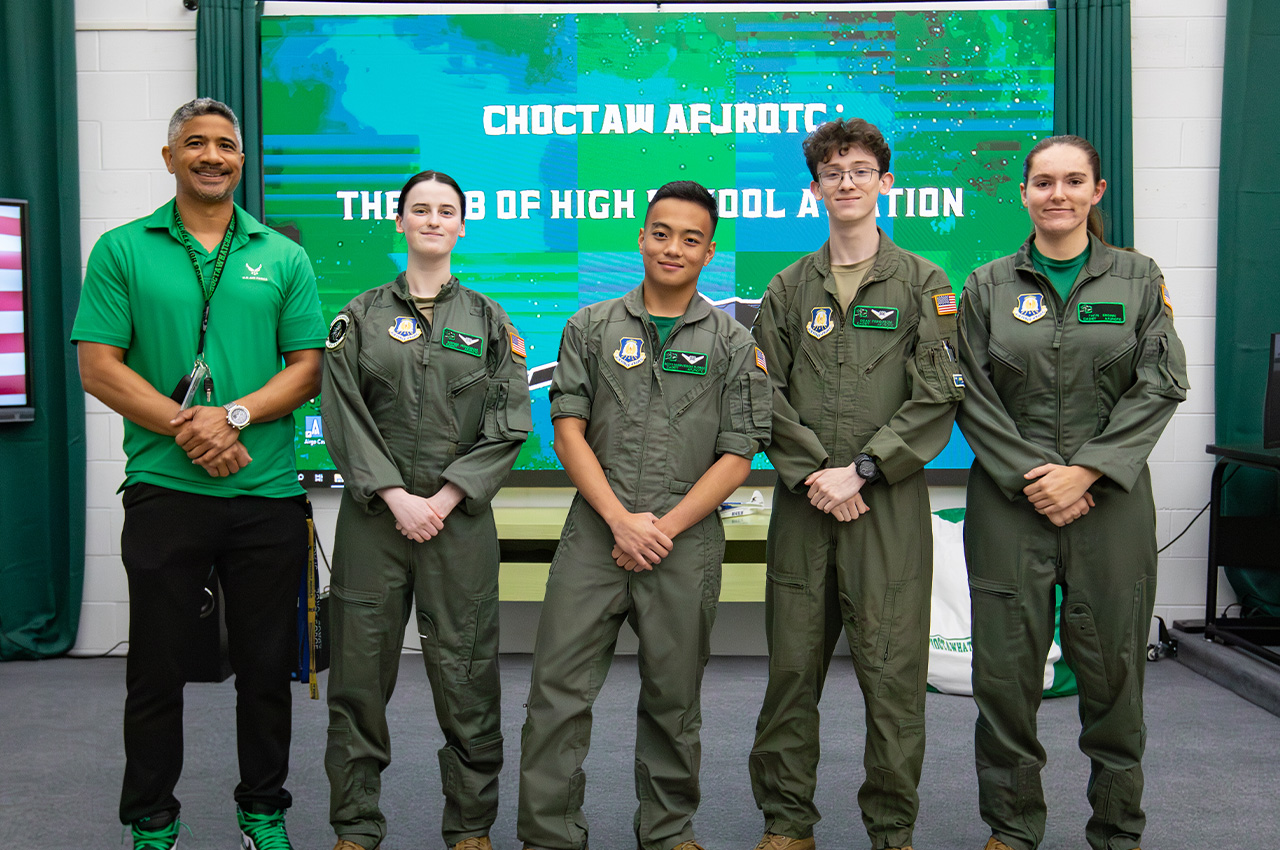
The Part 107 exam is no lightweight test. It consists of 60 scored questions administered over two hours, covering airspace classifications, weather, regulations, aviation decision-making and flight operations.
“It is a grown person’s test,” Lazenby said. “And they scored well.”
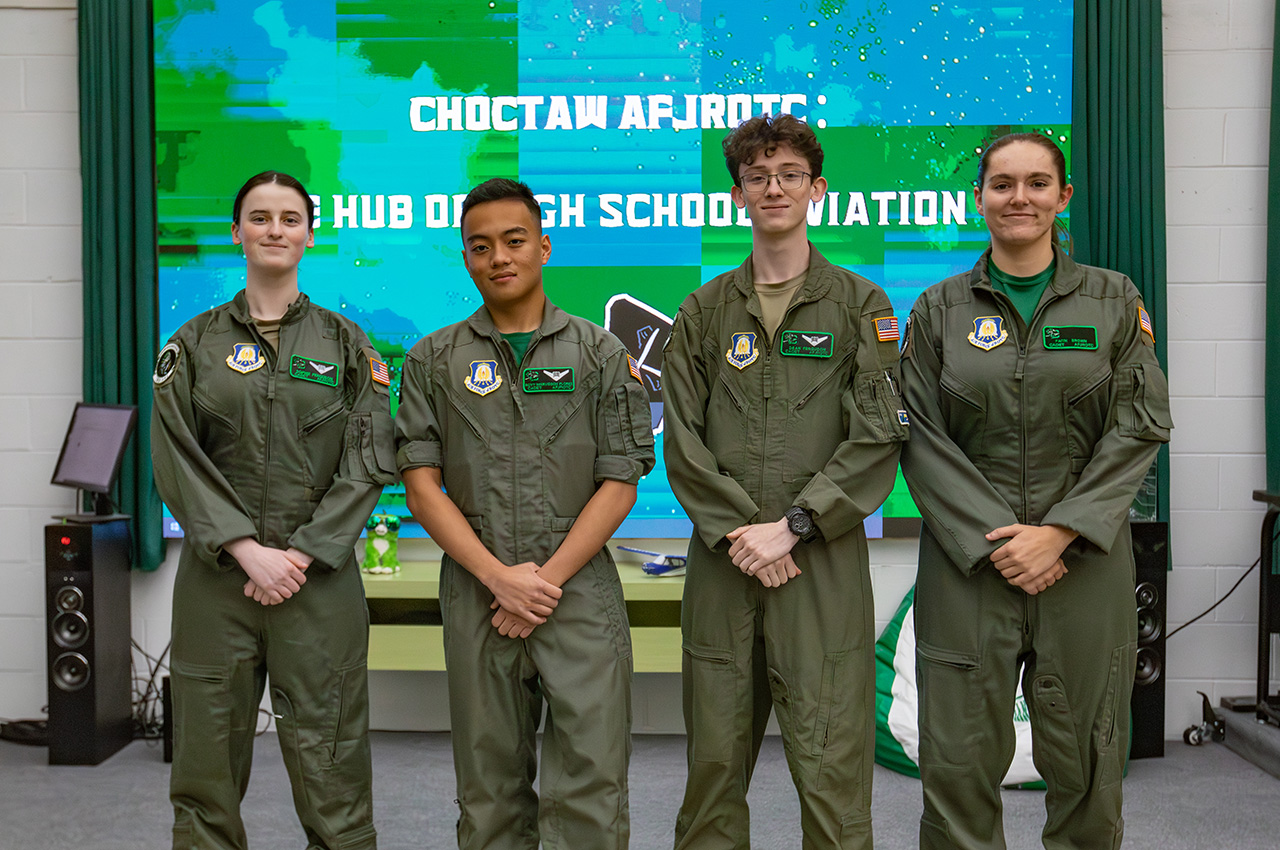
Sophie Ferguson, a junior who was part of the first group to take the exam through the formal curriculum, said preparation made the difference.
“He did a really good job at teaching it,” Ferguson said of Lazenby’s instruction. “It’s just important to study too. What I did mostly was just look over all the practice questions Colonel gave us, and he gave us a lot of them.”
Two cadets, Dean Ferguson and Rovy Marvidson Flores, took a different path. They studied the material on their own after picking it up peripherally the year before the course was formally offered, then sat for the exam and passed.
- “Me and Rovy, we did this class last year before we had 107 in the curriculum, so me and him were able to self-study for a little bit and then just take the test,” Dean Ferguson said.
The cadets are already thinking about how to use their credentials. Dean Ferguson said the Part 107 certification opens a path to drone work in real estate photography. Faith Brown, who earned the USI certification and plans to test for Part 107 in the coming weeks, said she hopes to use it to film football games at the school and eventually work toward becoming a pilot after attending Northwest Florida State College.
Flores, who moved to the United States about three and a half years ago from the Middle Eastern country of Oman and is originally from the Philippines, said the program has been unlike anything he’s encountered.
“What we have, not only in high schools here in the States, but this specific one with this specific ROTC unit and this specific aviation program — it’s one of a kind,” Flores said.
- He added that he plans to attend Civil Air Patrol’s National Flight Academy this summer and bring what he learns back to the program. Through his involvement with Civil Air Patrol at Eglin Air Force Base, he hopes to earn mission pilot certifications and use his Part 107 credential to support search and rescue and emergency services operations.
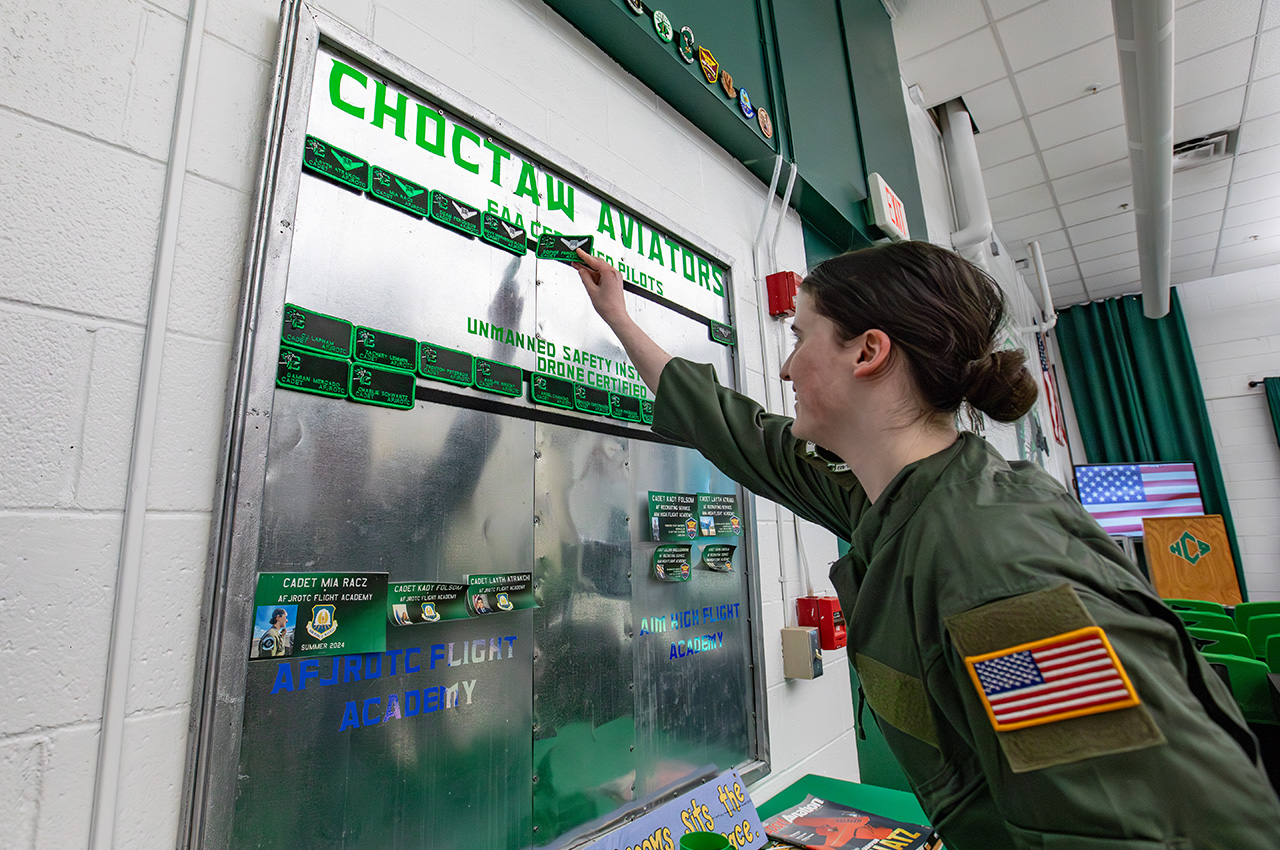
Sophie Ferguson said she wants to use the certification both as a source of income and as a stepping stone toward becoming a pilot.
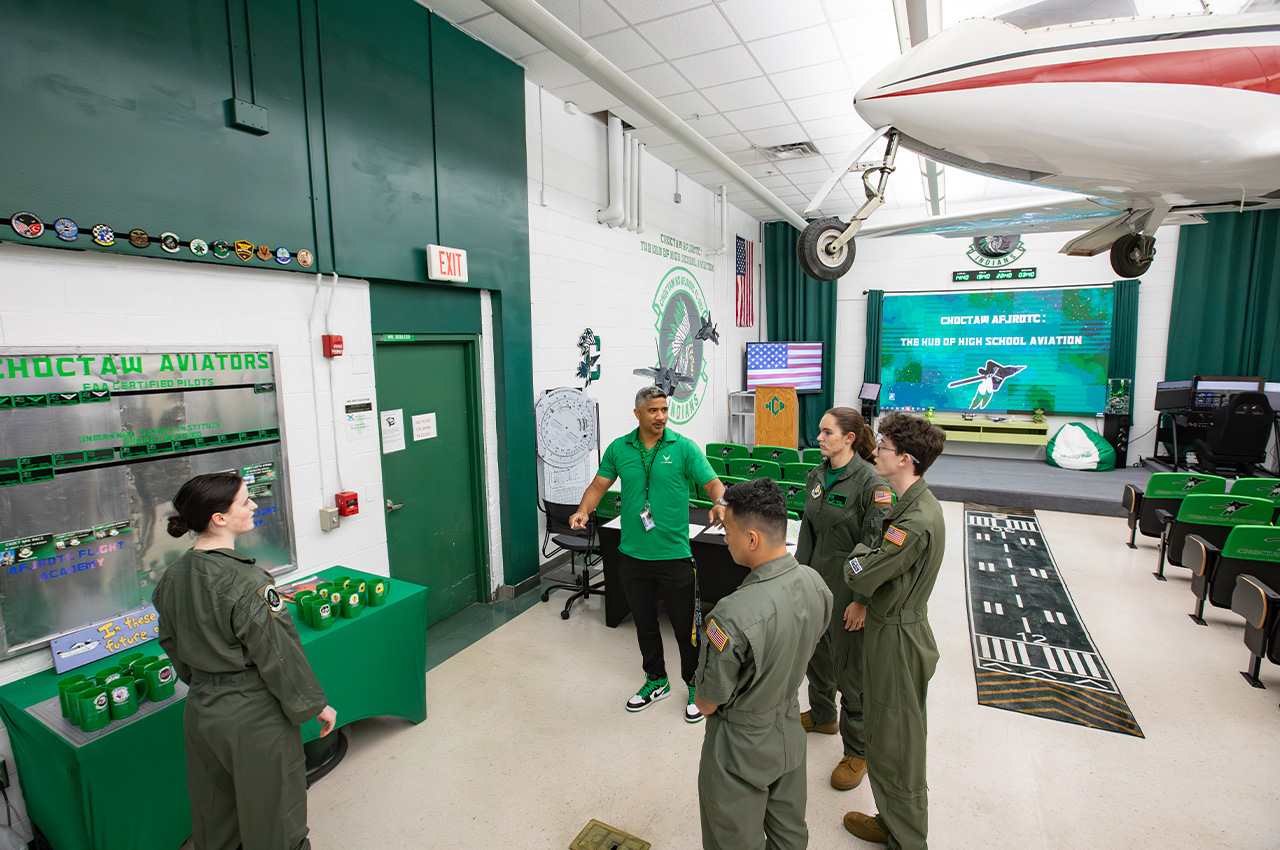
The cadets have been putting their certifications to use in a renovated aerospace classroom that the program unveiled in September after receiving a Florida Power & Light grant. The upgraded space features new technology and a layout designed to mirror a professional learning environment.
“It looks a lot more like what a college lecture hall would actually be rather than just another high school classroom,” Dean Ferguson said.
The cadets who earned FAA Part 107 Remote Pilot certifications are:
- Hunter Carrell
- Dean Ferguson
- Sophie Ferguson
- Rovy Marvidson Flores
- Memory Rosemore
Those who earned USI Safety Level 1 certifications are:
- Alexander Barreintos
- Faith Brown
- Hunter Carrell
- Sophie Ferguson
- Allen Hernandez Villarreal
- Kaleb Lewis
- Lillian Moellenbrink
- Juliet Morales
- Zach Page
- Lesly Rodriguez
- Memory Rosemore
- Drew Sandler
- Adam Smith
- Reagan Teague
- Rowen Thompson
The aerospace push is part of a broader strong year for Choctaw AFJROTC, which has 230 cadets and is the largest unit in the Okaloosa County School District and the third-largest AFJROTC unit in Florida.
The unit earned Distinguished Unit status following its annual headquarters inspection. Cadets completed more than 50 community service events totaling more than 3,400 service hours and led multiple field trips and leadership events throughout the region.
The program is also drawing interest from students outside Choctawhatchee’s enrollment zone, a sign that the embedded Embry-Riddle curriculum and certification opportunities are building a reputation beyond the school’s walls.
Lazenby said the program sits in a natural position to grow, given its proximity to the Eglin-Hurlburt corridor.
- “We are a military community,” Lazenby said. “The Eglin-Hurlburt corridor is an aerospace corridor, a vital one for our nation, and we’re right in the middle of it.”
He said the program is pursuing additional industry partnerships and grant opportunities, including a Triumph Gulf Coast grant application, to build what he envisions as a sustainable high school aerospace workforce pipeline connected to the region’s defense and aviation economy.
“We’re trying to expose students to aviation and aerospace early enough that they can see themselves in those careers before they ever leave high school,” Lazenby said.
All four cadets interviewed are juniors heading into their senior year and said they plan to stay in the program.
“This entire unit, they amaze me every single day,” Lazenby said. “The sky is not the limit for these guys.”