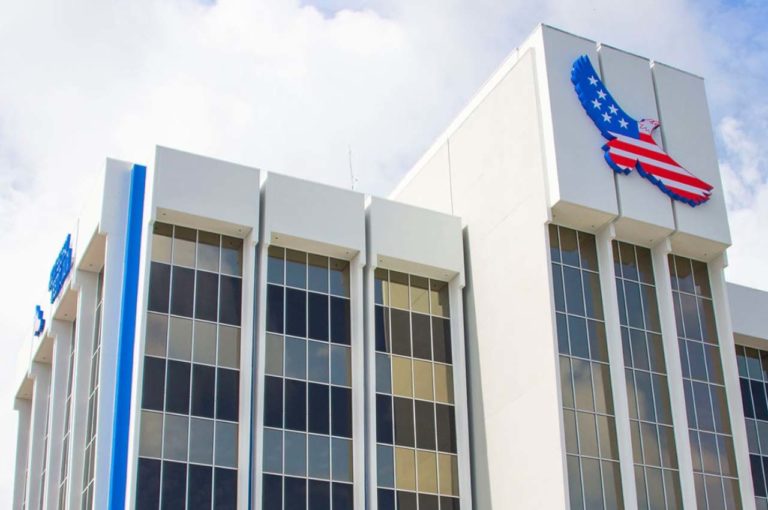
Dr. Matthew Johnson leads first surgeries on new robotic system at HCA Florida Fort Walton-Destin Hospital
Dr. Matthew Johnson completed four hernia cases Friday as HCA Florida Fort Walton-Destin Hospital began using next-generation robotic technology it sought for about two years.

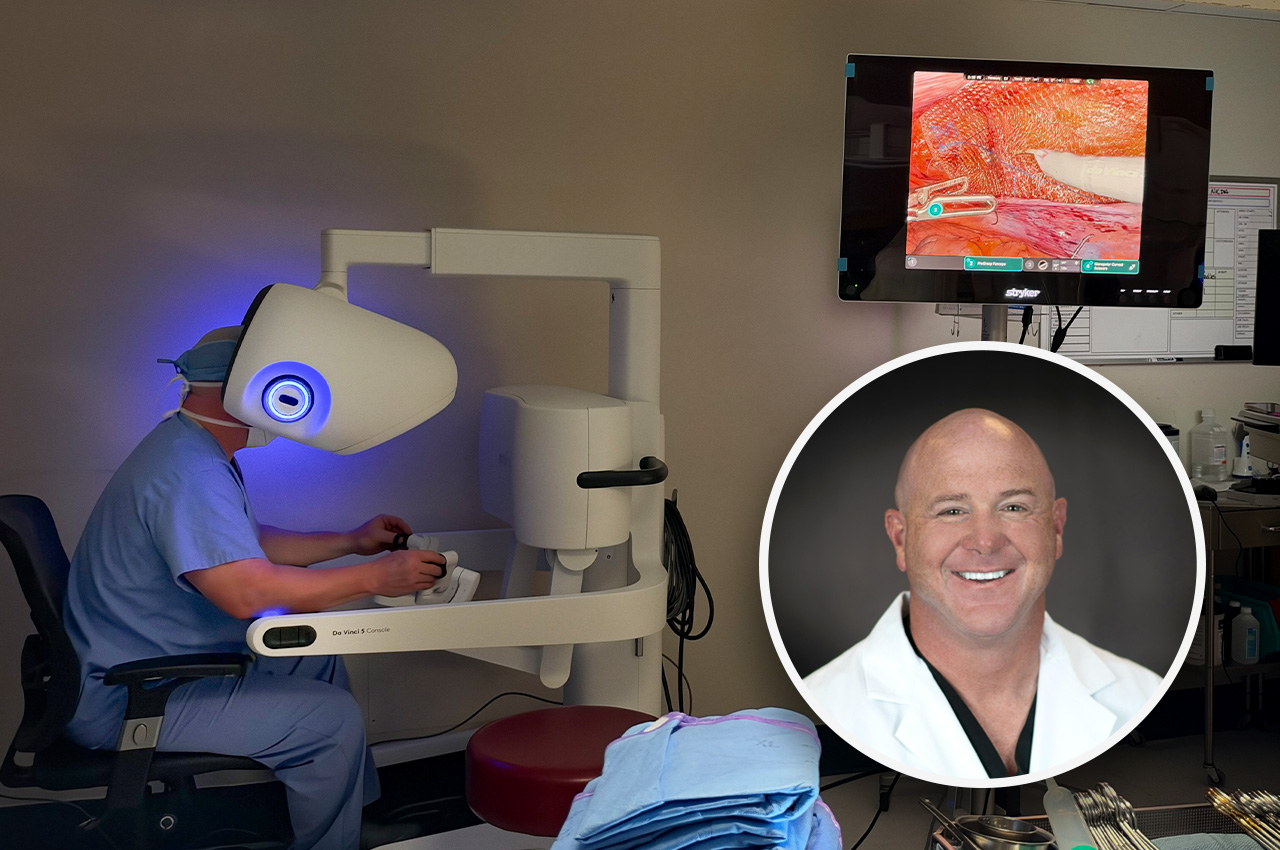
HCA Florida Fort Walton-Destin Hospital performed its first procedures using next-generation robotic-assisted surgical technology Friday, when General Surgeon Dr. Matthew Johnson completed four hernia cases on the new system.
- The hospital’s new Intuitive da Vinci 5 robot was a long time coming, Johnson said before his first case Friday morning.
“We’ve been trying to get this for about two years, and it arrived last week,” Johnson said. “The amount of technology on it is absolutely incredible. We’re so excited to be able to deploy this and benefit our patients.”
HCA Florida Healthcare has also added the technology at HCA Florida Gulf Coast Hospital in Panama City, which performed its first procedure on the technology last month.
Johnson’s first procedure Friday was a robotic right-sided inguinal hernia repair.
“That’s basically a hernia down in the groin. Very common in men as you get older,” Johnson said.
He said the new system helps with the sensitivity of the instruments and allows surgeons to measure the hernia during the operation.
- “Ultimately a hernia is a hole, so we can measure it in the operation to determine specifically what size of mesh that we need to use to fix the hernia,” Johnson said.
The system offers enhanced three-dimensional visualization, advanced instrument control and technology that allows surgeons to sense the amount of force applied to tissue during surgery, according to the hospital. Johnson said the platform is more precise than earlier models and uses artificial intelligence.
“Although the older models are just as amazing, this newer model employs the use of artificial intelligence,” Johnson said. “It has specific instruments that give you feedback. It’s called a Force Feedback system, so you can actually feel it or have sensitivity with robotic arms.”
Measuring tumors digitally
Johnson said the system is used across abdominal, gynecologic and urologic surgeries, and the hospital will also use it for thoracic surgeries, including removing lung cancers.
One of its main features, he said, is the ability to measure the size of a tumor inside the body digitally. That helps surgeons get the margin needed above or around a tumor to make sure everything is clear and cancer-free.
“Before we would have to pull in a ruler on the inside and do a measure. Now we don’t have to do that because we can digitally measure, and so it’s used for all various types of cancer surgeries,” Johnson said. “And with it being here, we’ll be able to do more of those and be more precise.”
How it works
During robotic-assisted surgery, surgeons control specialized instruments from a console, using detailed, magnified images to navigate delicate areas of the body. The system translates the surgeon’s hand movements into precise instrument movements, allowing for greater control while minimizing the need for large incisions.
Johnson said minimally invasive surgery overall is much better than open surgery, and that the precision, efficiency and instruments of the new system lessen postoperative pain. He said minimally invasive surgery also gets patients back to work sooner and carries less infection risk, though he noted that is not specific to the new technology.
“The surgical anatomy is in 3D, so you can see everything clearer than the naked eye,” he said.
- The hospital said the technology provides enhanced control and visibility for complex procedures performed through smaller incisions.
Johnson said the enhanced visualization, precision and ability to sense force applied to tissue give surgeons valuable tools for complex procedures.
“Most importantly, this technology supports our goal of helping patients experience less discomfort, recover more quickly and return to their daily lives sooner,” Johnson said.
A patient’s perspective
Among Johnson’s patients Friday was Robert Tagatz, who had surgery to repair a hernia in his groin.
Tagatz said the hernia appeared after he lost 72 pounds. He said he believes he had it for some time and had felt achiness in the area but passed it off as getting older.
He noticed it at home and sent a picture to his physician, who told him he might want to have it looked at.
After retiring, Tagatz said, he came to see Johnson.
“He’s been talked about positively, and so I’m really excited to have this done with him,” Tagatz said.
Tagatz said Johnson briefed him a little on the new system ahead of the surgery, and he did his own research on YouTube.
- “It’s pretty advanced. I’m really fortunate to be the first one having it done here,” Tagatz said. “New technology, why not take advantage of it?”
He said the hernia has caused discomfort and has made him more cautious at the gym.
“I’m looking forward to the recovery and getting back to my activity in the gym,” Tagatz said.
Looking ahead
Johnson said the surgical team, hospital administration and surgeons are all excited about the new system.
“We’ve been doing robotic surgery here for a long time,” he said. “And truly, this is going to benefit all of our patients as we ramp up our volume on this new system.”
HCA Florida Healthcare said bringing the technology to hospitals across the region allows patients to access advanced surgical options without traveling far from their families and support systems.
For more information, visit hcafloridahealthcare.com/specialties/surgery.
Never miss a local story
Rather not get email? You can still help keep local news free. Support local news