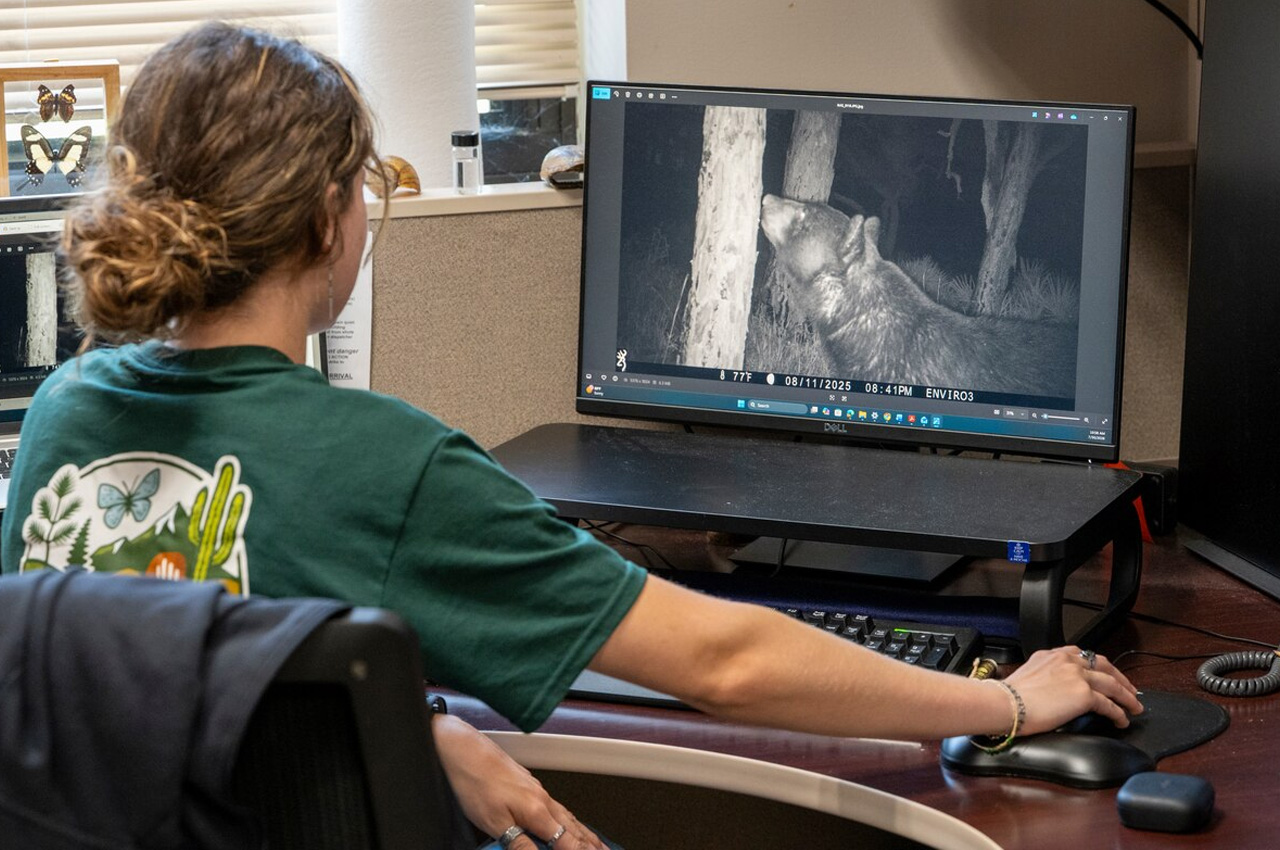
Hurlburt Field is actively tracking black bear movements on base and training security personnel to respond to encounters as interactions between people and bears increase across Florida.
- Desirae Minns, a wildlife biologist with the Center of Environmental Management of Military Lands, is leading the effort at Hurlburt Field. She uses information gathered from tracking and monitoring to understand bear movement patterns and determine how to make the base safer for both people and wildlife.
Minns said bear-human interactions have increased across Florida as development expands and the state’s population grows.
“If bears continue finding food around people, they can become more comfortable around humans,” Minns said. “That can create situations that are unsafe for both people and bears.”
Much of the strategy centers on removing what draws bears in: human food sources. Minns said residents can help reduce bear activity by making sure trash containers close and lock properly, securing dumpster lids after use and placing all garbage inside containers.
The base’s environmental team monitors locations where bears have repeatedly accessed trash containers to determine if damaged or unsecured receptacles are contributing to the problem and whether additional measures are needed to deter bears from returning.
- “We want to discourage them from coming up to our doorsteps,” Minns said.
If a bear encounter does occur, Minns recommends remaining calm, making noise so the bear knows a person is nearby and slowly backing away. She advises people not to run from a bear.
Environmental personnel have also provided Security Forces Airmen with intensive wildlife interaction response training.
Minns said the goal is not to remove the bears but to learn to coexist with them.
“We can’t get rid of the bears,” she said. “This is a part of their natural range and habitat, so we’re learning how to live with them.”