
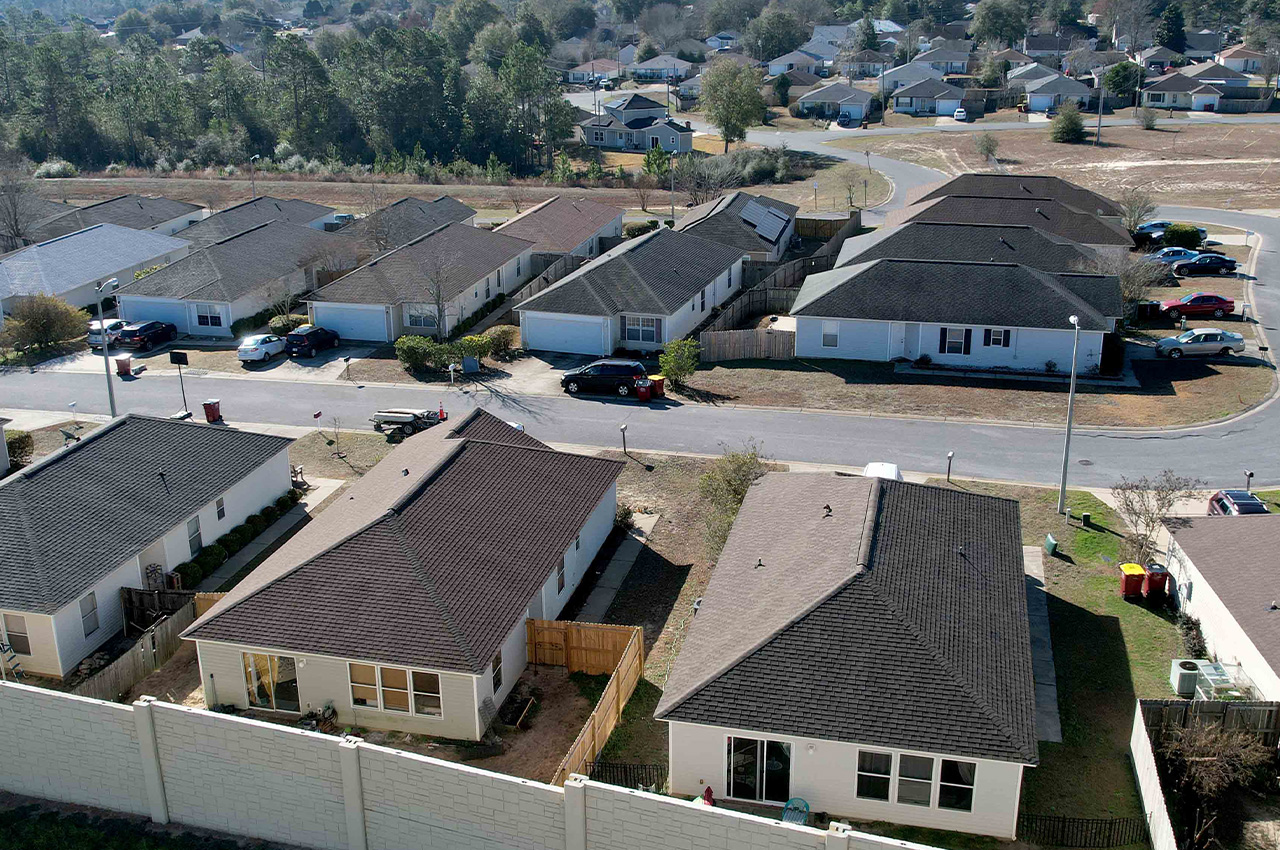
The Okaloosa Board of County Commissioners voted unanimously Tuesday to pursue a legislative initiative that could eventually eliminate county and city general property taxes on homesteaded properties, replacing them with a voter-approved one-cent sales tax.
- The initiative, titled “A Penny to Save Our County Homes, a Zero Homestead Millage Initiative,” was developed by Chairman Trey Goodwin with assistance from Deputy County Administrator Craig Coffey and County Administrator John Hofstad. It would require the Florida Legislature to authorize a new type of local-option sales surtax before any county could act on it.
The concept is straightforward in principle: if state lawmakers created the tool, a county could place a referendum on a general election ballot asking voters whether they want to swap general millage on homesteaded properties for a one-penny sales tax. Passage would require a 60% supermajority.
In Okaloosa County, Goodwin said the numbers support the concept. According to the agenda documents, the county currently collects approximately $37 million annually in general millage from homestead property owners. A one-cent sales tax, split between the county and its nine cities under existing state revenue-sharing formulas, could generate enough to replace those dollars entirely, Goodwin said.
More than a third of sales tax revenue in Okaloosa County comes from non-residents and visitors, meaning a significant share of the replacement funding would be paid by tourists rather than local homeowners.
- “Not only are you getting it off the homestead bill, you’re actually shifting it to outside dollars, which are the best dollars to use,” Goodwin told commissioners.
The proposal would apply only to county and city general revenue millage. It would not affect school district taxes, independent special districts, fire districts, non-ad valorem assessments, MSTUs or MSBUs.
A surtax approved under the initiative would carry a set term. A 10-year approval, for example, would mean 10 years of zero general millage on homesteads. Any extension would require another voter referendum.
Why Goodwin says it matters
Goodwin framed the initiative as a response to a complaint he said he has heard consistently since he first ran for office: residents want the financial burden for general services shifted off their homesteads and onto a consumption-based tax.
He pointed to first-time homebuyers as a group that stands to benefit. Under the current system, newer homeowners often pay a disproportionate share of property taxes because they lack years of accumulated Save Our Homes protections or portability benefits. The county-wide median home price is $377,000, according to the county, and rising values mean some homesteaded properties will never fully escape the tax burden even under existing or proposed protections.
- “I was talking to somebody just the other day and they said, the thing that disheartens them the most is they paid off their mortgage, they live mostly debt-free, and they said, ‘But I still feel like I rent my house from the government,'” Goodwin said. “And I hear that from a lot of people.”
Goodwin said the initiative has value regardless of what happens with the separate property tax amendment on the November ballot, which was advanced by the Legislature. That measure would increase homestead exemptions but phase in over several years and, Goodwin argued, still would not get every homesteaded property to zero general millage.
“Even under the initiatives that have been put forward by the state, it doesn’t get everybody to a zero general millage tax bill on their homestead, and this proposal actually could do that,” he said.
A unanimous vote, but not without debate
While all five commissioners ultimately voted in favor, the discussion showed differences over timing and strategy.
Commissioner Sherri Cox, who made the motion to approve, offered the strongest endorsement.
- “We don’t want to cut animal services. We don’t want to cut libraries. We don’t want to cut the things that we’re already providing to you,” Cox said, arguing that a voter-approved sales tax could fund services that might otherwise face cuts under property tax reform.
She also pushed back against suggestions to hold off on designating the initiative a top legislative priority, noting the 2027 legislative session would be the earliest window and that staff needed time to develop the framework.
“If property tax reform passes in November, it’s too late to then, at the last minute during the holiday season, sharpen our pencils and get something pushed together at the last minute to push before the eyes of the legislature,” Cox said.
Commissioner Drew Palmer seconded the motion but initially raised several concerns. He questioned the reliability of sales tax revenue, which fluctuates with economic conditions and tourism, and warned that a higher sales tax rate could put Okaloosa County at a competitive disadvantage compared to neighboring counties that do not adopt the surtax.
- “There’s gonna be another 2008 at some point …that really craters the visiting in our community, and then what do we do in those types of situations?” Palmer said.
He also noted the initiative was still in a conceptual stage, making it difficult to declare it a top legislative priority before the details were fully developed. He ultimately came around.
“I’m convinced,” Palmer said. “Making this a legislative priority or not, to me, it doesn’t really matter because there’s a lot of work to get before we get there anyways.”
Commissioner Carolyn Ketchel said she supported the concept but wanted more time. She suggested running the idea by state legislators, the incoming president of the Florida League of Cities and the Florida Association of Counties before formally prioritizing it.
“Policy made in haste is policy that you regret,” Ketchel said. She suggested the board could take it up in December, particularly if the property tax amendment passes in November and forces counties to find alternative revenue sources.
Goodwin pushed back on the idea of waiting.
- “You and I have been waiting 12 years to do this,” he said. “Do it now.”
Commissioner Paul Mixon said his concern was narrower. He had no objection to directing staff to begin work but questioned whether it was premature to declare the initiative a top legislative priority before the board had set its full legislative agenda for the year.
“We don’t know what our other legislative priorities will be. We’re very early to create a top legislative priority,” Mixon said.
That concern was largely resolved when commissioners noted the agenda language described the initiative as “a top” legislative priority rather than “the top” priority.
What comes next
The five-part motion the board approved directs staff to develop a legislative framework and advocacy strategy, coordinate outreach to Florida’s other 66 counties, conduct additional fiscal, legal and policy analysis, and return to the board with findings and recommendations.
No draft legislation has been written yet. Goodwin acknowledged the initiative “is not quite that ready to go” but said the agenda backup contains enough framework that a bill could be drafted from it.
The proposal would not require every county to participate. Counties where the math does not work or where voters do not support the shift would simply not adopt it. Goodwin said the initiative is best suited for counties with a strong tourism base, which includes many of Florida’s coastal counties.
The earliest the Legislature could consider the proposal would be the 2027 session. If authorized, individual counties would still need to hold their own referendums before any tax change could take effect.

7 Responses
A VAT. What a concept. Then you’re only taxed if you spend money. What a great idea!
Isnt this a one PERCENT sales tax? Seems that a one cent sales tax means one cent on each sale… only a penny. One percent is 1/100 of the total sale.
Oh hell no !!!!
NO, no more taxes
This is like taking from Peter to pay Paul. Taxes are already 7%, this will make them 8%. People think about if you have to buy a big ticket item? Besides it’s not going to take that much from the city or county budget. What we have to remember is all the rentals we have in Okaloosa County. They will still be paying taxes, only homeowners with a homestead tax exemption will not be paying taxes. I say we vote yes for no property tax and no for the one cent sale tax. The government is going to nickel and dime us to death. Let’s give the single mom’s and dad’s an opportunity to buy a home for their children give the middle class and senior citizens a tax break so they can afford the medication they need. This homestead tax exemption I feel will be a win for everyone. These city and county leaders will have to tighten their belts and stop having those 3 and 4 martini lunches on our dime. And wasting our money 💰
Susan, pretty much none of that is true. Have you calculated the difference for you personally between current taxes and then with the additional homestead exemption but with additional sales tax?
This is the fly in the ointment.
“It would not affect school district taxes, independent special districts, fire districts, non-ad valorem assessments, MSTUs or MSBUs.”
Special Districts, fire districts, etc are not bothered by us pesky voters when they decide to raise their rates or develop budgets or spend generously on their projects. They answer to no one. Are their meetings open for public comment for example?
I would be very pleased if anyone who reads this could correct me and perhaps better explain these districts and how they budget.
Jim McSwain