
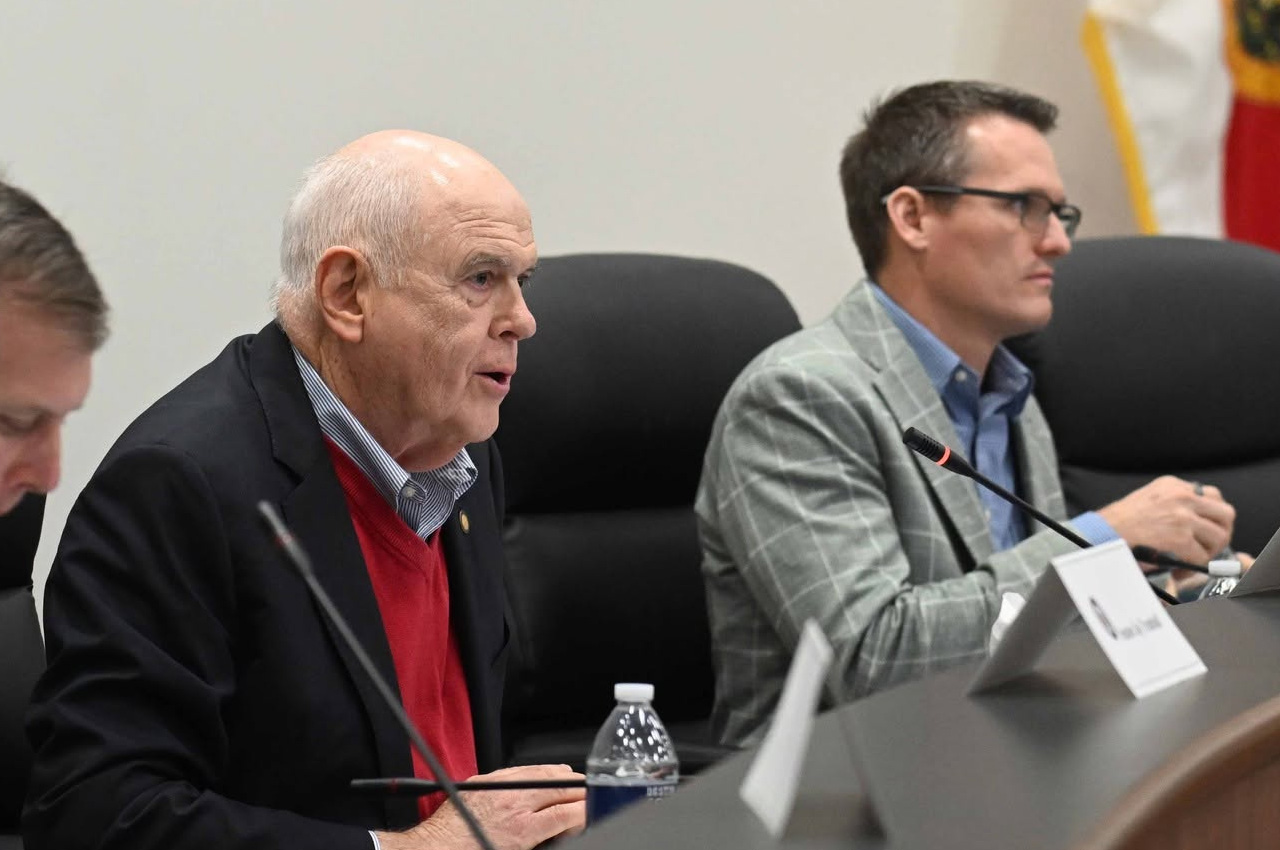
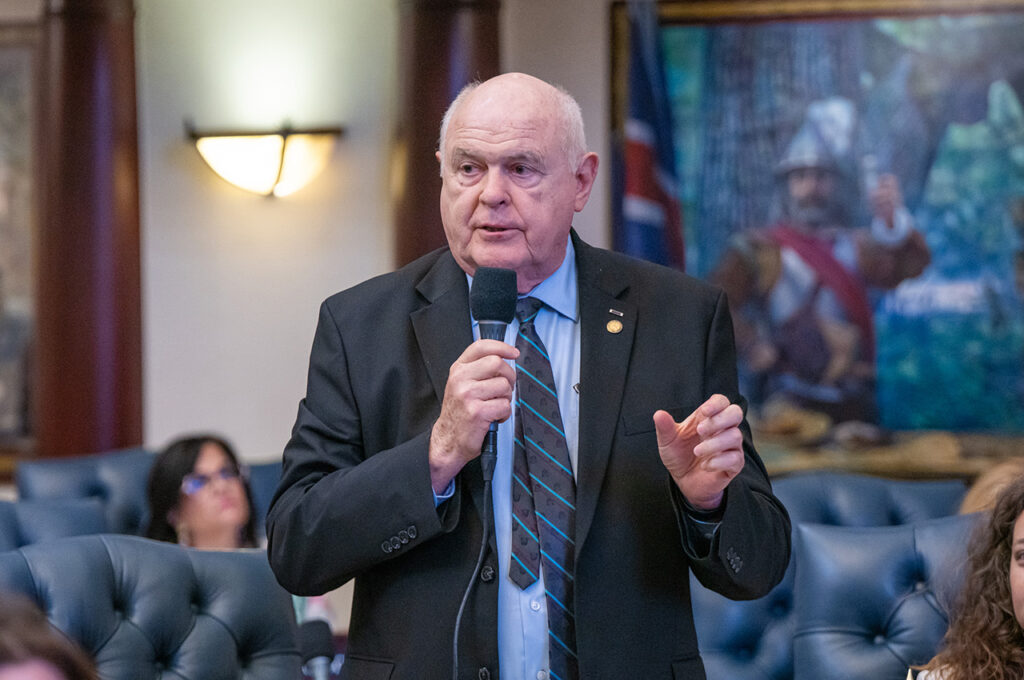
State Reps. Patt Maney and Nathan Boyles voted against Gov. Ron DeSantis’s property tax constitutional amendment during a special session of the Florida Legislature last week, with both lawmakers issuing public statements explaining their reasoning.
- The measure, CS/HJR 1F, passed both the House and Senate on June 2 and now heads to Florida voters on the November ballot. The constitutional amendment requires at least 60% voter approval to take effect.
If approved by voters, the amendment would raise Florida’s homestead exemption from $50,000 to $150,000 on Jan. 1, 2027, then to $250,000 on Jan. 1, 2028. The increased exemption would not apply to school district levies.
The proposal would also lower the annual assessment cap on non-homestead residential and commercial properties from 10% to 5%, require new Florida residents to maintain residency for five years before claiming the increased exemption, and restrict counties and municipalities to using property tax revenue for core services such as public safety, education, infrastructure and natural resources.
Maney: ‘This proposal wasn’t ripe’
In a newsletter to constituents, Maney, who serves on the Florida House’s Select Committee on Property Taxes, said he supports the goal of property tax relief but believed the final proposal moved too quickly.
“Governor DeSantis is right. Floridians deserve meaningful tax relief,” Maney wrote. “As we awaited his ideas, I volunteered to serve on the Florida House’s Select Committee on Property Taxes to deliver thoughtful proposals earlier this year.”
DeSantis announced his proposal May 27, and state legislators were called to Tallahassee for a vote June 1 through 3, according to Maney’s newsletter.
- “For such a fundamental reorientation of how we fund state and local government, it was little time to consider with no protections for public school funding, no revenue estimation studies, no recourse without another constitutional amendment, and a great deal of unanswered questions about the constitutionality of the measure as drafted, as well as the dramatic change to the state’s tax revenue structure,” Maney wrote.
Maney, a former judge and retired military officer, said his decision came down to deliberation.
“As a former judge and retired military officer, I am thoughtful before I send any man to jail or war,” he wrote. “Today, I am a state representative for parts of Okaloosa County, and I approach each vote with that same thoughtfulness which Florida families deserve. The truth is, this proposal wasn’t ripe and I voted my conscience. The voters of House District 4 entrust me to do nothing less.”
Maney’s newsletter also noted the broader context of the session, including the Legislature’s passage of the state’s $114.5 billion fiscal year 2026-2027 budget during an earlier special session.
Boyles cites uneven relief, local service concerns
Boyles released a statement after the vote acknowledging shared goals with the governor and Legislature while explaining his disagreement with the proposal in its final form.
“Although I voted against the final form of the proposal adopted today, I am grateful to serve alongside a Governor and Legislature that are focused on improving affordability for our citizens,” Boyles wrote. “I wholeheartedly agree that we are overdue for a review of the property tax structure in this state, even though I did not concur in the details of the proposal.”
Boyles outlined two main concerns with the measure.
“My concerns center primarily on the uneven distribution of the proposed tax relief, which would benefit homesteaded properties held for five years or more while potentially increasing costs for renters and new homeowners,” he wrote. “I am also concerned about the potential negative impacts to local services, including fire, law enforcement, emergency medical services, and public works, which are essential to maintaining safe and functional communities.”
Boyles said his office would work to inform voters ahead of the November referendum.
- “In the months ahead, my staff and I will work to help inform and educate interested voters on both the potential benefits and drawbacks of this referendum, so that Floridians can make informed decisions at the ballot box in November,” he wrote.
What’s next
The joint resolution, along with the Legislature’s proposed 2026-2027 budget, now goes to the governor’s desk. If approved by 60% of voters in November, the initial property tax exemption increase would take effect on Jan. 1, 2027.

8 Responses
DeSantis is actually trying to do something as opposed to 25 more years of “study”. People are tired of the waste and fraud in government. For better or worse, social media is exposing it all.
Y’all both disappoint me. I agree with Ray – Are either of you up for re-election?
Oh, by the way, this proposal does not go to the Governor – it’s a constitutional amendment and will be on the ballot for the November 2026 election
This is a horrible bill as we will have another tax to fund fire, law and so forth. People think before you vote. You may get a relief on property but you will pay more in another tax. This is stupid and sales tax would be terrible as you buy a big item like a car and you would pay thousand of dollars in taxes. No relief in this bill. It is only for the rich, it does not help the middle class. you got to be blind to see you cannot run a county without revenue and we have done fine and only those who can afford half million dollar home are heavy taxes so what is the problem. I pray it does not pass.
Tax the rich and the rich go away and no longer pay taxes. The top 5% of earners pay about 60% of all taxes. Do you really lose 60% of you tax revenue??
Schools, Police and Fire/Rescue are all protected in the proposed amendment. In Volusia County, the 2027 tax levels would reduce aggregate govt income by 6.5%, most of which are discretionary funds that have ballooned over the last decade to multiples of the county population growth. Read the text and decide for yourselves.
The Tax Foundation.org is an 80 year old think tank consisting of experts who advise businesses and legislatures and others on tax policy. It is described as “right-leaning.” It describes the DeSantis proposal as very bad for most communities and lists its many reasons why. I recommend it to the three or four voters in Florida who are likely enough to question this proposal starting with “why now and why this?” with any degree of sincere curiosity.
Floridians want to pay less taxes just as cats love mice and cat nip (also flashlights). “Full stop. Inquiry over. We’re good!”
But, in fact, the chaos this will cause to local control of finances will create economic “friction” that will make providing essential services more costly. Not less. And while there is no free lunch, making lunch more costly is stupid. It’s what we, Floridians, are known for.
Small Gov’t types will love making state government bigger with greater say so over what local communities can provide. New sales taxes and fees will go into effect to help offset the revenue shortfalls. The increases will fall partly on businesses already struggling to survive in the Trump economy. Those who lose businesses will be harmed and property values will decline. Homesteaders, like me, will lose in the long run making up for any short term gains from a roll back in taxes.
It will be glorious. And no one will remember that we could’ve avoided all this if we had honestly questioned the proposal and waited to hear from experts and reviewed the history of such tax “reforms” elsewhere.
The mayor of St Petersburg makes $250,000 a year to show up to work 34% of the time, seems like you could make up some revenue cutting his salary. Oh and btw the top 100 employees of the city make over six figures, same thing in Pinellas County where the county administrator makes $315,000 and the top 100 employees make over $130,000. The state auditor said that Pinellas County collected 80 million more than it needed in taxes and wasted a good chunk of it. I hope everyone remembers getting their proposed tax bill a couple of years ago with the ridiculous valuations. Remember that every one of the taxing districts opted to take the max rather than give the tax payers a break. The property tax increases have far outstripped the population increases and it’s being wasted. Don’t let a politician who makes 315,000 a year scare you into voting against this.