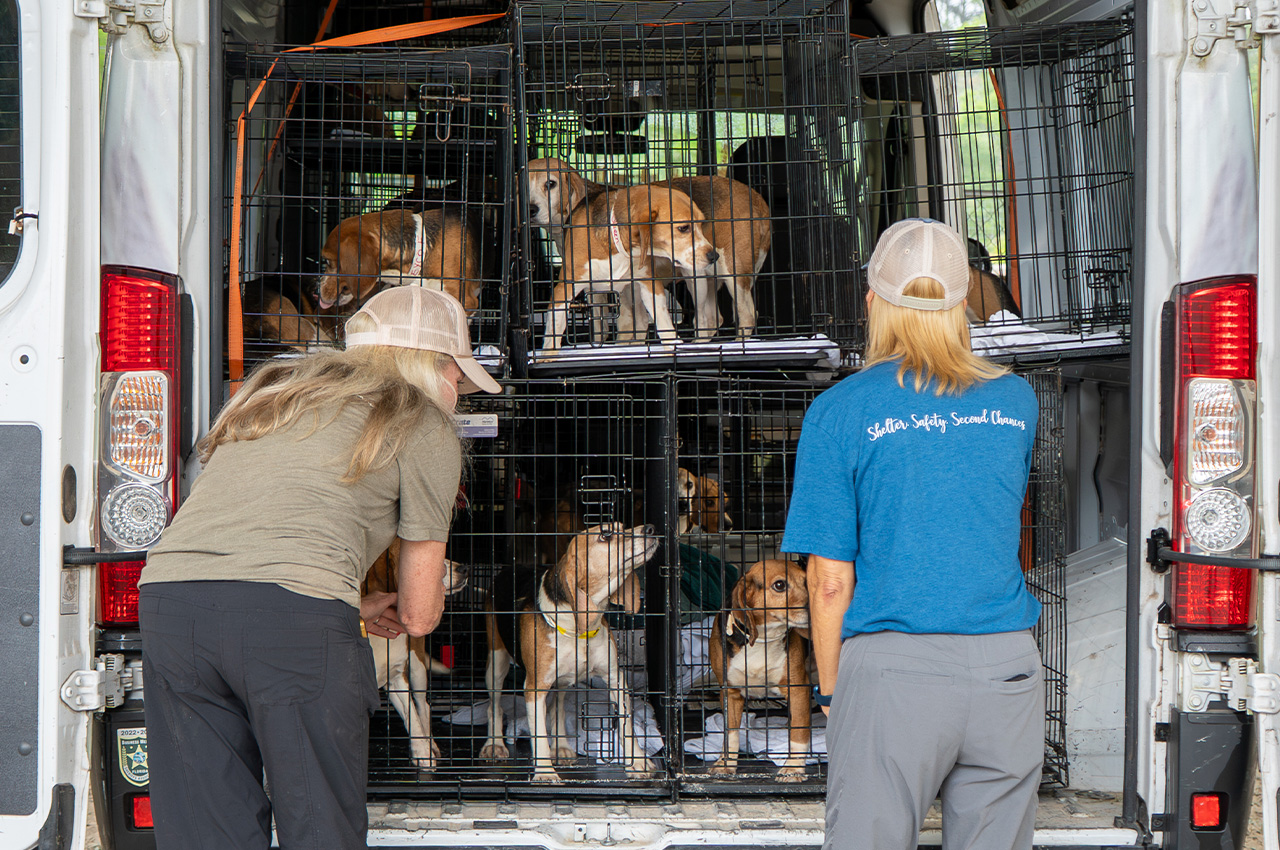
Twenty beagles, including pregnant mothers and senior dogs, arrived at Alaqua Animal Refuge on Thursday after being rescued from Ridglan Farms, a large-scale dog breeding and research facility in Wisconsin.
- The dogs are part of a larger effort led by the Center for Humane Economy and Big Dog Ranch Rescue, which negotiated the release of approximately 1,500 beagles bred for laboratory testing at the facility. The rescue required coordination across multiple states, with organizations stepping up on short notice to take in dogs as they were released in groups over several days.
Alaqua’s group arrived after a nearly 24-hour transport. The refuge’s team met a Big Dog Ranch Rescue bus at the organization’s facility outside Montgomery, Alabama, to pick up the dogs.
Among them is a 14-year-old male beagle who has spent his entire life at the facility.
“These beautiful dogs have never experienced life outside of a cage,” said Laurie Hood, founder of Alaqua Animal Refuge and Florida state director for Animal Wellness Action. “They were born specifically for science — to be bred, poked and prodded, confined, and used over and over again.”
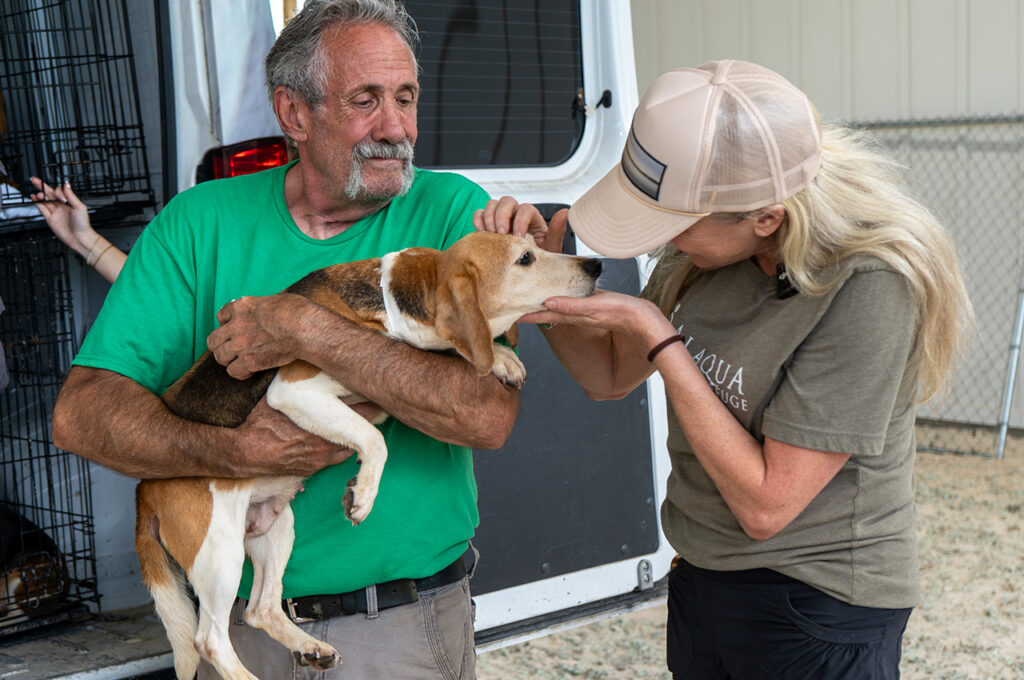
The beagles were raised in wire cages with no socialization. At the facility, Hood says they drank water from devices similar to rabbit waterers and were given a high-protein mash rather than standard dog food. When Alaqua’s team put down kibble for the dogs on their first night, the beagles didn’t know how to chew it.
- They had never felt anything soft under their feet. When staff offered them beds, the dogs didn’t want to step on them. They also didn’t know how to drink water from a bowl.
Despite a lifetime of confinement, the dogs began showing signs of life almost immediately.
“When the doors opened, literally they’re all standing and their tails are wagging, and they’re just happy to be alive,” Hood said. “I don’t think there was a dry eye in the whole house.”
Within about an hour of arriving, some of the beagles had started playing. Staff have since been taking the dogs out one by one into large play yards to stretch their legs.
Still, the adjustment will take time. Hood said the dogs don’t yet understand basic human affection.
“I held one yesterday for an interview and she didn’t even know what to do. She just froze,” she said. “They act like they want to come to you. They wag their tails, and when you squat down and put your hand out, they cower back. They don’t know how to accept even just a basic pat on the head.”
Hood said none of the dogs showed any sign of aggression — a trait that, while endearing, is part of what made them targets for research use.
- “Unfortunately, that trait that they are such easygoing, gentle dogs is what makes them a target for research experiments because they don’t fight back,” she said.
Several of the beagles are pregnant or suspected to be pregnant. Hood said their puppies will be born either in one of Alaqua’s maternity suites or in a foster home.
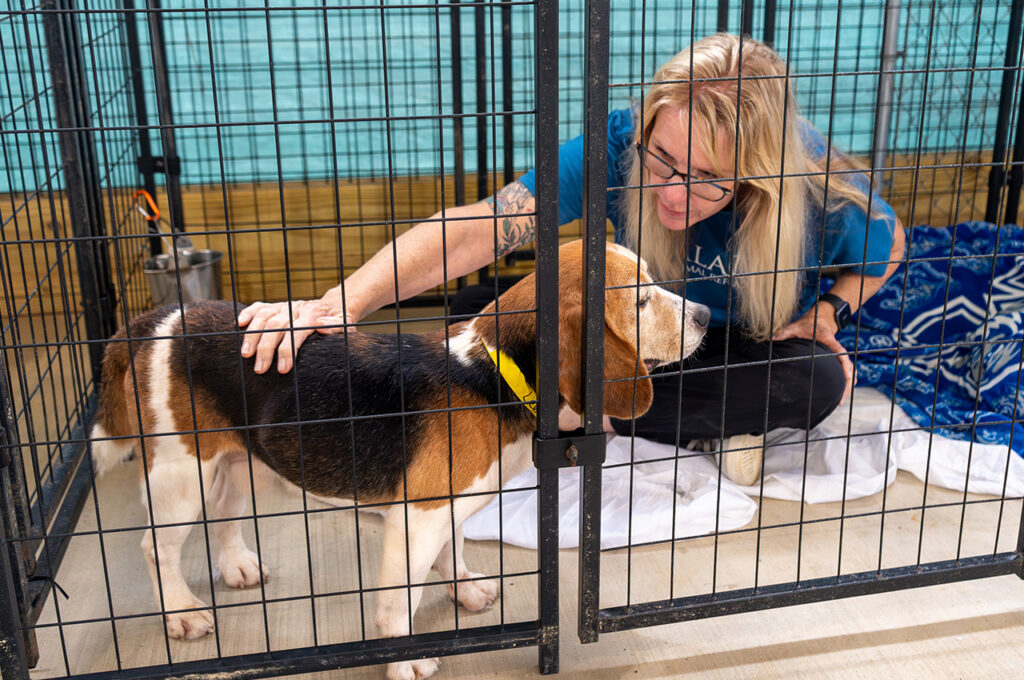
“To know that they’re going to be born not in a wire crate, in confinement without any human interaction at all — to know that they’re going to be born where they’re not going to know anything but love,” Hood said. “It’s amazing.”
Alaqua plans to quarantine the dogs for two weeks to screen for illness, disease and parasites. During that time, the dogs will also undergo behavioral evaluations. Once cleared medically, they will be spayed or neutered and microchipped.
Hood said the behavioral timeline is harder to predict. The dogs need to be leash trained and learn basic recall before being placed in homes, in part because they are a flight risk if a door is left open.
“We allow them to take all the time they need,” Hood said.
Due to the high-profile nature of the rescue, Alaqua expects strong interest from potential adopters and fosters. The organization said priority will be given to individuals with experience with fearful or under-socialized dogs, those who can provide calm and stable environments and those who understand the long-term commitment involved.
Hood encouraged community members to consider adopting other animals already at the refuge to help make room for the beagles to be integrated into the main facility.
- “We had to create an overflow emergency setup area for these dogs because we stay at full capacity all the time,” she said.
Alaqua Animal Refuge is a no-kill animal shelter and sanctuary located Freeport. The organization is currently accepting donations to support the ongoing medical care, rehabilitation and neonatal support needed for the rescued beagles and their puppies.