Florida Power & Light Company (FPL) filed a petition Tuesday with the Florida Public Service Commission requesting approval for a temporary surcharge that would add $8.07 to typical Northwest Florida residential customers’ monthly bills in 2025. In FPL’s main service territory, the surcharge would add $12.02 to typical residential bills.
- The proposed surcharge aims to recover costs from Hurricanes Idalia (2023) and Debby, Helene, and Milton (2024), which caused more than 3 million combined outages. The petition also seeks $150 million to replenish the company’s depleted storm reserve.
“FPL worked relentlessly to quickly restore power to our customers in the aftermath of each of these hurricanes,” said Armando Pimentel, FPL President and CEO. “We’re mindful that customers pay these restoration costs, which is why we continue to invest in storm hardening and smart grid technology.”
The series of storms began with Category 3 Hurricane Idalia in August 2023, followed by Category 1 Debby in August 2024, Category 4 Helene and Category 3 Milton in September and October 2024. Milton notably produced dozens of powerful, long-track tornadoes.
While our area of Northwest Florida largely avoided major impacts from the recent hurricanes, local FPL customers will see bill increases as part of the company-wide recovery effort.
- “FPL always works around the clock to restore power safely and as quickly as possible to our customers in the aftermath of hurricanes and extreme weather,” said J.T. Young, vice president and general manager, FPL – Northwest Florida region. “We’re mindful that customers pay for the cost of responding to storms — which is why, in order to avoid many outages, speed restoration and reduce restoration costs, we continue to invest in storm hardening and smart grid technology, across Northwest Florida and throughout our entire service area.”
If approved by regulators, Northwest Florida customers would see their typical 1,000-kWh residential bills increase from $135.38 to $143.45 starting in January 2025.
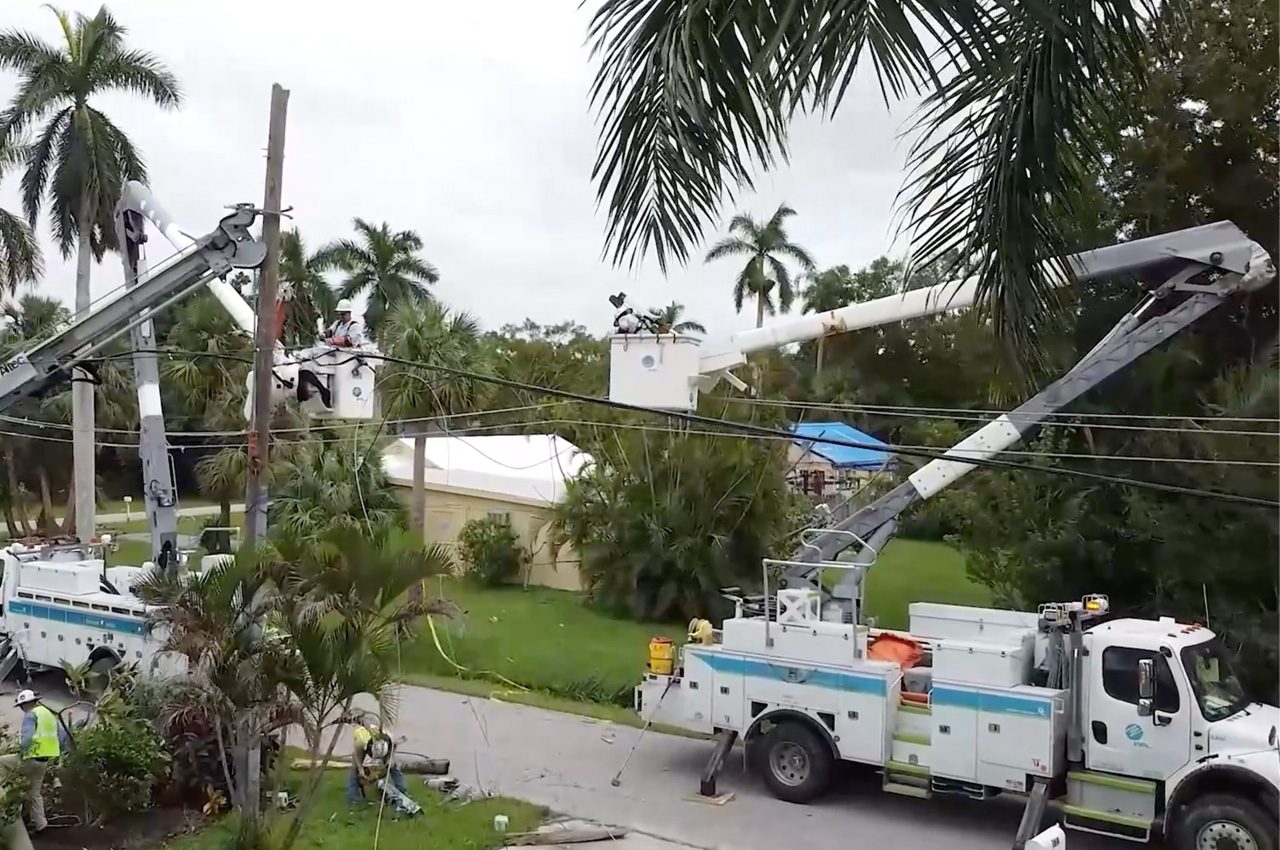
FPL deployed more than 52,000 restoration workers across all four storms. The company reports its grid investments helped avoid nearly 900,000 outages during these events. Restoration times ranged from one day for Idalia and Debby to five days for Milton.
If approved, the surcharge would be applied over 12 months to reduce the risk of overlapping charges if more storms hit in 2025. According to FPL, rather than including storm response costs in regular electric bills, Florida utilities typically recover these expenses through temporary surcharges after storms occur.