
Animal control in unincorporated Okaloosa County changes hands Wednesday, Sept. 23, when the county and the City of Crestview take over services the Panhandle Animal Welfare Society provided under a county contract that ended Sept. 22.
- Neither the county nor Crestview will handle non-emergency stray pickups or owner surrenders at this time, according to a county news release issued Tuesday.
The switch follows a Sept. 15 meeting at which Okaloosa County Commissioners unanimously approved changes to the county’s animal control ordinance. Commissioners also placed a 90-day suspension on citations for trap-neuter-return, or TNR, activity and directed staff to bring back ordinance language that allows it.
Who to call
The City of Crestview, through the Animal Services Division of the Crestview Police Department, will provide animal control in unincorporated areas north of Eglin Air Force Base. The number is 850-682-2055.
The county’s Animal Control Division, part of the Public Safety Department, will serve unincorporated areas south of Eglin. Residents there should call 850-651-7400, the Okaloosa County Sheriff’s Office non-emergency dispatch line.
Services include dangerous dog and bite cases, animal cruelty and neglect, quality-of-life ordinance violations, livestock at large and disease reporting, according to the release.
Sheltering and veterinary care for animals in the custody of animal control officers will follow the same north-south split. Crestview Animal Services will shelter animals from north county, while the county will provide those services in south county through a vendor. The county has contracted with Niceville Animal Clinic for sheltering and veterinary services, according to county documents.
Deputy County Administrator Craig Coffey told commissioners Sept. 15 that Destin, Fort Walton Beach and Mary Esther remain with PAWS, and the City of Niceville handles its own animal control. He said three smaller jurisdictions either have no animal control or handle issues case by case.
- Coffey said PAWS once served the entire county and dropped to about 70% after Crestview began its own service. PAWS will now serve about 20% of the county’s population, he said, with the county and Crestview covering about 80%.
The county said in the release that it expects additional changes in the south end of the county as municipal contracts evolve.
“This initiative will bring animal control services in-house so that we can better serve the residents of Okaloosa County with ongoing animal control issues,” Board Chairman Trey Goodwin said in the release. “We are very fortunate to have partnered with the City of Crestview and local businesses to streamline the process between animal control and sheltering to keep costs down.”
Ordinance changes
Commissioner Paul Mixon made the motion to approve the ordinance amendments on Sept. 15, and Commissioner Sherri Cox seconded.
Coffey said the changes were time-sensitive because of the PAWS transition, and that more revisions will follow.
“The ordinance itself is not the end-all, be-all. This is not chiseled in stone. Ordinances evolve, they adapt over time,” Coffey said.
According to Coffey and county documents, the amendments:
- Delegate the county’s animal control authority in north county to Crestview, adopting the city’s animal services ordinance, rules, fines and processes under the interlocal agreement commissioners approved in August.
- Allow PAWS to continue working cases it opened through Sept. 22, such as animal bites and neglect or cruelty.
- Reduce the minimum hold time for stray animals from five days to three.
- Change the definition of an animal shelter to include private shelters, not only nonprofits.
- Remove references to “bad” dogs and cats and bring the ordinance more in line with state law.
- Allow the county to use a special magistrate for animal cases instead of the courts.
- Double current fines and fees, based on inflation.
- Require that an animal be returned immediately once its rightful owner is identified, rather than after 10 days.
- Remove agricultural and rural restraint rules, placing all of south county under one standard.
Coffey said the reduction in hold days had been discussed for years. County documents list the hold time and shelter definition changes as necessary for the south county model, which uses Niceville Animal Clinic for sheltering.
A future ordinance package will address dangerous dogs and changes in state law, Coffey said, along with regulation of places such as pet stores. County documents state that package will incorporate the “Pam Rock Act” passed during the last legislative session.
Residents push for TNR
Several people spoke during the public hearing, all asking commissioners to address TNR. Neighborhood volunteers, shelter workers and leaders of local animal welfare groups described trapping free-roaming cats, having them spayed or neutered and vaccinated, and returning them to where they live. Several pointed to Santa Rosa County, which they said defines community cats in its ordinance and runs a TNR program.
Lorraine Whetstone, development director for Save Our Cats and Kittens, said residents are already doing the work but fear enforcement.
“The public is willing to do this. They just need to know they can help solve the problem without being afraid of being cited by animal control,” Whetstone said. “So that’s why we need the ordinance change.”
Nancy Schimmer, Executive Director of Save Our Cats and Kittens, told commissioners the county has no ordinance addressing free-roaming cats.
“I’m asking you to amend the ordinance to explicitly allow TNR,” Schimmer said. “It won’t cost you more than you’re already about to spend.”
One speaker also raised concerns about reducing stray hold times from five days to three.
Commissioners weigh in
Mixon asked staff about the benefits and potential problems of TNR, and how the county could work toward it.
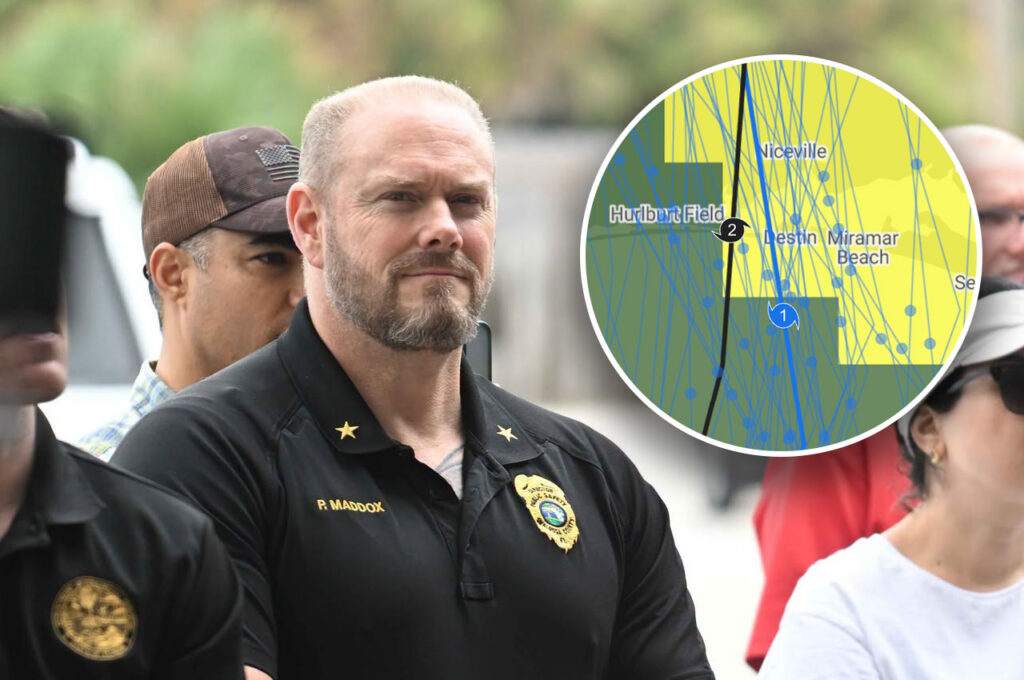
Public Safety Director Patrick Maddox said the ordinance was meant to get the county past two dates: the Sept. 23 start of services and the Nov. 3 vote that will determine what money is available.
“Allowing for this program to move forward in the future, of course, is not off the table should that be the will of the board as we come to you with further changes down the road,” Maddox said.
Mixon then moved to approve the ordinance as presented, with direction that the next ordinance change include a TNR program. He said the change should address “the availability for it, not the funding for it.”
- Coffey noted any county ordinance would apply only to unincorporated areas. He also said colonies can grow in parks and harm birds and other wildlife, that some cats continue to spray and cause problems for neighbors, and that a program would need to address microchipping and ongoing vaccinations.
Goodwin asked whether county ordinances prohibit private individuals or groups from doing TNR. Coffey said the county’s leash law requires a collar, microchipping or owner control once an animal leaves its property, and that the ordinance also addresses harboring strays.
Goodwin asked whether the request was simply to let residents do the work themselves.
“They’re not our cats, but if I want to go into a neighborhood and trap some feral cats and neuter them and then let them go again, why do we care?” Goodwin said.
“If somebody comes into one of the neighborhoods in my district and says, ‘Look, I’m going to trap 20 cats and I’m going to make sure that they can’t make babies anymore. I’m not going to keep them. I’m going to put them back,’ they were already there anyway. What’s the difference?” he said.
Coffey said TNR is already happening in the county and that he had not heard of anyone being arrested for it.
Goodwin said nuisance complaints would remain a separate issue. “If that cat starts tearing up somebody’s property, we may have to send an animal control officer over to get it,” he said. “Those are two different issues to me.”
He then proposed the citation suspension.
“Let’s put a 90-day suspension on issuing citations for TNRs, and then by the time that suspension of citations is over, we’ll already have something back and we’ll deal with it,” Goodwin said.
Commissioner Drew Palmer said the county could change definitions of a community cat or allow TNR by groups it does not fund, while balancing concerns about nuisance animals and wildlife.
Maddox said his office receives many complaints about cats unrelated to TNR, and that not everyone supports the approach.
“There are many people that do not want the TNR program because it doesn’t eliminate the animal or the animal’s presence,” Maddox said. He said the county wants to work with rescues to get the language right.
Cox said she hopes the county’s eventual language becomes a model that other municipalities will want to adopt.
Mixon and Cox accepted Goodwin’s citation suspension as a friendly amendment, and the motion passed unanimously.
Budget concerns
Commissioner Carolyn Ketchel supported the 90-day suspension and said staff should work with the volunteers in the room. She noted the timeline would carry the county past the election.
“In 90 days we’ll be past the election, so we’ll know whether we have money to work with,” Ketchel said.
Ketchel said Amendment 3, the homestead exemption measure on the ballot, would limit county funds if it passes, and that the county could have to look at cutting services such as mosquito spraying and libraries. She said the county is the second- or third-lowest-tax county in the state.
“So we’re not going to be adding on new programs,” Ketchel said. “We don’t have a money tree out back.”
Background
The PAWS executive board voted April 30 to end its county contract Sept. 22 with no extensions. Commissioners approved the “Animal Control Light” model on June 16, limited to services required under Florida law, then approved $600,000 in infrastructure surtax funding for startup costs and an interlocal agreement with Crestview for north county.
Coffey said the county will operate under the “Animal Control Light” model in north county until the new shelter is built and Crestview adds officers and vehicles.
“Please be patient with us as we ramp up this operation to meet the needs of the County. It won’t be perfect on day one, but our commitment to you remains the same: we’ll be better each day,” Maddox said in the release.

One Response
Leave it to Ketchel to remark about the impending doom created by the people voting for amendment 3. She nor anyone else has produced publicly any services that WILL get dropped or specifics concerning a lower budget but she likes scaring people with services that may be dropped most of which won’t affect people like she thinks. I hope amendment 3 passes overwhelmingly and government services are drastically cut. Government should be forced to budget better and get rid of services that waste tax dollars