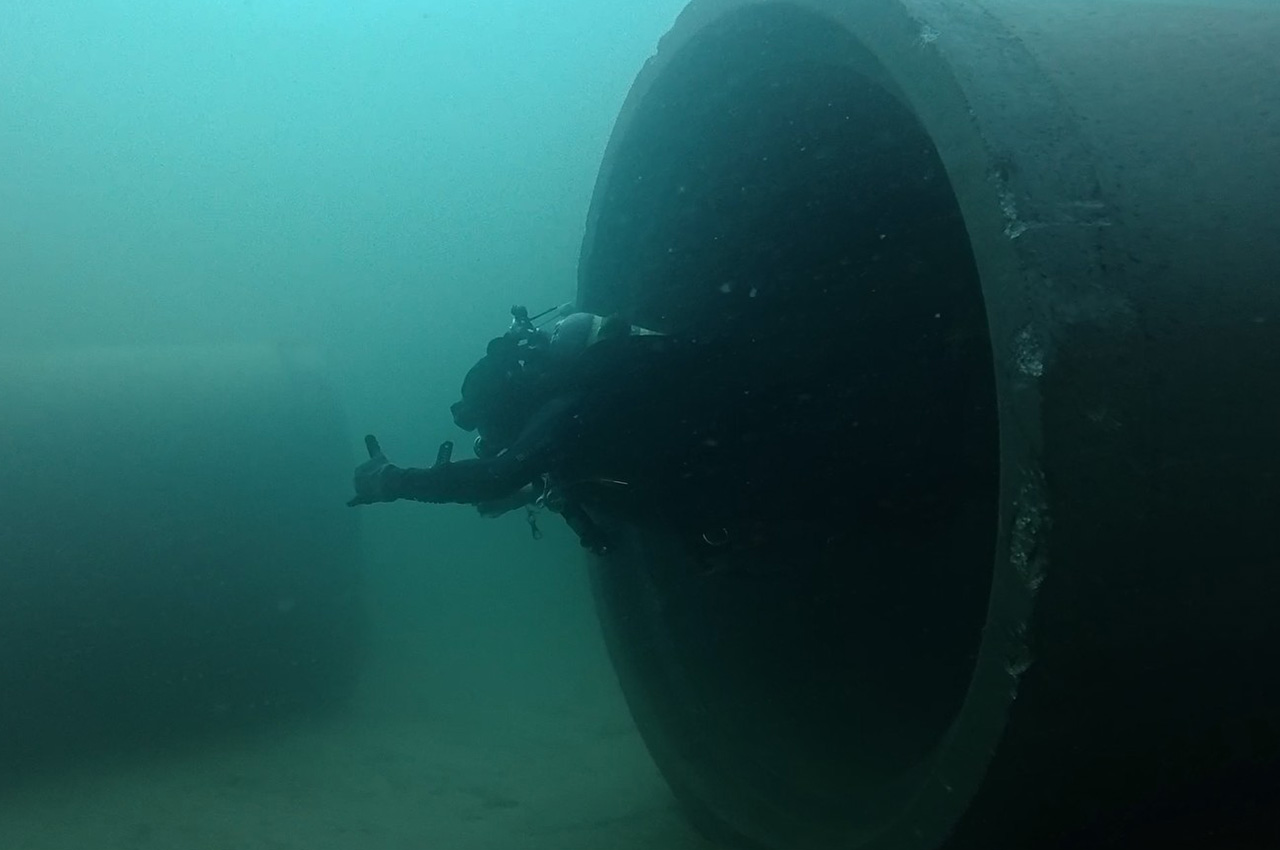
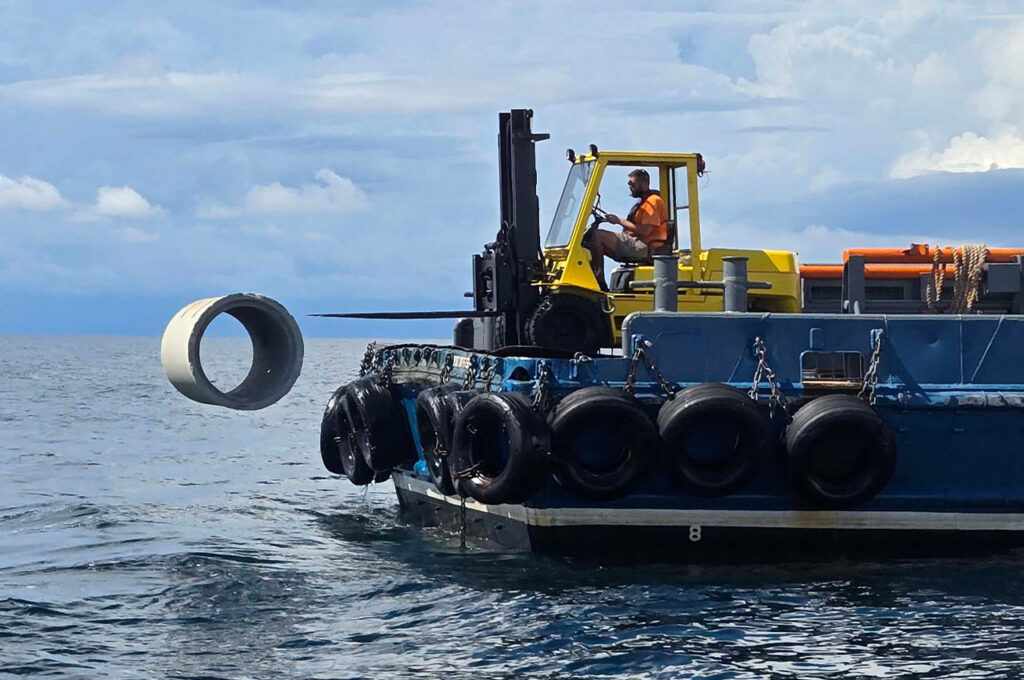
Three new artificial reefs are taking shape off the coast of Destin-Fort Walton Beach as crews deploy 1,500 tons of repurposed concrete culverts in a collaboration between the county’s Natural Resources Team and the Fish & Wildlife Foundation of Florida.
- The project is the second deployment under Florida’s Coastal Corridor, a statewide initiative led by the Fish & Wildlife Foundation and the Florida Fish and Wildlife Conservation Commission. The first deployment took place off Naples on Sept. 2.
The reefs will be built roughly four to eight nautical miles from East Pass at depths of about 68 to 74 feet. Each of the three sites will receive approximately 500 tons of concrete culverts placed in concentrated configurations designed to create durable, complex hard-bottom habitat. The phase is expected to be complete in November 2026.
“These collaborations are necessary to continue the statewide effort to improve habitat for marine life in the Gulf,” said Okaloosa County Board Chairman Trey Goodwin. “We appreciate the Fish & Wildlife Foundation of Florida for choosing Destin-Fort Walton Beach to add to our already vibrant artificial reef system.”
Artificial reefs can provide areas for reef-associated fish and other marine life to feed, shelter, grow and reproduce while also expanding fishing and diving opportunities.
“Thoughtfully planned artificial reefs can play an important role in conserving and enhancing marine habitat while supporting the long-term health of Florida’s fisheries,” said Roger Young, executive director of FWC. “Projects like this bring together sound science, careful site selection, durable materials and strong local partnerships to create habitat that supports marine life and helps sustain healthy marine resources for generations to come.”
Florida’s Coastal Corridor is designed to strengthen the interconnected habitats that support healthy fisheries and coastal ecosystems, from mangroves and seagrass beds to natural and artificial reefs. Through partnerships with FWC, local governments, scientists, conservation organizations and coastal communities, the initiative is building a coordinated network of habitat projects along Florida’s Gulf and Atlantic coasts.
“Three million pounds of reef material makes this a big deployment, but what excites us most is what it represents,” said Nick Wiley, executive director of the Fish & Wildlife Foundation of Florida. “We are beginning to turn the Coastal Corridor from a statewide vision into real habitat in Florida waters. Okaloosa County has been an outstanding partner, and this is exactly the kind of collaboration that will allow the initiative to grow from one community to the next.”