
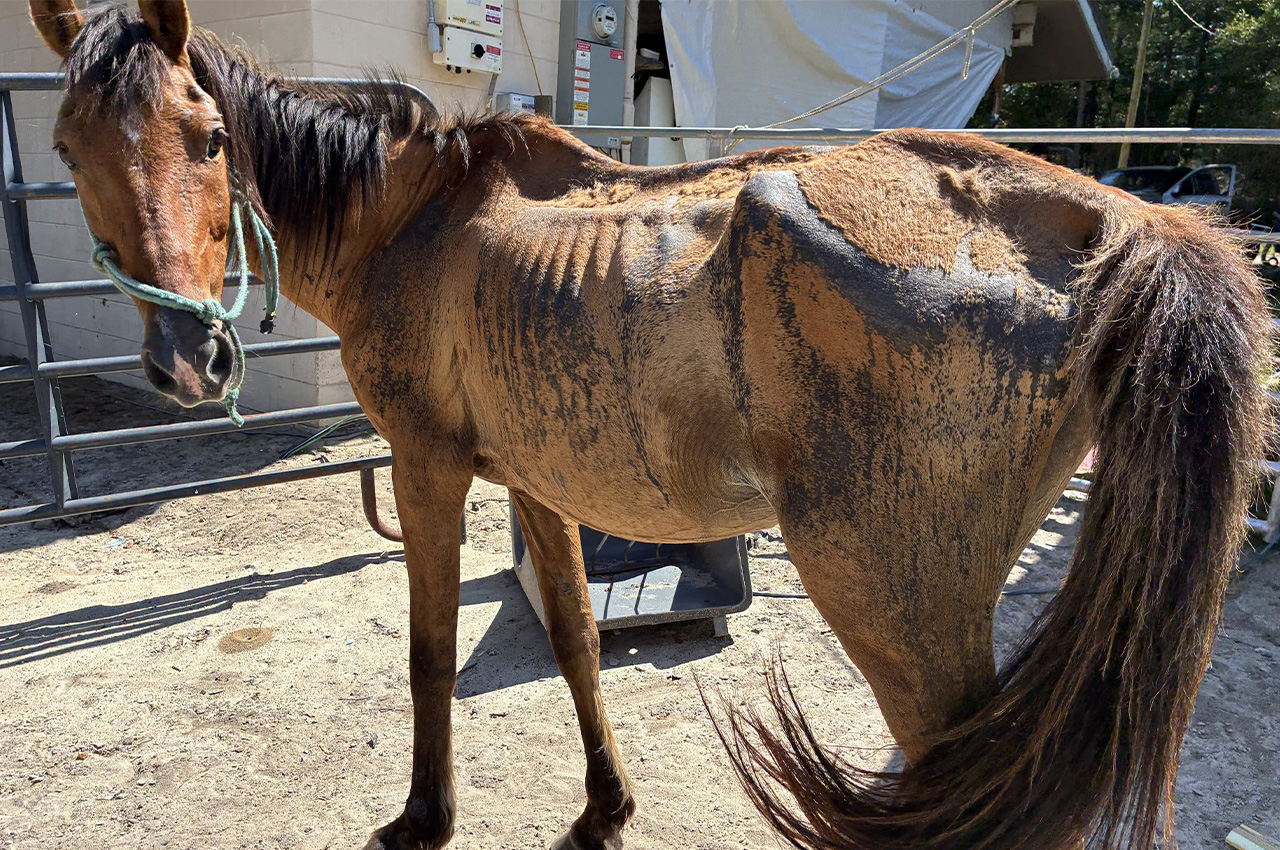
Six horses rescued from a cruelty investigation in Holmes County are now receiving lifesaving care at Alaqua Animal Refuge after being voluntarily surrendered during an investigation by the Florida Department of Agriculture and Consumer Services Office of Agricultural Law Enforcement.
- Based on the investigation, OALE has charged the owner with three counts of animal cruelty. Those charges remain pending through the judicial process.
The investigation began following a referral from the Holmes County Sheriff’s Office, according to Alaqua. Investigators found the horses reportedly confined to a barren dirt paddock with little to no forage available.
A veterinarian and an FDACS Division of Animal Industry inspector confirmed severe malnutrition, with three of the six horses receiving a Henneke Body Condition Score of 1, the lowest possible score and an indication of critical, life-threatening emaciation. Investigators also documented untreated skin conditions and a lack of appropriate veterinary care.
All six horses are now receiving comprehensive veterinary treatment, carefully managed nutritional rehabilitation and individualized care plans at Alaqua.
“These horses didn’t simply lose weight,” said Laurie Hood, founder and CEO of Alaqua Animal Refuge. “Three of them were literally at the lowest body condition score possible. Recovering from prolonged starvation is an incredibly delicate process. It requires specialized veterinary care, carefully monitored feeding protocols, medications, diagnostics, and months of rehabilitation. Every decision we make is focused on giving these horses the greatest opportunity to survive and heal.”
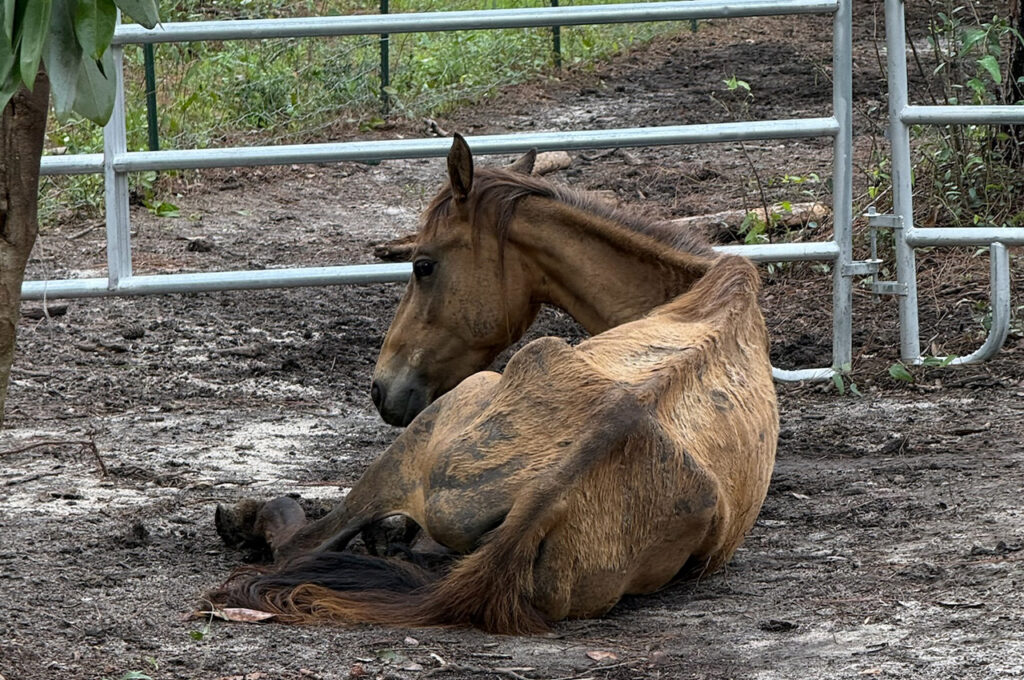
As Alaqua’s team began evaluating the horses, they made an unexpected discovery.
One of the horses, Sumatra Traveler, was identified through official registration records as a registered Florida Cracker Horse, one of Florida’s rarest heritage breeds. Descended from horses brought to Florida by Spanish explorers more than 500 years ago, Florida Cracker Horses helped shape the state’s ranching history and are recognized as Florida’s official heritage horse. Only a limited number remain.
“While Traveler’s story is unique, every one of these horses is equally deserving of compassion,” Hood said. “Neglect doesn’t discriminate. Whether a horse carries one of Florida’s oldest bloodlines or has no pedigree at all, every animal deserves freedom from pain, hunger, and suffering.”
- Several of the horses require ongoing veterinary treatment, specialized nutrition, medications, hoof care, diagnostics and months of rehabilitation before they can begin to recover physically and emotionally.
Hood said the rescue is among the most challenging and expensive Alaqua undertakes, and the organization has responded to a high number of cruelty cases in recent months.
“Each time we say yes, we do so because these animals have nowhere else to turn,” Hood said. “But every rescue stretches our resources further.”
She added: “We never want cost to be the reason we can’t help an animal in desperate need. The generosity of our community has made these rescues possible, and today we’re asking for that support once again. Without continued donations, it becomes increasingly difficult to say yes to the next call for help. These horses deserve every chance to recover, and together, we can give them that chance.”
Donations to support the recovery of these horses and future cruelty investigations can be made at secure.qgiv.com/for/holmescountyhorsecruelty.
Alaqua Animal Refuge is a nationally recognized, no-kill animal welfare organization located on 100 acres in Northwest Florida. Founded in 2007 by Hood, Alaqua cares for thousands of animals each year through rescue, rehabilitation, adoption, cruelty intervention, disaster response and community outreach programs.
More information is available at alaqua.org.

One Response
So what’s the rest of the story? Where were they found? Who was neglecting them? Was anyone arrested? Who?