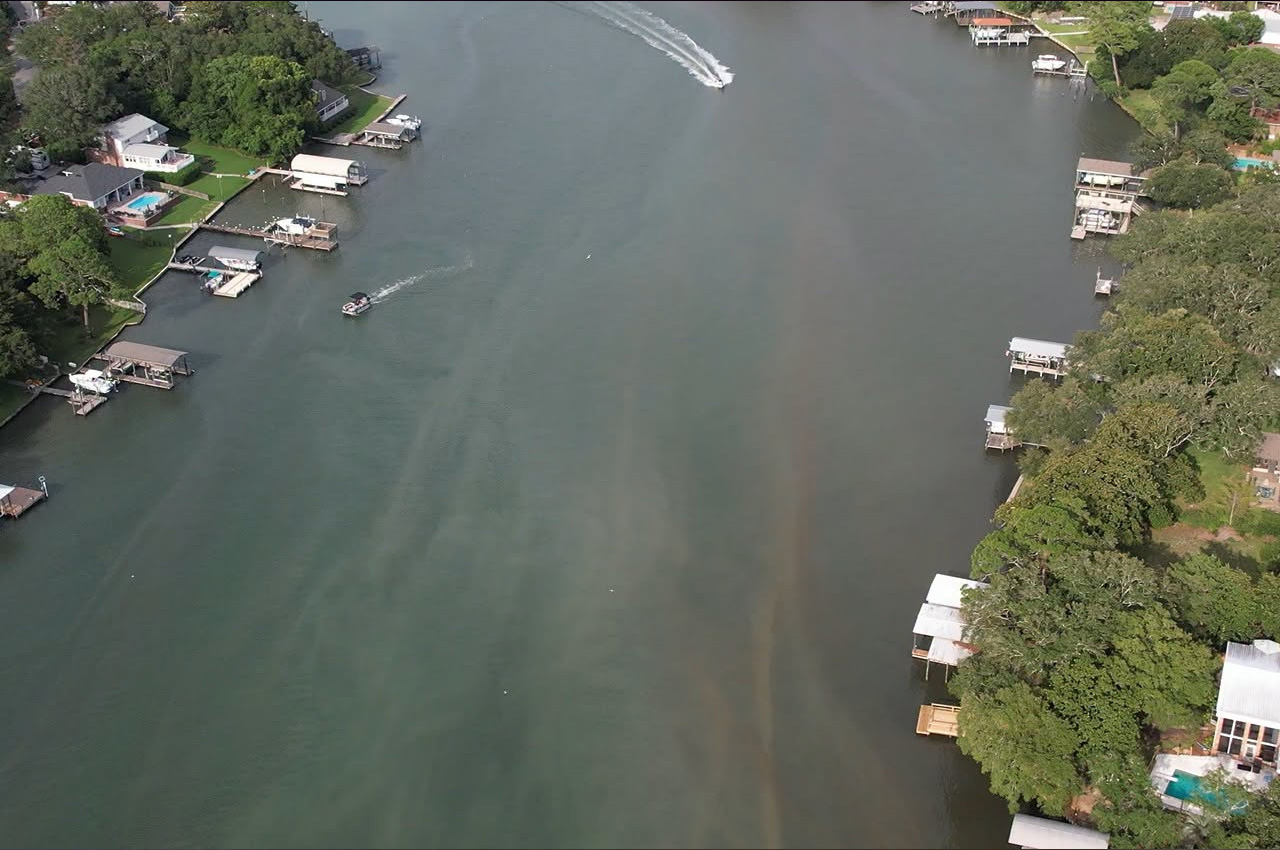
The health advisory for Cinco Bayou in Fort Walton Beach has been lifted, and Okaloosa County has offered a likely explanation for the environmental incident that killed thousands of fish and crabs and prompted a series of advisories over the past month.
- The Okaloosa Health Department lifted its most recent advisory Monday, Sep. 1, after sampling by the Okaloosa County Natural Resources Section showed bacteria levels had dropped below the advisory level. The health department said ongoing monitoring by the county will continue.
In a separate release detailing the initial incident, the county pointed to low oxygen levels in the water and a dying algae bloom as the likely causes.
The county said the Destin-Fort Walton Beach Natural Resources team immediately tested salinity, temperature and dissolved oxygen levels after the problem was reported and found them extremely low. Those conditions likely resulted in the loss of marine life in the area, the county said.
The Florida Fish and Wildlife Conservation Commission collected and processed additional samples and confirmed a mixed assemblage of algae, according to the county. The algae eventually died and likely contributed to the discoloration and odor.
- The county said the most likely causes of the algal bloom included stormwater runoff and very warm water, which creates an environment conducive to the growth and decay of algae.
The City of Fort Walton Beach Public Works department ran dye through a force main and hired an outside contractor to perform sonar scans of the entire submerged length, the county said, and found no evidence of leaks.
The county also addressed the elevated bacteria levels that led the health department to issue its advisories. Subsequent testing for enterococci bacteria was completed at numerous locations by the health department and the Destin-Fort Walton Beach Natural Resources team, resulting in the additional advisories, the county said.
Because enterococci bacteria can come from the waste of any warm-blooded mammal, or from re-suspension from the bayou bottom, additional tests were taken, the county said. Those tests confirmed the bacteria was not of human origin.
The county said the likely and most common cause of the bacteria’s presence is stormwater runoff and the agitation of sediment, which suspends bacteria that feeds on the organic material the bayou is rich with.
The incident first came to light Sunday, Aug. 2, when Okaloosa County staff, the City of Fort Walton Beach and the health department began an on-site investigation into an abnormal discoloration and odor in Cinco Bayou in the region between Beal Parkway and Eglin Parkway.
At the end of the Aug. 4 Board of County Commissioners meeting, Okaloosa County Commissioner and Board Chairman Trey Goodwin described the incident as a significant event that impacted three and a half miles of the bayou within a 24-hour period. He said the water turned gray and the odor was a sulfur-type smell that would burn the nose and eyes.
The health department issued its first advisory Aug. 7, warning against water-related activities after tests showed the water did not meet the state’s recreational water quality criteria for Enterococcus bacteria. That advisory was lifted Aug. 19, a new advisory was issued Aug. 21, and it was lifted again Sep. 1.