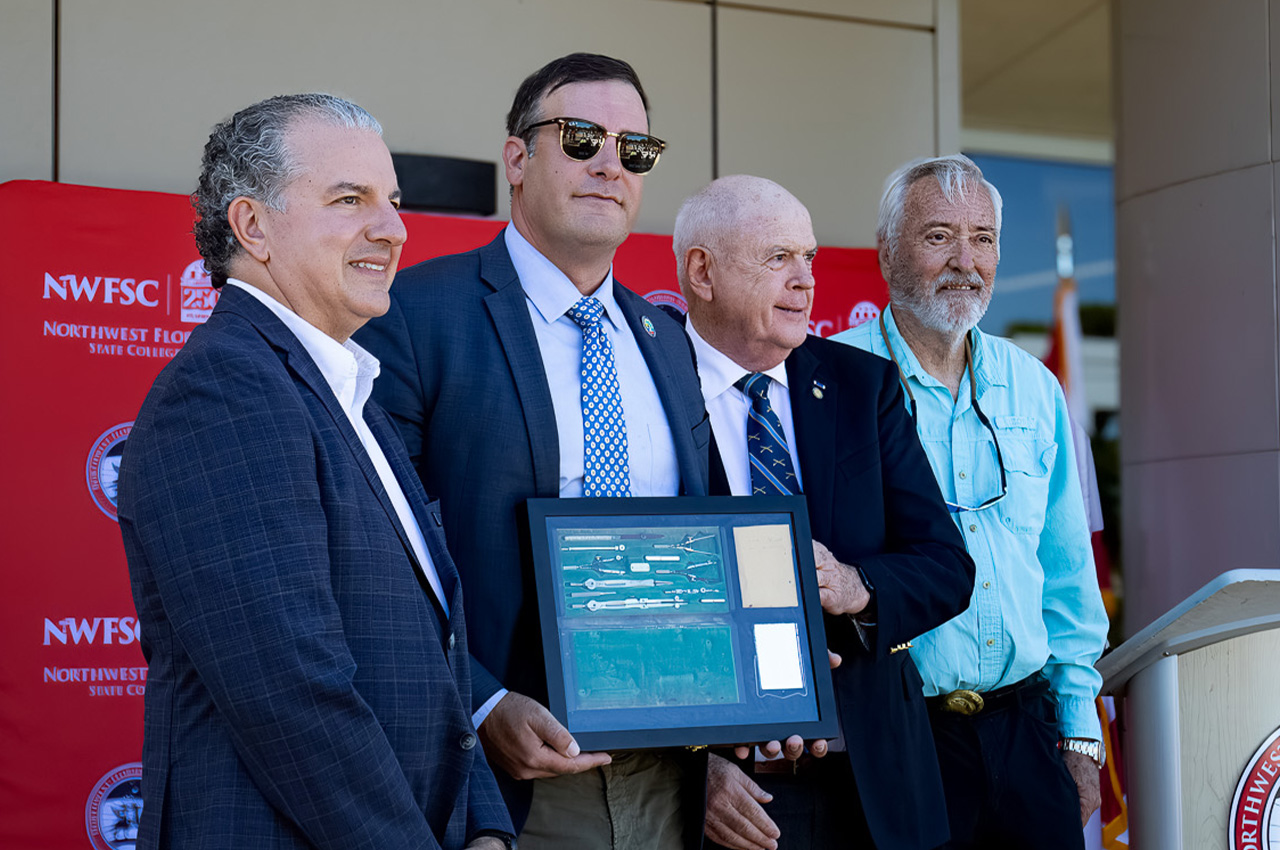
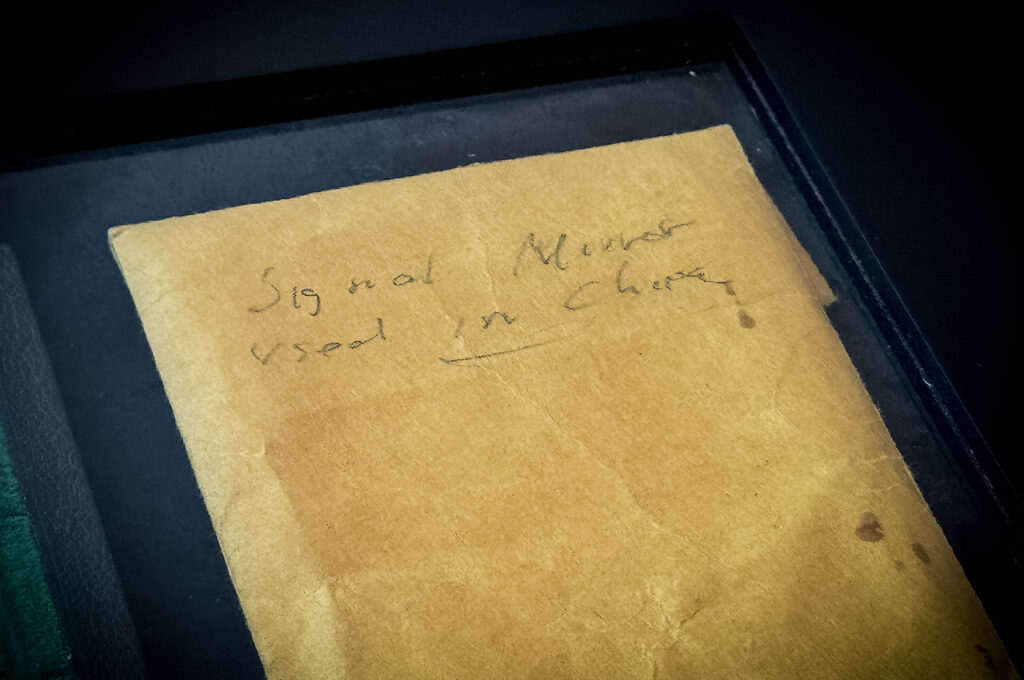
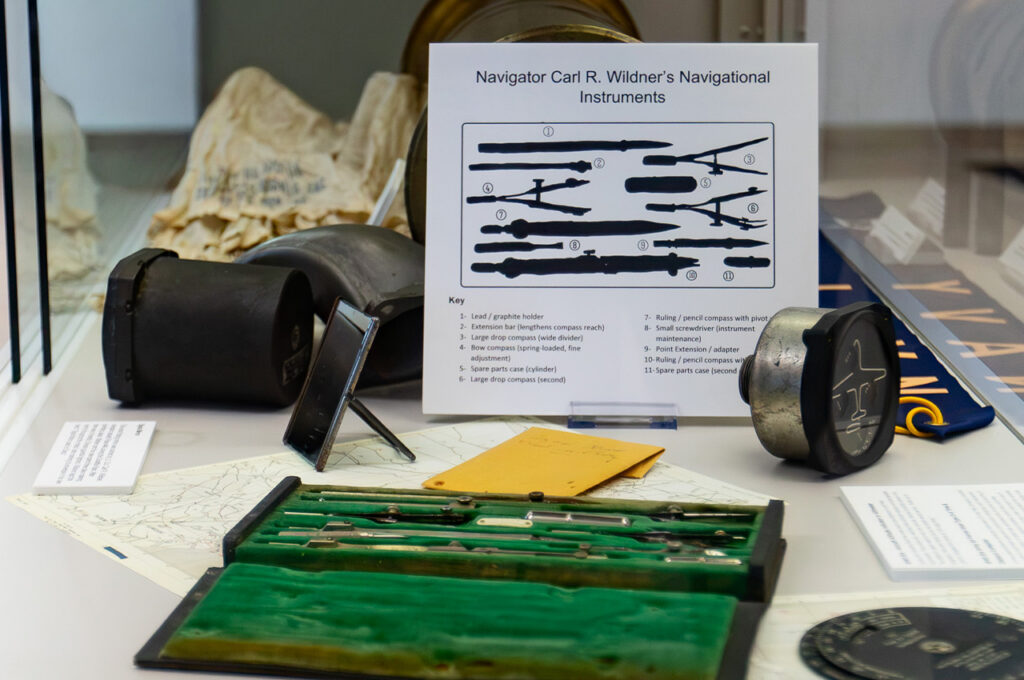
Northwest Florida State College added a mission-flown signal mirror and navigation equipment from the 1942 Doolittle Raid to its Doolittle Raid WWII History Permanent Exhibit during a donation ceremony Tuesday afternoon.
- The artifacts belonged to Lt. Col. Carl R. Wildner. They were donated by State Rep. Patt Maney, Dewey Destin and his son, Okaloosa County School Board Member and Florida Historical Commission Vice Chairman Parker Destin. The items give visitors a direct link to one of the most historic military missions of World War II and will help carry the story of the Doolittle Raiders forward to future generations.
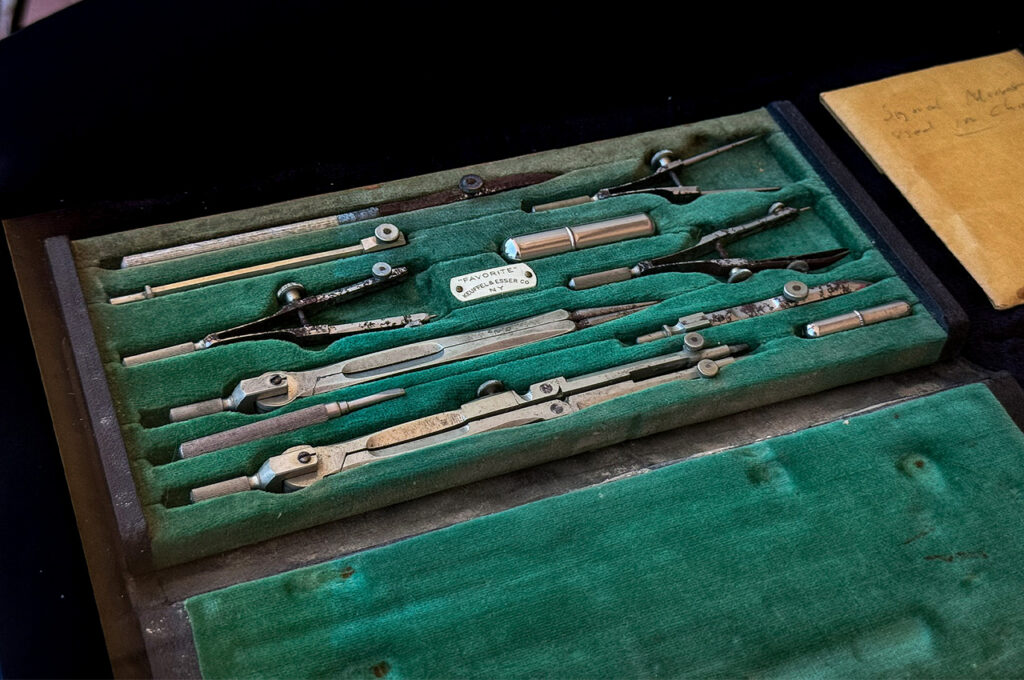
Wildner served as navigator aboard Crew No. 2 during the April 18, 1942, raid. Among the donated items is his Keuffel & Esser “Favorite” drafting and navigation set, which he used to help guide the crew’s B-25 toward Japan and later across the Pacific to China. After the crew crash-landed in a rice paddy, the airmen escaped with much of their personal equipment, including the instruments.
NWFSC President Mel Ponder opened the 2 p.m. ceremony at Raider Arena by recounting the mission. On April 18, 1942, just months after the attack on Pearl Harbor, 80 American airmen led by Lt. Col. Jimmy Doolittle launched 16 B-25 bombers from the deck of the USS Hornet to strike the Japanese homeland.
“The Doolittle Raid demonstrated America’s resolve during one of the darkest periods of the war, it lifted the spirits of a nation and showed the world the extraordinary courage of American service members,” Ponder said.
Ponder said the mission is part of the college’s institutional identity, not just a chapter in a history book.
- “We are the Raiders, and that name represents far more than athletic teams or school spirit,” Ponder said. “It reflects the courage, perseverance, teamwork and commitment to excellence demonstrated by the men who participated in that historic mission.”
He said the exhibit gives students, the community and future generations a chance to connect with that history in a meaningful way, and that the newly donated items carry a direct connection to the raid.
“These are not simply items from another era, they’re tangible reminders of the men who served, the risk they accepted and the sacrifices they made for our nation,” Ponder said.
Maney tied the date of the raid to another April 18 in American history: Paul Revere’s midnight ride in 1775. He connected both events to the nation’s America 250 commemoration.
“And now we have something tangible tied directly to the raid in World War II, where people left on what they thought was a one-way mission,” Maney said. “They knew they didn’t have the gas to get back. They hoped they had enough gas to make it to China, and they went anyway.”
Maney pointed to the range of people in the audience, including an active-duty service member, retired colonels, a retired general, representatives of the Fort Walton Beach Chamber of Commerce, members of the Sons of the American Revolution and representatives of three museums, counting the college.
He also recognized William D. “Rusty” Wells, who drove from Pensacola for the ceremony. Wells’ mother worked with the Raiders when they trained at Eglin for the mission, Maney said.
- “That just, to me, ties the whole event into a nice, neat bow,” Maney said.
Maney thanked those in attendance for supporting the college and its mission to build the community. “Part of building our community is recognizing our history and being guided into the future by it,” he said.
U.S. Rep. Jimmy Patronis also spoke, saying institutions like the college help make sure future generations understand the sacrifice and leadership of those who came before them.
“We all come and go, but institutions like this are here forever,” Patronis said.
Patronis said colleagues he works with in Washington are often in awe when he tells them about the Doolittle Raiders, and some have never heard the story.
- “When you tell about the courage, the bravery, what these folks went through in order to do what they did to try to build the morale, the courage, the confidence of what our country was going through at that time, the sacrifice that these men went through, it just leaves me speechless,” Patronis said. “But it also tells such an amazing story of the American spirit.”
Parker Destin spoke on behalf of himself and his father, Dewey Destin. Although he was introduced as a school board member, Destin said he was there more in his role as Vice Chairman of the Florida Historical Commission.
He said his love of Florida history came from his father, and that Florida history is American history. Destin noted that the de Luna expedition landed in Pensacola in 1559, nearly 500 years ago, and said Northwest Floridians have played a part in American history ever since.
“That’s what we’re talking about today is storytelling,” Destin said. “This is a retelling of an American hero story, which is to inform us of who we were, who we can be, and frankly regular Americans, when extraordinary times called them to do extraordinary things, they did it without hesitation and with full resolve.”
Destin said he was privileged to play a small role in bringing the artifacts back into the public trust. He closed by asking each person in attendance to pass the story along.
“I will charge each of you to share that story with a young person over the next days and weeks, because that’s what this is about,” Destin said.