
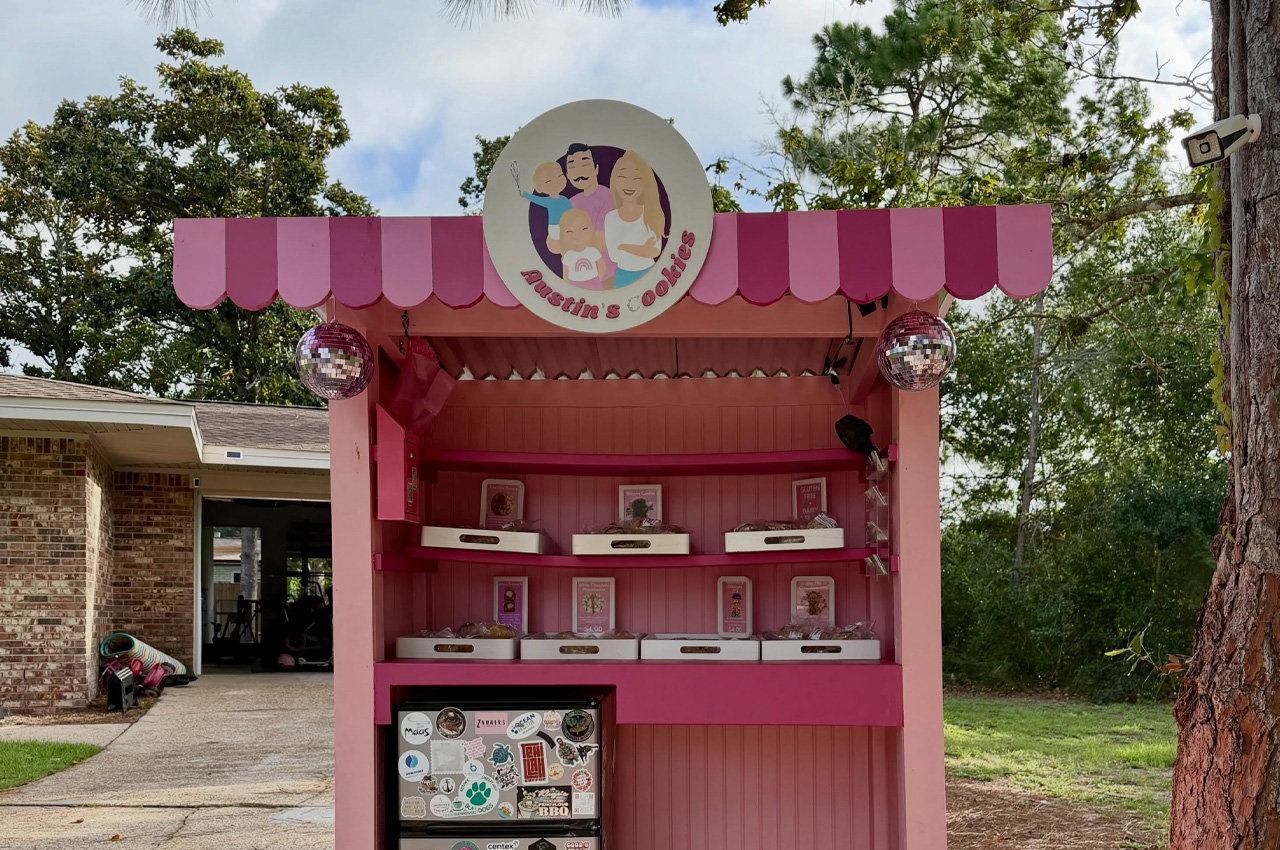
The Fort Walton Beach City Council voted 5-1 on Aug. 11 to advance an ordinance that would let home-based cottage food businesses sell goods from a cart or stand, a use the city’s code does not currently allow.
- Councilman Logan Browning made the motion to adopt Ordinance 2227, with Councilman David Schmidt with the second. Councilwoman Gloria DeBerry cast the lone dissenting vote, and Councilman Payne Walker was absent. The ordinance needs a second and final reading, set for Aug. 25.
The change grew out of code complaints, City Manager Jason Davis told the council. He said a resident complained about a large sign in a neighbor’s yard, and a later complaint raised concerns about traffic. When code enforcement examined the ordinance, staff found the stands were not allowed as written, Davis said, and operators were given a 45-day window to keep operating while the council decided how to proceed.
Growth Management Director Tim Gibson said the issue involves two state laws.
- Florida’s cottage food law, Chapter 500.80, lets residents make and sell certain shelf-stable foods from home and bars local governments from prohibiting those businesses.
- The home-based business statute, 559.955, lets the city regulate the appearance of the property, including whether a stand is allowed outside.
“This would not allow people to go out there and sell art or jewelry or do any other kind of home-based business at a stand out in front of their house,” Gibson said. “This is just strictly written in there for the cottage food operators.”
Under the ordinance, a qualifying stand could be no larger than 20 square feet and no taller than 8 feet, could operate only between 7 a.m. and 8 p.m., and would have to be stored out of sight outside those hours. It would need to sit within 10 feet of the home and at least 15 feet from the front property line, and the property would need at least two off-street parking spaces on a stabilized surface. Operators would have to register with the city.
Gibson said operators are also required to hold a city business tax receipt, which many did not have before code enforcement became involved.
Gibson said staff could not find another jurisdiction in the region that permits the stands. “Staff could not find any in the Panhandle that specifically allow them,” he said, adding that some nearby areas have begun shutting stands down. Santa Rosa County, Okaloosa County and Crestview have language similar to the city’s current ban, he said.
City Attorney Jeff Burns said the change is allowed under state law because it eases restrictions rather than adds them. He cautioned that the city could not later make the cottage food rules more restrictive while a state law, SB-180, is in effect.
“SB-180 does expire August 30, 2027, if we get no hurricanes locally,” Burns said.
- Burns said doing nothing was not an option, because the stands were in violation of the current code and at least one enforcement case was already underway, which the council could not halt on its own.
Several operators spoke in support. Kyle Henderson, who introduced himself as the head taste tester at Austin’s Cookies, thanked Davis and Gibson for moving quickly.
“I’ve never seen government move so fast, and I think you can tell what I actually do for a living,” he said.
Henderson said his family marked its seventh year running a cottage food business (Austin’s Cookies) in July, and that the work had allowed his wife to raise their children while running a business of her own.
“Over the past few weeks, we’ve seen just how many families are impacted by this ordinance,” he said, telling the council his family was grateful for the chance to keep operating within the city’s rules.
Henderson later returned to address a concern Mayor Nic Allegretto had raised about whether the change might open the door to other home businesses selling from stands. He said cottage food operators cannot wholesale their products, so a stand is one of their few ways to reach customers.
- Allegretto said his concern was not with the cottage food operators but with what a visible stand in a driveway could eventually be used to sell. Gibson said the ordinance was written narrowly and that staff would bring any future requests from other types of businesses back to the council.
Others urged the council to loosen the proposed limits. Kellsey Schaffer, owner of Sweet Treat Depot, which operates around the clock, submitted 62 pages of photographs and argued that the hours, setbacks and lighting rules were stricter than what residential neighborhoods already allow.
“If a garage sale can have cars lining a residential street, why should someone stopping for two minutes to buy a cookie or a treat be treated differently?” she said.
DeBerry said she would not support the change, citing traffic and the movement of residential areas toward commercial use, and suggested door-to-door sales as an alternative. Some residents echoed concerns about traffic and neighborhood character.
Allegretto pushed back on the idea that the ordinance would make matters worse. “We are not trying to make anything more restrictive,” he said. “We are trying to allow a use that currently doesn’t exist, which is the cart in the driveway of the house.”
Police Chief Robert Bage said he supported the ordinance and that it would give the city a standard to enforce when complaints arise.
“We’re not going to go out there with a tape measure every day,” he said, adding that the rules would give code enforcement a baseline to work from.
Council members signaled they may adjust the ordinance before final adoption, including the 8 p.m. cutoff, the setbacks and the parking requirement. Burns said the council could make the rules less restrictive at the second reading without returning to a first reading, while making them more restrictive would require starting over.
The second reading is scheduled for the council’s Aug. 25 meeting.




One Response
This is a really bad idea built upon the notion of cute kids selling lemonade. It has the potential to create all kinds of problems — particularly traffic — in what should be quiet residential neighborhoods. There are many good reasons for zoning laws that keep retail businesses out of residential areas.